Composers · Romantic
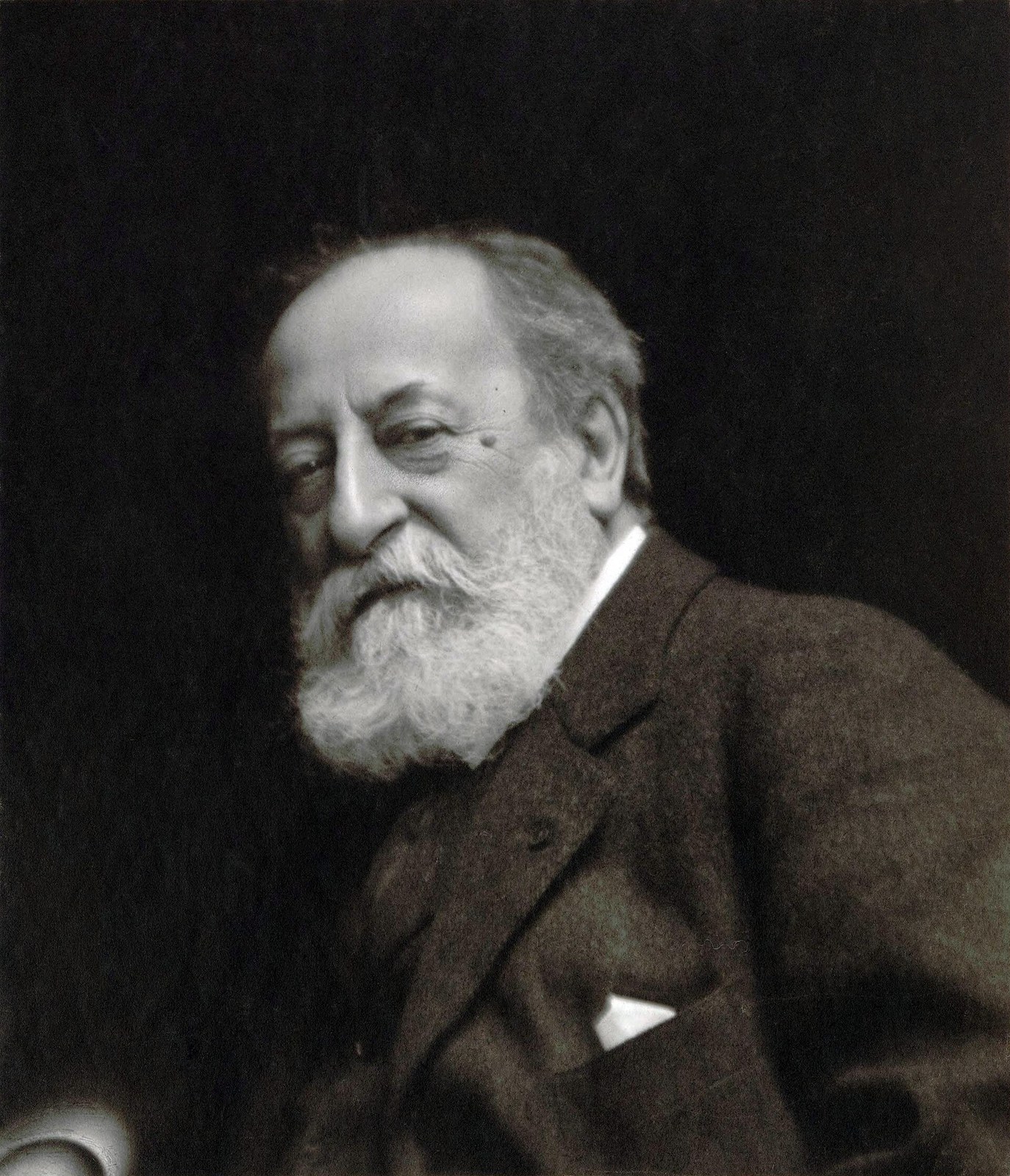
Camille Saint-Saëns
Camille Saint-Saëns
- Life
- 1835–1921
- Born in
- Paris, France
- Era
- Romantic
The story of Saint-Saëns
1846, the Salle Pleyel in Paris. A ten-year-old plays concertos by Mozart and Beethoven. When he finishes, the story goes, he offers as an encore to play from memory any one of Beethoven's thirty-two piano sonatas. It was Camille Saint-Saëns's official debut.
Mother and great-aunt
Saint-Saëns was born in Paris in 1835. His father died a few months after his birth, and the boy was raised by his mother and great-aunt. His great-aunt began teaching him piano at about two, and he quickly showed astonishing talent. He was keenly interested not only in music but also in languages, mathematics and the natural sciences.
Organist of the Madeleine
After studying organ and composition at the Paris Conservatoire, he became organist of the Church of the Madeleine in Paris in 1858 and served for nearly twenty years, one of the most prestigious posts in the city. He was especially renowned for his organ improvisations.
For a time he also taught piano at a music school, where one of his pupils was the young Gabriel Fauré. The two remained close friends all their lives.
For French music
After France's defeat in the 1871 war with Prussia, Saint-Saëns and other musicians founded the Société nationale de musique, to create a stage for new works by French composers overshadowed by German music. It later became the stage where works by composers such as Debussy and Ravel were first heard.
Samson and Delilah, and great grief
His opera Samson et Dalila could not get staged in France and premiered first in Weimar, Germany, in 1877, thanks to Liszt. The next year he suffered a great tragedy: his two young sons died within weeks of each other. His marriage then collapsed.
The traveling scholar
Saint-Saëns loved travel all his life and often visited Algeria in North Africa. Beyond music he was deeply interested in astronomy, archaeology and philosophy, writing essays and even publishing a book of poems. In 1886 he wrote both the grand "Organ" Symphony and the playful Carnival of the Animals: one as majestic as organ and orchestra filling a cathedral, the other a joke for friends. He dedicated the "Organ" Symphony to the memory of Liszt, who had just died. He lived long enough to see a younger generation's new music appear, and reportedly did not hide his displeasure with some of it. He died in Algiers in 1921, at eighty-six.
Music to hear on Pyeongeum
- "The Swan" from The Carnival of the Animals: a graceful song for cello.
- Introduction and Rondo Capriccioso: a dazzling violin piece written for Sarasate.
Hearing the slow, serene "Swan" and the capricious, Spanish-flavored rondo together, you can tell how many colors of music Saint-Saëns wrote.
People around him
- Franz Lisztthe elder who helped get Samson et Dalila staged in Weimar.
- Gabriel Fauréhis pupil and lifelong friend.
- Pablo de Sarasatethe Spanish violinist to whom Saint-Saëns dedicated several works.
A question to think about
Saint-Saëns lived long enough to watch the new music of a younger generation, and criticized some of it sharply. It is not easy for someone who led one era to accept the next generation's experiments. Differences between generations still often turn into conflict today.
When the experience of one generation collides with the new attempts of the next, what can each learn from the other?
Pieces by Saint-Saëns
Hidden stories about Saint-Saëns
Composers of the same age
People whose lives overlapped with Saint-Saëns's by more than ten years