Composers · Romantic
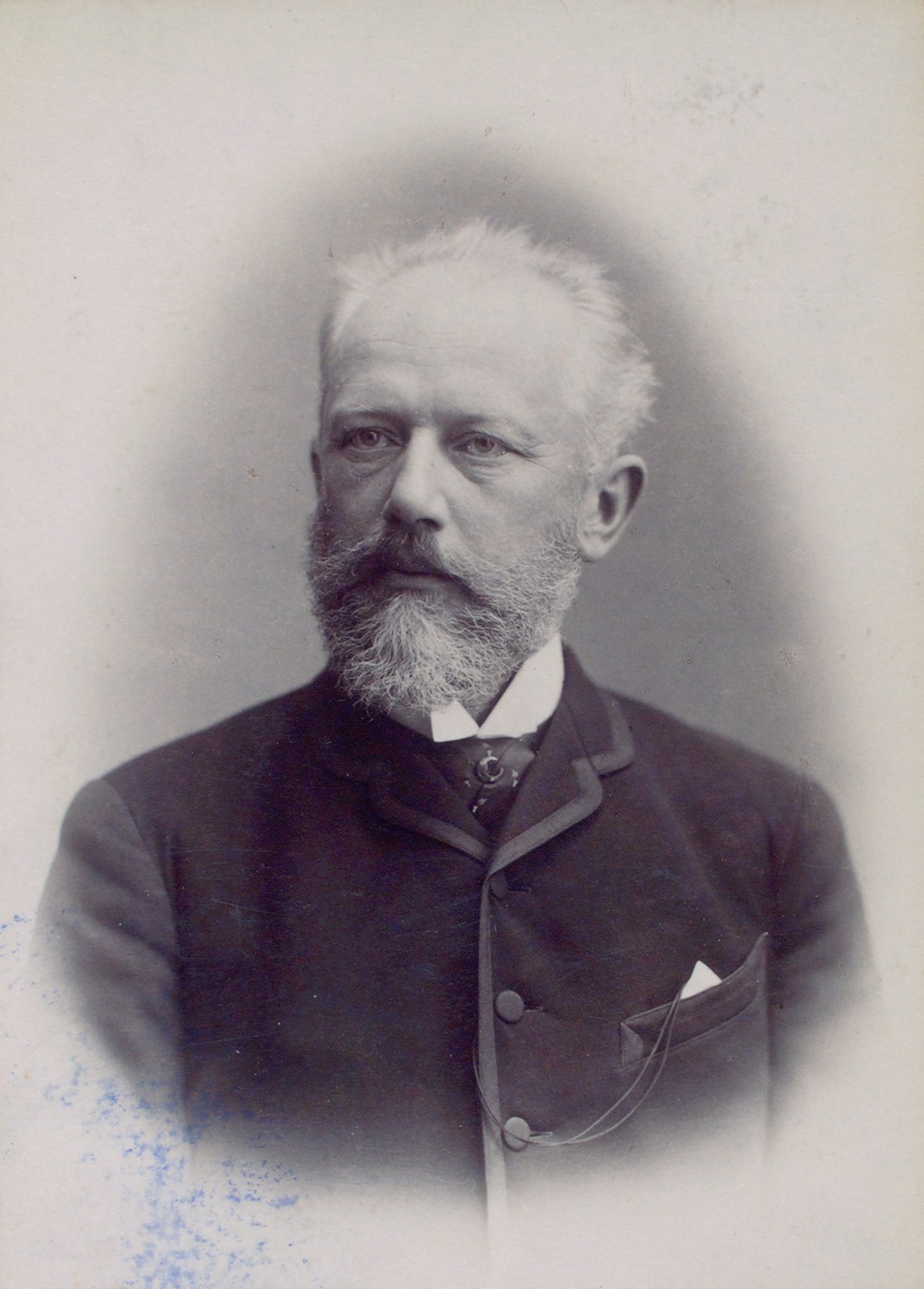
Pyotr Ilyich Tchaikovsky
Pyotr Ilyich Tchaikovsky
- Life
- 1840–1893
- Born in
- Votkinsk, Russia
- Era
- Romantic
The story of Tchaikovsky
For fourteen years from 1877, two people exchanged more than a thousand letters. One was a composer; the other, Nadezhda von Meck, a wealthy widow who sent him a large sum every year. Yet the two agreed never to meet, and they never sat down and talked face to face. This is the story of Pyotr Ilyich Tchaikovsky.
From civil servant to musician
Tchaikovsky was born in 1840 in Votkinsk, a mining town in the Urals of Russia. His father was a mining engineer. Though he loved music from childhood, his family sent him to a law school in St Petersburg, and after graduating he worked as a civil servant in the Ministry of Justice.
Then in 1862 he entered the newly opened St Petersburg Conservatory to study music seriously, a late start at twenty-two. After graduating he became a professor at the Moscow Conservatory, teaching harmony and composing.
Madame von Meck
In the late 1870s Tchaikovsky went through a great crisis. A hasty marriage in 1877 collapsed within weeks, leaving him in deep distress. Just then Madame von Meck's patronage began. Her allowance let him give up teaching and devote himself to composing. His Fourth Symphony is dedicated to her.
In 1890 von Meck suddenly ended the allowance, and the letters stopped. Why remains unclear. Tchaikovsky reportedly grieved the end of the friendship more than the loss of money.
Ballets and symphonies
Tchaikovsky raised ballet music from mere dance accompaniment to music as deep as a symphony. Swan Lake, The Sleeping Beauty and The Nutcracker are today among the most frequently performed ballets in the world. He also left six symphonies, the First Piano Concerto, the Violin Concerto and the opera Eugene Onegin.
Eugene Onegin
His best-loved opera, Eugene Onegin, is based on Pushkin's novel in verse. At its heart is the scene in which the country girl Tatyana writes all night to Onegin, a cynical young man from the city. Wanting to portray the characters' hearts rather than a lavish spectacle, Tchaikovsky entrusted the first staging not to a big theater but to students of the Moscow Conservatory, in 1879.
Onto the world stage
Unusually for a Russian musician of his time, he was warmly received as a conductor in Europe and America. In 1891 he conducted at the opening of Carnegie Hall in New York. In October 1893 he conducted the premiere of his last symphony, the "Pathétique," and nine days later died suddenly at fifty-three. The official cause was cholera.
Music to hear on Pyeongeum
- "Dance of the Sugar Plum Fairy" from The Nutcracker: the tenth stop on our Music Journey. Listen for the crystal sound of the celesta.
- "Waltz of the Flowers," the scene from Swan Lake, the finale of the "Pathétique," the First Piano Concerto, and the "Andante cantabile."
People around him
- Nadezhda von Meckthe patron he met only through letters for fourteen years.
- Nikolai Rubinsteinthe pianist who founded the Moscow Conservatory; he first savaged the First Piano Concerto but later played it often.
- His brother Modestwho wrote his biography and is said to have suggested the title "Pathétique."
A question to think about
Thanks to one person's patronage, Tchaikovsky could compose without worrying about his living, but when the support suddenly stopped he was deeply hurt. An artist's livelihood depended on one person's feelings. Many artists today still rely on a few patrons or companies.
What kind of support is needed so that an artist's livelihood is not shaken by the choices of a single person or company?
Pieces by Tchaikovsky
Hidden stories about Tchaikovsky
Composers of the same age
People whose lives overlapped with Tchaikovsky's by more than ten years