Composers · Romantic
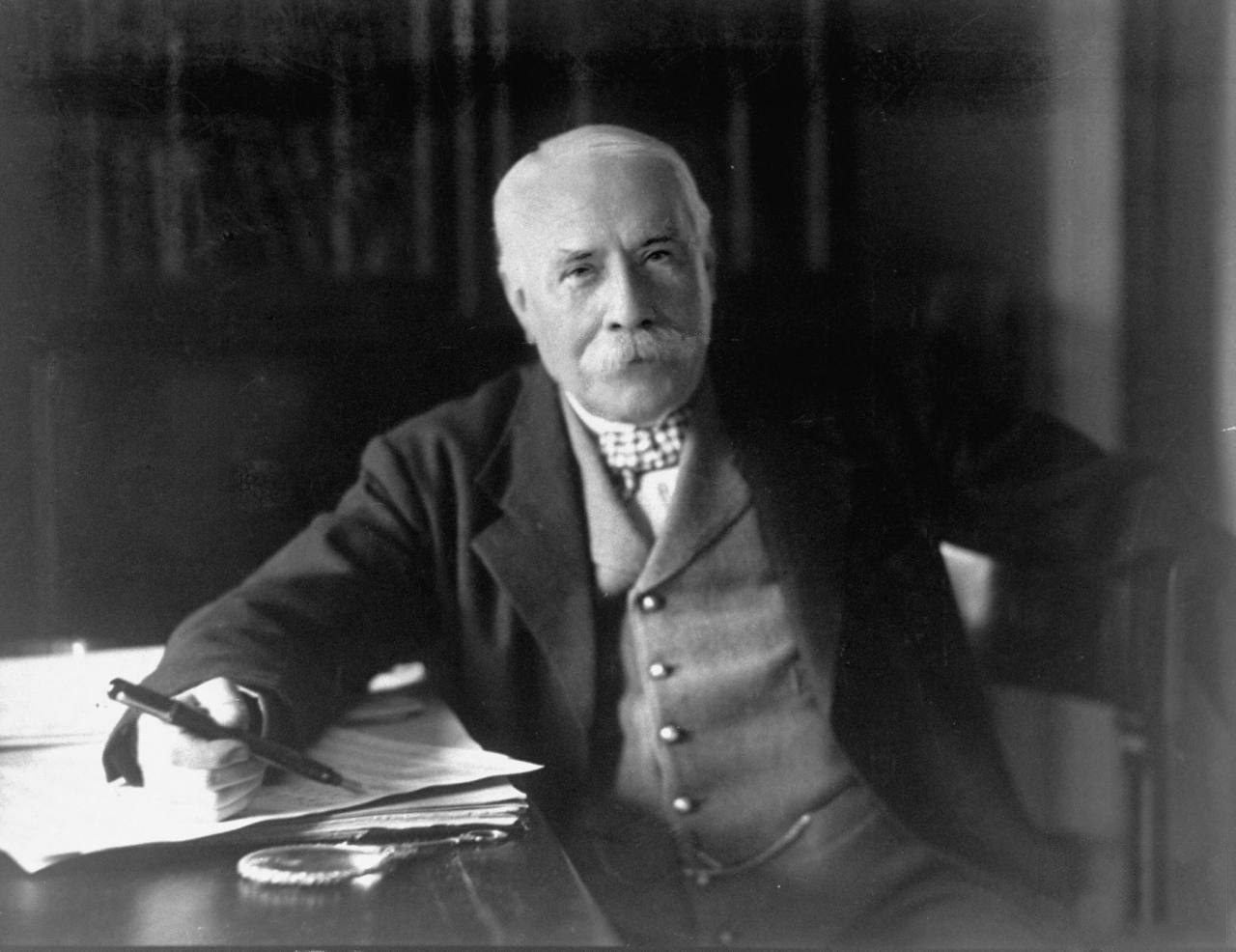
Edward Elgar
Edward Elgar
- Life
- 1857–1934
- Born in
- Lower Broadheath, England
- Era
- Romantic
The story of Elgar
1888. A thirty-one-year-old violin teacher gives his fiancée a small piece: a short song for violin and piano, Salut d'amour. He was then an unknown musician earning his living from lessons in a provincial English city. This is Edward Elgar.
The music-shop son
Elgar was born in 1857 in Broadheath, a village near Worcester, England. His father ran a shop selling instruments and sheet music in Worcester, worked as a piano tuner and was a church organist. The boy learned music by reading the shop's scores and handling its instruments. He never attended a music school, and later liked to say he was almost entirely self-taught.
A provincial musician
The young Elgar taught violin, played in local orchestras, and even conducted a band made up of staff at a nearby mental hospital, writing music for it. Being a Catholic in a mainly Protestant England, and from a family in trade, kept him far from the musical establishment.
Bicycles and country lanes
Elgar loved the hills and fields around Worcester. He is said to have found ideas for his music cycling country lanes or walking the Malvern Hills. A man of restless curiosity, he also enjoyed eccentric hobbies such as chemistry experiments and kite flying. People say the broad, warm melodies running through his music carry the landscape of those hills.
Alice
His pupil Caroline Alice Roberts was eight years older than he, a general's daughter from a higher class. Her family did not welcome the match, but they married in 1889. Alice firmly believed in her husband's talent, copying out his scores and running the household, supporting him all her life. Salut d'amour was his engagement present to her.
Success at forty-two
In 1899 the Enigma Variations, portraying his friends one by one in music, premiered in London to great success. Elgar was forty-two. The next year he wrote the oratorio The Dream of Gerontius, and in 1901 the Pomp and Circumstance March No. 1, whose middle melody later gained words and became a song the British love to sing. He was knighted in 1904.
War and after
The First World War wounded Elgar deeply. After it ended he wrote chamber music and his Cello Concerto in a country cottage in Sussex. When Alice died in 1920, he wrote few large works. Instead he took an interest in the new technology of recording and conducted many recordings of his own music. In 1924 he became Master of the King's Music, and he died in Worcester in 1934, at seventy-six.
Music to hear on Pyeongeum
- "Nimrod" from the Enigma Variations, Salut d'amour, and the fourth movement of the Cello Concerto.
Hearing the tender Salut d'amour, written as an engagement present, then "Nimrod," portraying a friend, and the lonely Cello Concerto written after the war, you see one man's life from youth to old age.
People around him
- Alice Elgarhis wife and lifelong supporter.
- August Jaegerthe subject of "Nimrod," the publisher's editor who held him up.
- Hans Richterthe conductor who premiered the Enigma Variations.
A question to think about
From a family in trade, without proper schooling, and of a different religion from the mainstream, Elgar long stood outside the musical establishment and was recognized only after forty. Today, too, one's school and family still strongly shape opportunity.
For a society to judge people by ability rather than school or family, where must the doors of opportunity be reopened first?
Pieces by Elgar
Hidden stories about Elgar
Composers of the same age
People whose lives overlapped with Elgar's by more than ten years