
The Variation That Called a Friend a Hunter
Each variation in Elgar's Enigma Variations portrays a friend. The famous "Nimrod" captures a conversation with Jaeger, an editor at his publisher.
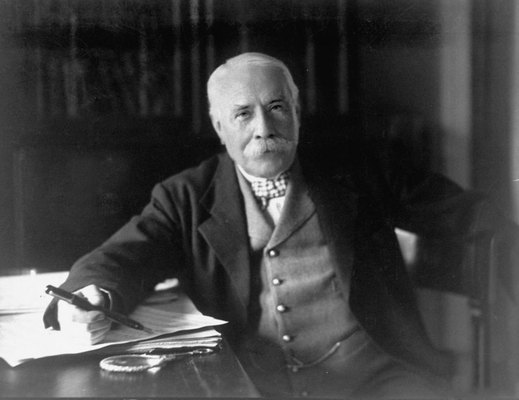
An autumn evening in 1898, at a house near Worcester, England. Tired after a day of teaching, Edward Elgar sits at the piano and noodles aimlessly. When a certain tune emerges, his wife Alice asks: that's nice, what is it? Instead of answering, Elgar starts playing it in different ways, as this friend might, or that friend might.
Friends pictured within
That evening's game became the Enigma Variations: a theme followed by fourteen variations, each portraying someone in Elgar's circle. It begins with his wife Alice and moves through friends, neighbors and pupils, ending with Elgar himself. The score bears the dedication "To my friends pictured within."
Instead of names, the variations carry initials or nicknames, and listeners enjoyed guessing who was who. Elgar later explained that one variation shows a friend slamming a door on his way out, and another a friend's bulldog leaping into a river.
Nimrod, the mighty hunter
The ninth variation is called "Nimrod," the name of the "mighty hunter" in the Bible. Its subject was August Jaeger, an editor at Novello, the firm that published Elgar's music. Jäger means "hunter" in German, so Elgar was playing on his friend's name, a joke Jaeger would have enjoyed.
Jaeger was the friend who held Elgar up whenever he despaired. Elgar later explained that this variation records a long talk the two had about Beethoven's slow movements. Perhaps that is why it begins quietly, like a slow, deep breath, and gradually swells until it spreads into a great wave of feeling.
A riddle never solved
So what is the "enigma"? Elgar said that through the whole work runs another, larger theme that is never played. What it was, he never revealed. People have proposed everything from well-known songs to word games, but to this day no one knows the answer.
The work was premiered in London in 1899 and made Elgar a leading English composer. And "Nimrod" has become music often heard in Britain at ceremonies remembering the dead.
A question to think about
Elgar honored Jaeger, the editor who stood by him in hard times, in music. Behind one person's success there are usually helpers whose names are seldom seen. Even today, achievements remembered as one person's work rest on many people's invisible help.
When we talk about success and achievement, how should the share of the people who helped behind the scenes be remembered and recognized?
Edward Elgar1857–1934Read the story of Elgar →