The story of Puccini
1876. A seventeen-year-old sets off on foot with friends from his hometown of Lucca to Pisa, a walk of many miles, because Verdi's opera Aida is playing there. After seeing it that night, the story goes, the boy resolved to become not a church organist but an opera composer. This is Giacomo Puccini.
The fifth generation
Puccini was born in 1858 in Lucca in Tuscany, Italy, into a family that for four generations had been in charge of the music at Lucca's cathedral. But his father died when he was five, and his mother, raising several children, struggled to make a musician of her son. The boy helped the family by playing organ in churches.
A poor student in Milan
Around twenty-one, with help from his mother and a relative and a scholarship arranged through the queen, Puccini entered the Milan Conservatory. He studied with the opera composer Amilcare Ponchielli and lived in great poverty. Sharing a room with friends and worrying about meals, these years, people say, flowed straight into La bohème, his opera about poor young artists.
From first success to La bohème
In 1893 the success of his opera Manon Lescaut marked Puccini as Verdi's likely successor. La bohème, premiered in Turin in 1896 under the young conductor Toscanini, drew mixed reviews at first but soon became one of the most often performed operas in the world. In 1900 he staged Tosca in Rome.
Madama Butterfly's failure and revival
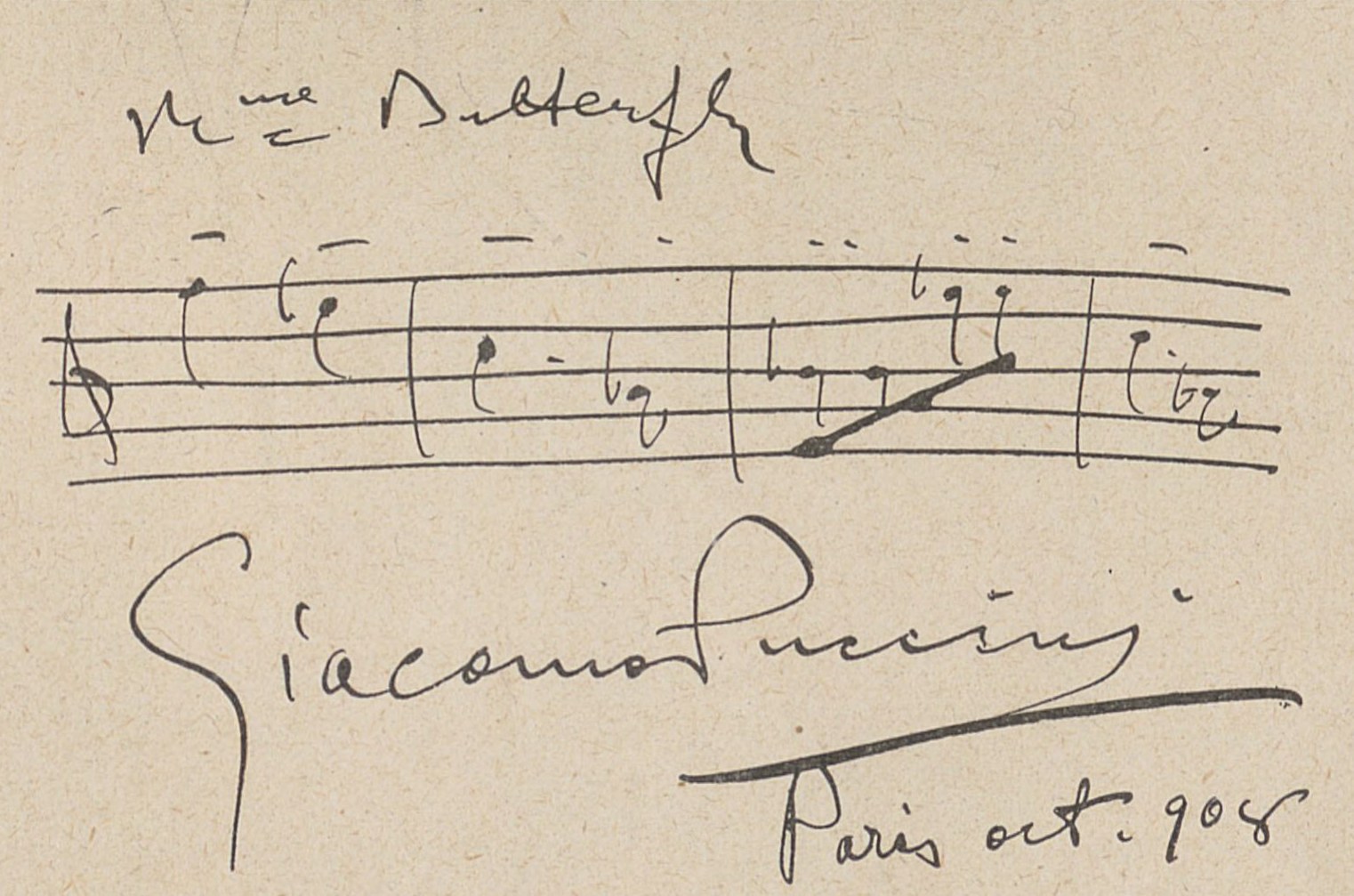
Madama Butterfly, premiered at La Scala in Milan in 1904, failed disastrously amid booing. Puccini quickly withdrew it and revised it. A few months later the revised version was a great success, and today it is one of his signature works. He did not abandon a failed work; he refined it.
The lakeside house
Puccini lived in a house he built at Torre del Lago, a lakeside village in Tuscany. He loved hunting and was enthralled by the new automobiles and motorboats. In 1903 he was badly injured in a car accident and suffered for a long time. In 1918 he premiered Il trittico, three one-act operas of contrasting character, in New York.
Turandot, unfinished
In his last years Puccini threw himself into Turandot, an opera about a Chinese princess. But he went to Brussels for treatment of throat cancer and died there in 1924 at sixty-five, the final scene unfinished. At the 1926 premiere, it is said, the conductor Toscanini stopped at the last passage Puccini wrote and told the audience that here the composer had laid down his pen.
Music to hear on Pyeongeum
- "O mio babbino caro" from Gianni Schicchi: the most lyrical song in his only comic opera.
People around him
- Arturo Toscaninithe conductor who premiered La bohème and Turandot.
- Amilcare Ponchiellihis teacher at the Milan Conservatory.
- Giulio Ricordithe publisher who believed in the young Puccini and supported him for years.
A question to think about
Madama Butterfly failed disastrously at its first performance, yet Puccini did not abandon it; he revised it and staged it again. Today we often treat one failure as the end, or never get the chance to try again.
To become a society that gives second chances to people and work that once failed, how should we look at failure?
Pieces along a life
Each dot is a piece on Pyeongeumjae — tap one to open it. The year is whichever is confirmed: composed, completed, published or premiered.
Pieces by Puccini
Hidden stories about Puccini
Composers of the same age
People whose lives overlapped with Puccini's by more than ten years