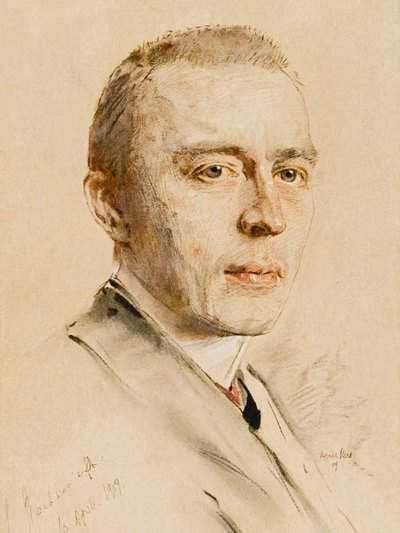
The story of James Scott
Carthage, a small town in Missouri, in the early 1900s. Inside a music store, a young Black man plays the latest songs on the piano for customers, so they can hear a piece before buying the sheet music. This young man is James Scott, later counted alongside Scott Joplin and Joseph Lamb as one of the three great names of classic ragtime. How did he walk from the music-store piano into the heart of ragtime?
The boy from Missouri
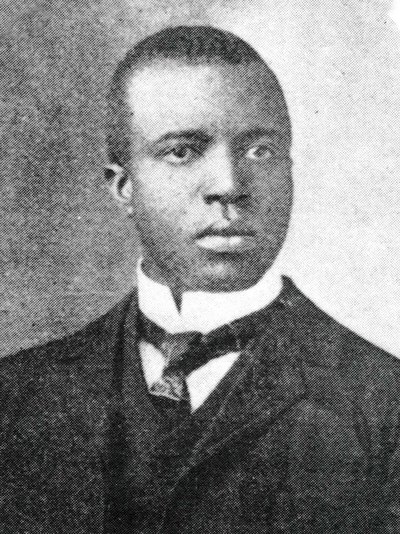
James Scott was born around 1885 in Neosho, Missouri. He had little formal musical training as a child and is said to have taught himself most of what he knew at the piano. In his late teens he moved with his family to Carthage and began working at a music store there.
He started with odd jobs and went on to demonstrate new sheet music at the piano for customers. In a time before radio and records were common, people bought sheet music and enjoyed songs on the piano at home, so the store's pianist was also the person who introduced new songs to the world. Scott's first pieces were published in Carthage around this time.
What ragtime is
Ragtime was piano music that grew among Black American musicians in the late nineteenth century. The left hand walks steadily like a march, oom-pah, oom-pah, while the right hand slips just off the beat and skips along on the off-beats. This rhythm that dodges the beat is called syncopation.
Published classic rags were usually built like marches: several sections of roughly sixteen bars follow one another, and each section is repeated. As improvised saloon music took on this shape, it became music you could open on the stand and play at home.
Joplin and Stark
Around 1906 Scott is said to have gone to St Louis and met Scott Joplin. Joplin introduced him to John Stark, the publisher of his own rags, and that year Stark published Scott's "Frog Legs Rag." It was well received, and from then on most of Scott's rags reached the world through Stark.
"Grace and Beauty," published in 1909, is also counted among the pieces that made his name. "Sunburst Rag," which you can hear on Pyeongeum, was published the same year. Many of his rags range widely across the keyboard with a brilliant sound and are known as rather demanding to play.
The theaters of Kansas City
By the late 1910s ragtime's vogue was steadily giving way to jazz. Scott later moved to Kansas City, where he taught music and accompanied silent films in theaters. A player who could fit music to the scenes on screen was someone every theater needed in those days.
But when sound films spread at the end of the 1920s, the jobs of theater accompanists began to disappear. Scott died in Kansas City in 1938. His rags were forgotten for a while, then returned to the stage from the mid-twentieth century on, thanks to performers and researchers who rediscovered ragtime.
Music to hear on Pyeongeum
- "Sunburst Rag"published in 1909.
- "Ophelia Rag"published in 1910.
- "Honey Moon Rag," "Efficiency Rag," "Troubadour Rag" and "Victory Rag": published between 1916 and 1921.
Try listening to the 1909 piece and the 1921 piece back to back. You can feel that he kept writing rags even as the ragtime era faded over those dozen years.
People around him
- Scott Joplinthe older composer he met in St Louis, who is said to have introduced him to the publisher John Stark.
- John Starkthe publisher who issued most of Scott's rags, starting with "Frog Legs Rag."
- Joseph Lamba composer who wrote rags in the same era, named with Joplin and Scott as one of the three great names of classic ragtime.
A question to think about
Scott began at a music-store piano and made his name after his senior colleague Joplin introduced him to a publisher. Yet when ragtime's vogue passed and films began to talk, his work was pushed aside by the changing times.
When a new technology makes a job disappear, how can the skill and music of the people who did that work be carried into the next era?
Pieces along a life
Each dot is a piece on Pyeongeumjae — tap one to open it. The year is whichever is confirmed: composed, completed, published or premiered.
Pieces by James Scott
- On the Pikepublished 1904 · aged about 19 · about 3 min
- Grace and Beautypublished 1909 · aged about 24 · about 3 min
- Sunburst Ragpublished 1909 · aged about 24 · about 3 min
- Hilarity Ragpublished 1910 · aged about 25 · about 3 min
- Ophelia Ragpublished 1910 · aged about 25 · about 3 min
- Ragtime Oriolepublished 1911 · aged about 26 · about 4 min
- Honey Moon Ragpublished 1916 · aged about 31 · about 3 min
- Prosperity Ragpublished 1916 · aged about 31 · about 3 min
- Efficiency Ragpublished 1917 · aged about 32 · about 3 min
- Paramount Ragpublished 1917 · aged about 32 · about 3 min
- Rag Sentimentalpublished 1918 · aged about 33 · about 3 min
- Troubadour Ragpublished 1919 · aged about 34 · about 4 min
- Victory Ragpublished 1921 · aged about 36 · about 3 min
- Broadway Ragpublished 1922 · aged about 37 · about 3 min
Composers of the same age
People whose lives overlapped with James Scott's by more than ten years