Composers · Romantic
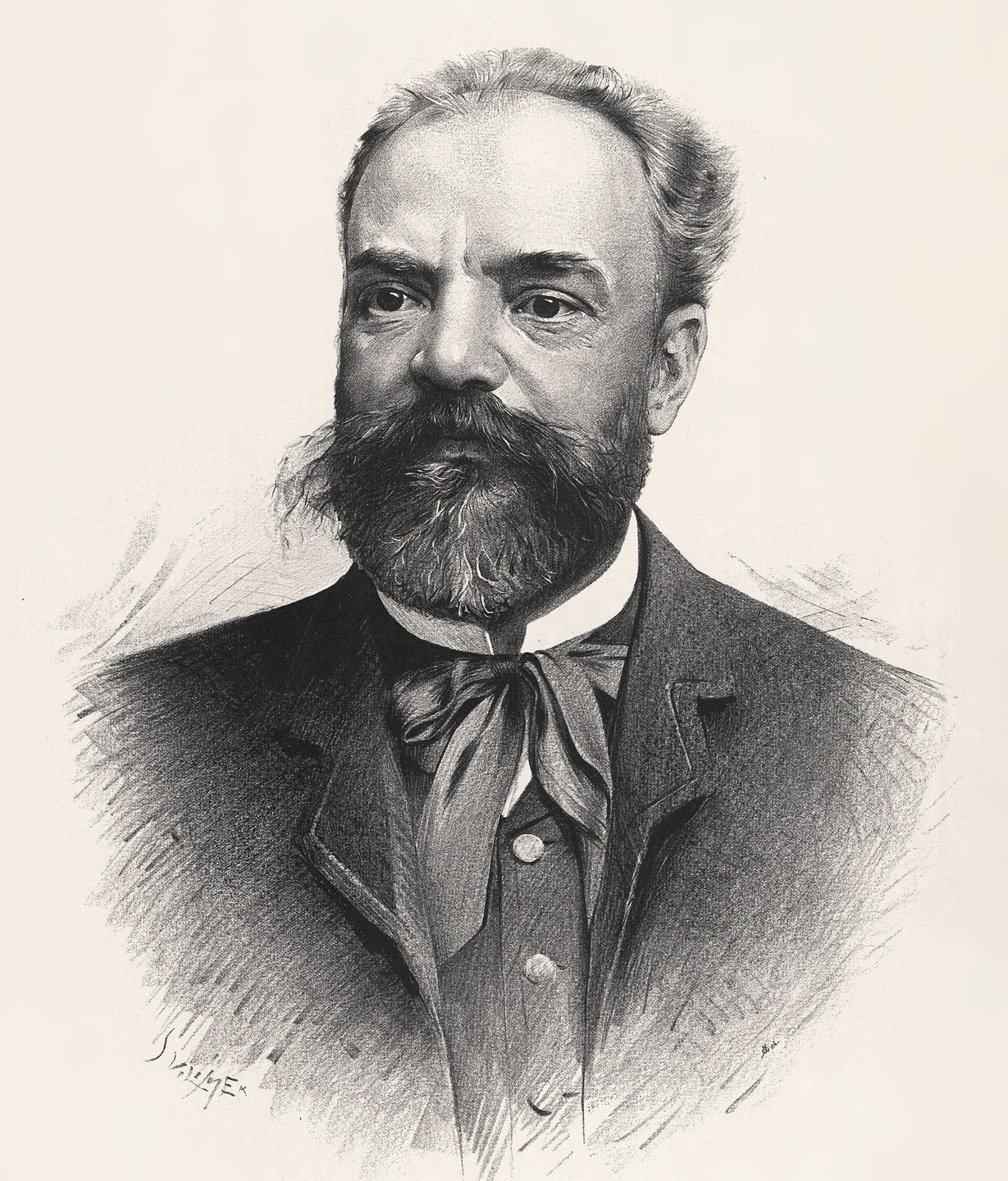
Antonín Dvořák
Antonín Dvořák
- Life
- 1841–1904
- Born in
- Nelahozeves, Czech Republic
- Era
- Romantic
The story of Dvořák
A Prague theater in the early 1870s. Deep in the orchestra, among the violists, sits a man of about thirty. On the podium stands Smetana, later called the father of Czech music. The violist's name is Antonín Dvořák, and he is still unknown.
A village on the Vltava
Dvořák was born in 1841 in Nelahozeves, a small village on the Vltava north of Prague. His father ran a butcher's shop and an inn and hoped his son would take over the business. But the boy, who learned violin and singing from the village teacher, lost his heart to music. At sixteen he entered the organ school in Prague.
The theater violist
After finishing school, Dvořák earned his living for nearly ten years playing viola in a Prague theater orchestra. All the while he composed in secret, again and again, and is said to have burned early works he wasn't satisfied with. Playing countless operas and orchestral works from inside the orchestra later became the foundation of his orchestral skill.
Brahms's recommendation
In the mid-1870s Dvořák applied several times for, and won, an Austrian state stipend for poor young artists. One of the judges was Brahms. Impressed by his talent, Brahms recommended him to his own publisher, Simrock. The Slavonic Dances, published by Simrock in 1878, were hugely popular, and Dvořák's name spread across Europe at a stroke. The two remained friends for many years.
Czech dances and songs
The dances and songs of home live in Dvořák's music. The furiant, a stamping Czech dance in which twos and threes cross, appears throughout his symphonies and chamber music. There is also the Dumky Trio, a piano trio stringing together six dumkas, Slavic songs that switch suddenly between sorrow and joy. Rather than copying folk songs, he made his own melodies from their rhythm and breath.
England and America
In the 1880s Dvořák was especially warmly received in England, crossing several times to conduct his works. Then in 1892 the National Conservatory in New York invited him to be its director. During his years in America he wrote the "New World" Symphony and the "American" Quartet, and was deeply moved by spirituals he heard through his student Harry Burleigh.
Home again
Unable to bear his homesickness, Dvořák returned to Bohemia in 1895. He taught at the Prague Conservatory and served as its director, and in his last years devoted himself to opera, with great success in Rusalka. He died in Prague in 1904, at sixty-two. He loved trains, and the story goes that he enjoyed going to the station to watch the locomotives.
Music to hear on Pyeongeum
- Symphony No. 9 "From the New World," second movement: the eleventh stop on our Music Journey.
- "Song to the Moon" from Rusalka, the Humoresque, and the "American" String Quartet.
People around him
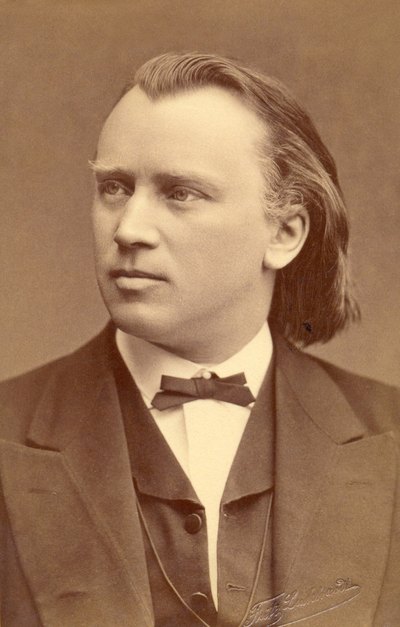
- Johannes Brahmswho recommended him to a publisher and became a lifelong friend.
- Bedřich Smetanaconductor of the theater where Dvořák played viola, and an elder of Czech music.
- Harry Burleighhis student in New York, the singer who sang spirituals for him.
A question to think about
Dvořák escaped obscurity thanks to a stipend for poor young artists and the recommendation of one judge, Brahms. A good system, and one person within it, connected talent to the world. Scholarships and competitions are still many people's first opportunity today.
For talented people to get opportunities regardless of their family's means, what must scholarship and judging systems protect?
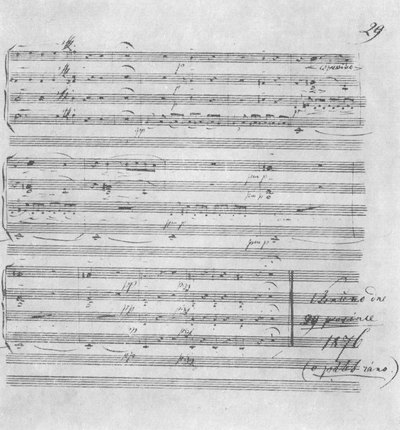
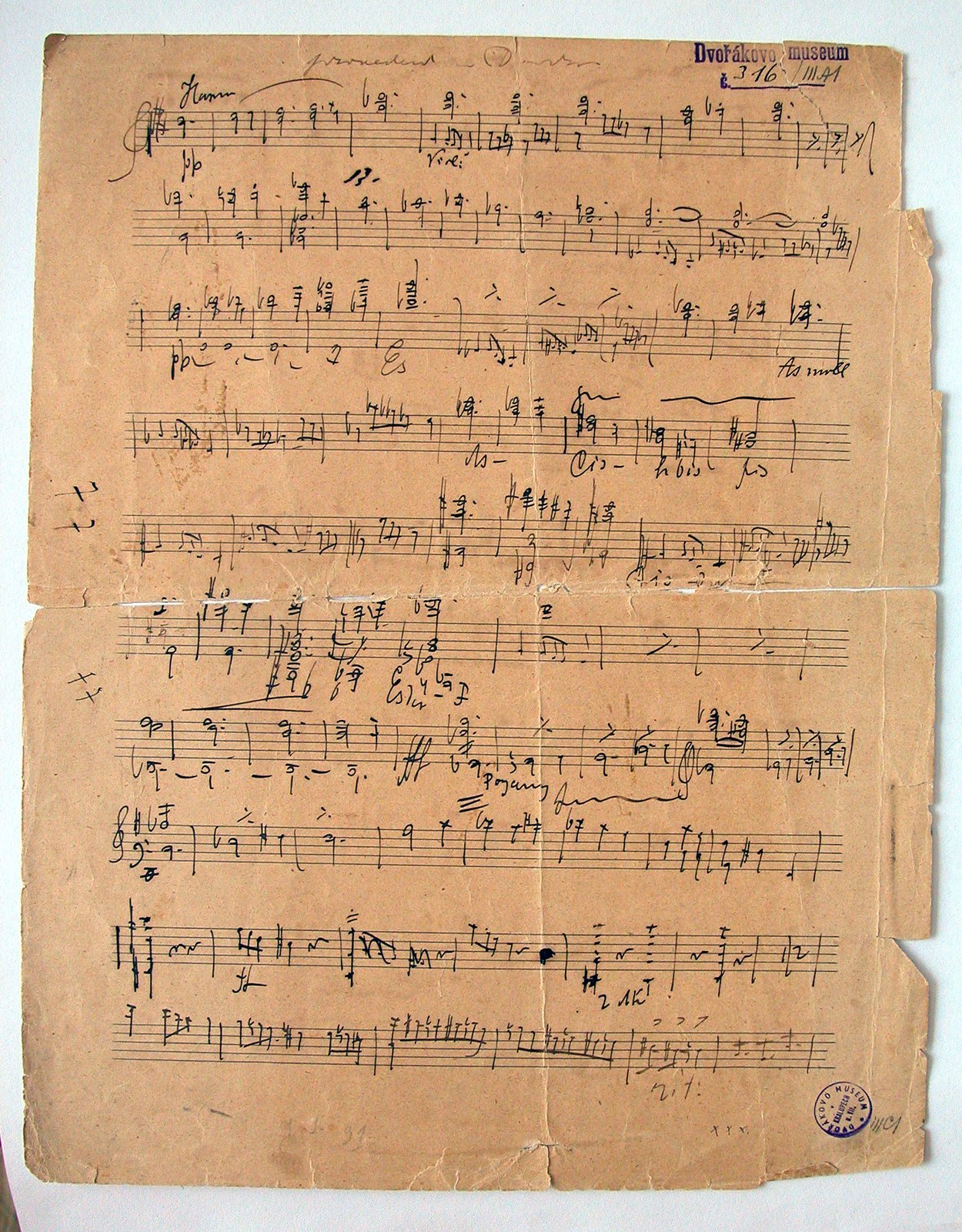
In the composer's own hand
Pieces along a life
Each dot is a piece on Pyeongeumjae — tap one to open it. The year is whichever is confirmed: composed, completed, published or premiered.
Pieces by Dvořák
- Symphony No. 9 'From the New World'II. Largo · premiered 1893 · aged about 52 · about 12 minMusic Journey · track 11
- String Quartet No. 10I. Allegro · about 11 min
- Symphony No. 9Movement I · about 10 min
- Symphony No. 9III. Vivace · about 8 min
- String Quartet No. 12I. Allegro · about 8 min
- String Quartet No. 12III. Vivace · about 4 min
Composers of the same age
People whose lives overlapped with Dvořák's by more than ten years