
Details
- Composer
- Antonín Dvořák
- Catalogue no.
- Op. 95
- Key
- E minor
- Scoring
- Orchestra
- Length
- about 8 min
Recording
Morning music at 7
About this piece
The timpani pound vigorously and the strings and woodwinds dance in a whirl. Dvořák said this movement was inspired by a feast scene in The Song of Hiawatha, an epic poem by the American poet Longfellow.
At a glance
- What it isthe third movement of Symphony No. 9, a scherzo marked Molto vivace, very lively.
- Who, when, whywritten in New York in 1893. In a newspaper interview Dvořák linked this movement to Longfellow's poem.
- What to listen forthe timpani's strong rhythm, and the gentle dances that cut in between.
Listen for
- Poundingthe timpani beat a short, strong rhythm and open the door to the dance, while the woodwinds trade the same short figure.
- A gentle dancein the middle a soft, swaying dance led by flute and oboe changes the mood.
- Looking backnear the end, the horn theme of the first movement is heard again, a thread that ties the whole symphony together.
When it was written
The Song of Hiawatha is a long epic written in 1855 by the American poet Henry Wadsworth Longfellow, based on Native American legends. Dvořák read it in Czech translation and was drawn to it, and he even considered writing an opera on it. That opera never came to be.
Even amid the busy life of New York, Dvořák longed for his native Bohemia. Many listeners hear the feel of a Bohemian country dance in the gentle middle section of this scherzo.
A question to think about
Dvořák found inspiration for this music in a poem in which a white poet retold Native American legends. One culture's story reached him through several hands.
When people outside a culture retell its stories, what can be preserved and what may change? Who owns a story?
The composer
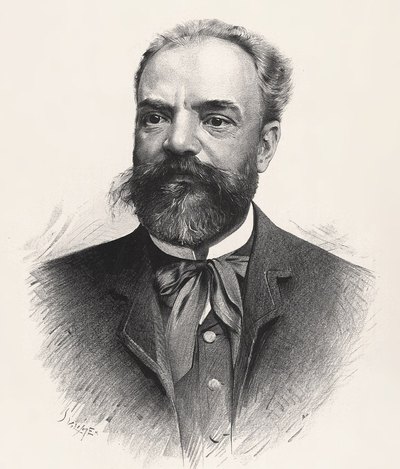 Antonín Dvořák1841–1904 · born in Nelahozeves, Czech RepublicMore on Dvořák →
For moods like
Anxious · Restless
fast · minor key · energy 5
Find more pieces in Listen by Mood →