
Details
- Composer
- Camille Saint-Saëns
- Catalogue no.
- Op. 28
- Key
- A minor
- Scoring
- Orchestra
- Length
- about 9 min
Recording
Morning music at 7
Track info
「Rondo in A minor」Performed by Skidmore College OrchestraWikimedia CommonsPublic Domain
About this piece
At first the violin sings slowly, almost sighing. Then the rhythm suddenly starts to bounce, and it leaps into the middle of a Spanish dance.
At a glance
- What it isa single-movement piece for solo violin and orchestra, made of a slow Introduction and a capricious, brilliant Rondo.
- Who, when, whySaint-Saëns, twenty-eight, wrote it in 1863 for the young Spanish violinist Pablo de Sarasate.
- What to listen forthe gloomy melody of the introduction, the bouncing rhythm of the rondo theme, and the breathless virtuosity of the ending.
Listen for
- The introductionover a light string accompaniment, the violin sings a lonely, slow song.
- The rondo themea theme of short, springy rhythms appears and returns several times, with new tunes slipping in between.
- The endingthe violin pours out very fast notes and finishes in a blaze.
When it was written
Sarasate was a Spanish-born violin virtuoso who had already made his name in Europe as a teenager. Saint-Saëns wrote a violin concerto and this piece for him, and Sarasate made them widely known by playing them on many stages. The Spanish rhythms throughout recall the performer's homeland.
A rondo is a piece in which the same theme returns again and again with other tunes in between. "Capriccioso" means capricious, so this is a dance that keeps returning on a whim.
A question to think about
Saint-Saëns shaped the music to one performer's talent and home colors, and the performer carried it to the world: composer and performer made each other shine. Today, in the performance and content industries, conflicts often arise over the shares of those who create and those who deliver.
What do people who made something together need so that they shine together rather than fight over their shares?
The composer
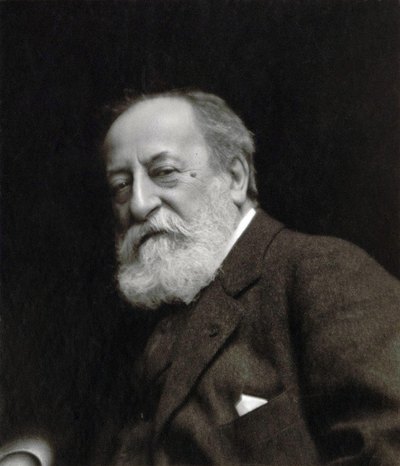 Camille Saint-Saëns1835–1921 · born in Paris, FranceMore on Saint-Saëns →
For moods like
Anxious · Stuck · Focused
moderate tempo · minor key · energy 3
Find more pieces in Listen by Mood →