
Details
- Composer
- Camille Saint-Saëns
- Catalogue no.
- Op. 22
- Key
- G minor
- Scoring
- Piano and orchestra
- Length
- about 11 min
Recording
Morning music at 7
Track info
「Piano Concerto No. 2」Performed by University of Iowa School of Musicrecorded 2019Wikimedia CommonsCC BY 3.0
About this piece
It is a concerto, yet it begins not with the orchestra but with the piano alone, like a Bach-style prelude an organist might improvise before a service. Saint-Saëns's Second Piano Concerto opens in this solemn way.
At a glance
- What it isthe first movement of Piano Concerto No. 2 in G minor, a slow Andante sostenuto, with the notes well sustained.
- Who, when, whywritten in 1868 by the thirty-two-year-old Saint-Saëns in little more than three weeks for the Paris conducting debut of his friend Anton Rubinstein. Saint-Saëns played the piano himself.
- What to listen forthe opening the piano spreads out alone, and the moment the orchestra enters heavily.
Listen for
- Alonewithout the orchestra, the piano spreads out chords and quick figures at a free tempo, recalling an organ improvisation.
- The entrancethe orchestra comes in with heavy chords, and the piano sings a sad, stately theme in G minor.
- Alone againnear the end the piano again has a long solo passage, then closes solemnly with the orchestra.
When it was written
Saint-Saëns, organist of the Madeleine in Paris, excelled at improvisation. When the famous Russian pianist Rubinstein was to make his debut as a conductor in Paris, Saint-Saëns offered to write a new concerto and play the solo. There was little time to rehearse, and it is said the first performance left something to be desired.
The concerto begins in a solemn Bach-like manner and ends, in its last movement, with a lively dance. Hence the story that a pianist once said it 'begins with Bach and ends with Offenbach'. Offenbach was a composer of light operettas popular in Paris.
A question to think about
Saint-Saëns wrote a large concerto in a short time for his friend's debut. He gave his time and talent for a friend.
Is it good friendship to put off your own work or overstretch yourself to help a friend succeed? What is needed so that a relationship of mutual help does not turn into one side's sacrifice?
The composer
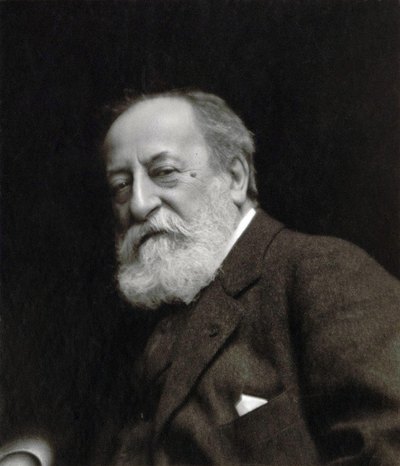 Camille Saint-Saëns1835–1921 · born in Paris, FranceMore on Saint-Saëns →
For moods like
Anxious · Stuck · Focused
moderate tempo · minor key · energy 3
Find more pieces in Listen by Mood →