Composers · Romantic
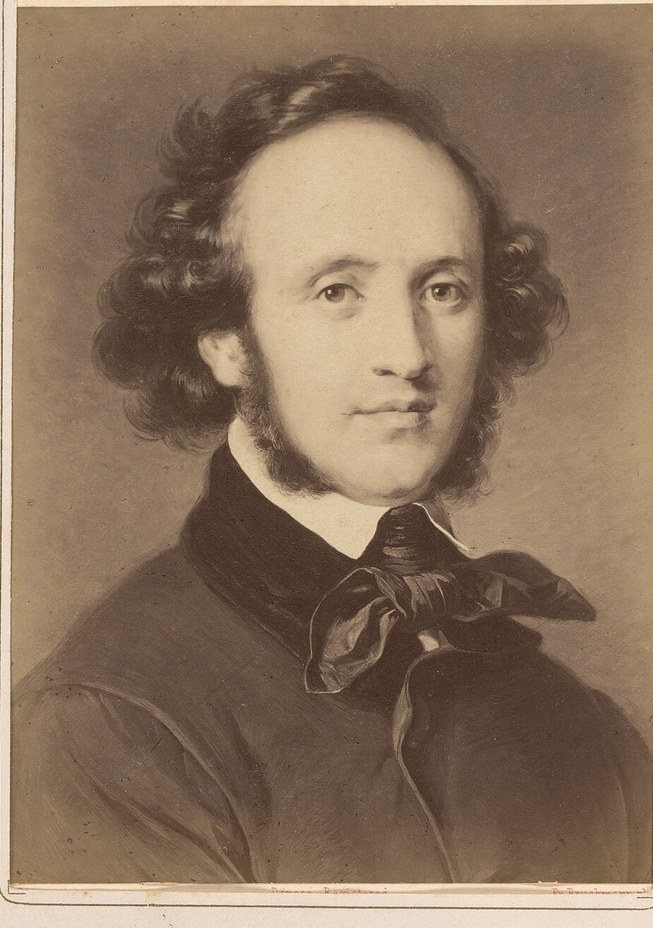
Felix Mendelssohn
Felix Mendelssohn Bartholdy
- Life
- 1809–1847
- Born in
- Hamburg, Germany
- Era
- Romantic
The story of Mendelssohn
1825, a mansion in Berlin. Every Sunday a small concert was held in its large hall. That day's piece was an octet for eight string instruments, and its composer was a sixteen-year-old boy. It is still counted among the masterpieces of chamber music. This is Felix Mendelssohn.
A family of scholars and bankers
Mendelssohn was born in Hamburg in 1809. His grandfather was the celebrated Jewish philosopher Moses Mendelssohn, and his father a banker. The family soon moved to Berlin, and the children were baptized as Protestants. The family even added "Bartholdy" to their name, a choice made to escape the discrimination Jews faced in German society at the time.
Sunday concerts
The Mendelssohns spared nothing in educating their children. Felix and his sister Fanny learned not only music but drawing, several languages and classical literature. He studied composition with Carl Friedrich Zelter, a friend of Goethe. Sunday concerts at home let Felix try out his music with performers. At sixteen he wrote the Octet; at seventeen, the overture to A Midsummer Night's Dream.
Bringing Bach back
In 1829, at twenty, Mendelssohn conducted Bach's St Matthew Passion in Berlin, a work that had gone almost a century without a proper performance. It caused a sensation and helped spark the revival of Bach's music.
The traveling young man
Afterwards he traveled at length in England, Scotland and Italy. The Scottish sea became The Hebrides overture; Italian sunlight became the "Italian" Symphony. A fine artist too, he left many drawings of the places he visited.
Leipzig
In 1835 Mendelssohn became conductor of the Leipzig Gewandhaus Orchestra. He raised the standard of its concerts greatly and even gave the first performance of Schubert's "Great" Symphony. In 1843 he founded the Leipzig Conservatory to train young musicians. Much loved in England as well, he crossed nearly ten times, and in 1846 premiered his oratorio Elijah in Birmingham.
An early end, and after
In May 1847 his sister Fanny, closest to him all his life, died suddenly. Devastated, Mendelssohn died that November at thirty-eight. Later, Nazi Germany banned his music because his family was Jewish, and even removed his statue that stood in Leipzig.
Music to hear on Pyeongeum
- The Hebrides overture, the Violin Concerto in E minor, the Wedding March from A Midsummer Night's Dream, "Spring Song" from Songs Without Words, and String Quartet No. 6.
Start with the bright, poised "Spring Song" and Wedding March, and end with String Quartet No. 6, written the year he lost his sister. You will hear how deep a grief Mendelssohn, known only for brightness, poured into his last music.
People around him
- His sister Fanny Mendelssohn: a pianist and composer every bit his equal, and his first audience all his life.
- Carl Friedrich Zelterhis composition teacher.
- Ferdinand Davidthe Gewandhaus concertmaster who helped refine the Violin Concerto.
- Robert Schumanna colleague in Leipzig.
A question to think about
The Mendelssohn family changed even their religion and name to escape discrimination, yet after his death the Nazis banned his music and removed his statue because his family was Jewish. People and their achievements erased because of their origins is a story history repeats.
What responsibility do we have today to recover the names and achievements of people erased because of their origins or background?
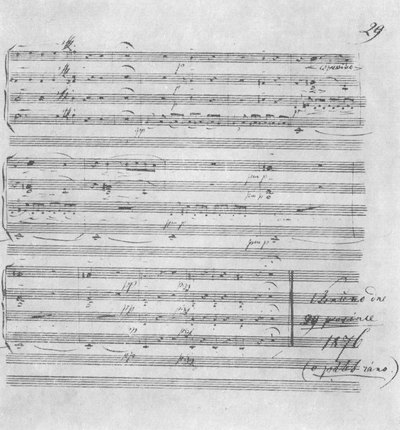
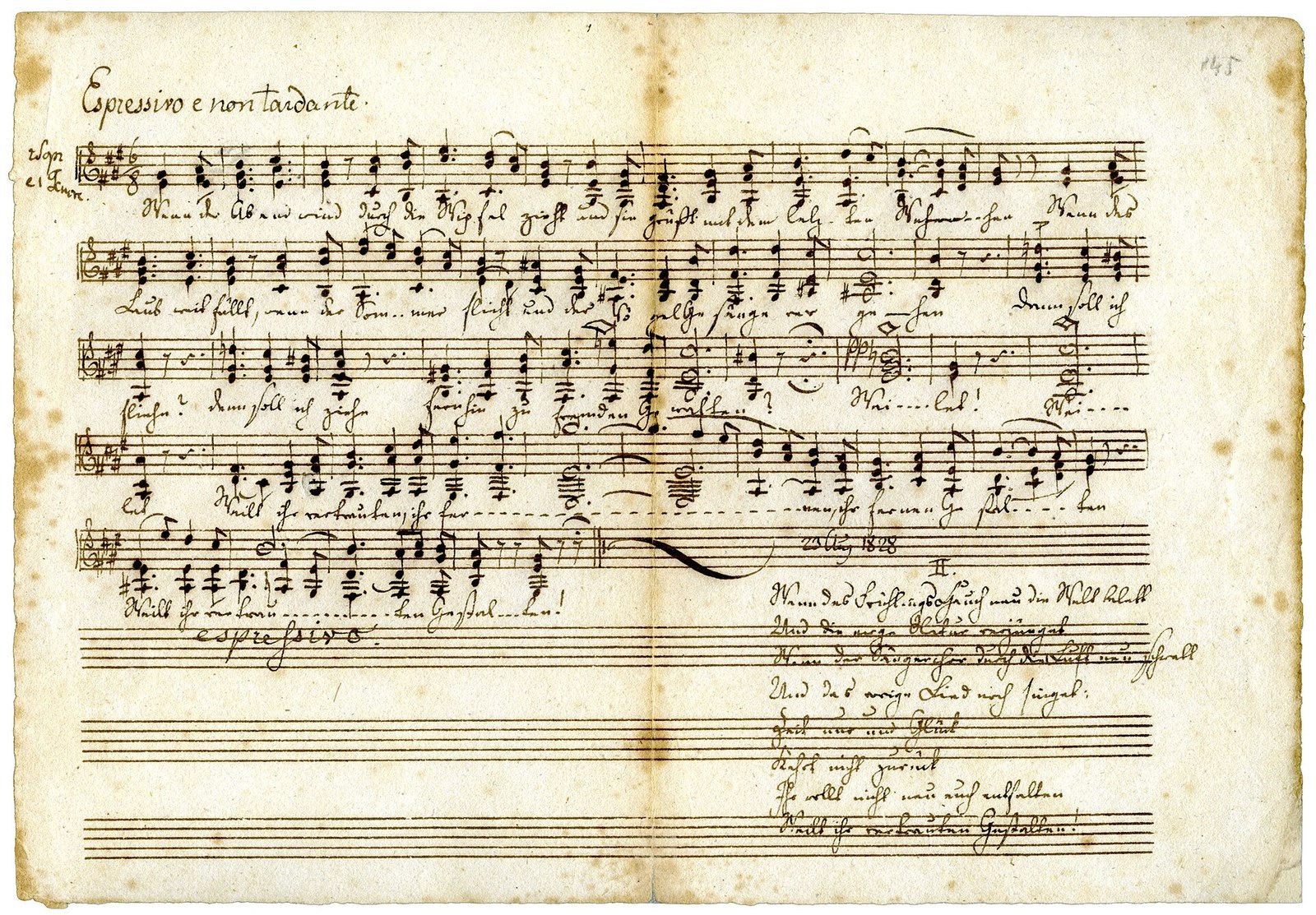
In the composer's own hand
Pieces by Mendelssohn
Hidden stories about Mendelssohn
Composers of the same age
People whose lives overlapped with Mendelssohn's by more than ten years