Composers · Classical
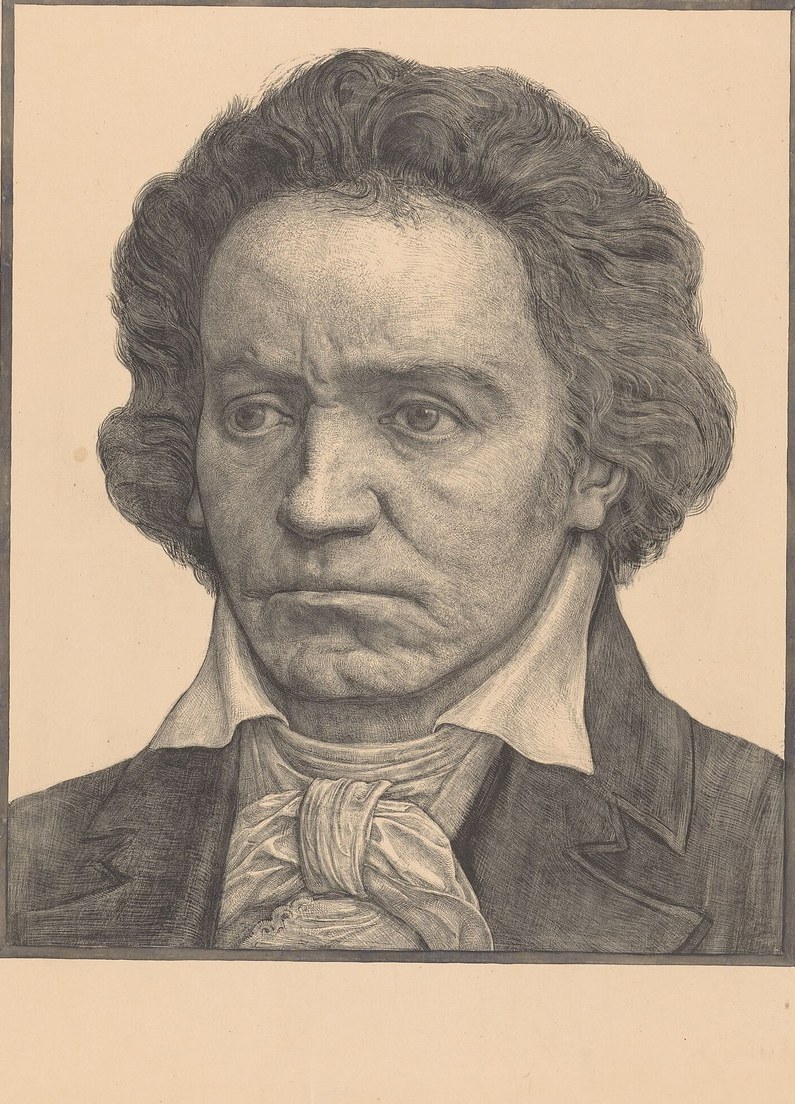
Ludwig van Beethoven
Ludwig van Beethoven
- Life
- 1770–1827
- Born in
- Bonn, Germany
- Era
- Classical
The story of Beethoven
Autumn 1802, Heiligenstadt, a village outside Vienna. A thirty-two-year-old composer writes a long letter to his brothers. As his hearing failed he had begun to avoid people, and had even thought of death, but art had held him back. He never sent it and kept it all his life. This is Ludwig van Beethoven's "Heiligenstadt Testament."
The boy from Bonn
Beethoven was born in Bonn, Germany, in 1770. His grandfather was music director at the Bonn court and his father a court singer. His father drove him hard at the piano, hoping to make a prodigy like Mozart, but sank into drink and could not properly look after the family. As a teenager Beethoven worked as a court organist to help support them.
In Bonn he studied with the organist Christian Gottlob Neefe and learned Bach's Well-Tempered Clavier. Then in 1792, at twenty-one, he left for Vienna to study with Haydn. He never went back to Bonn.
The pianist of Vienna
In Vienna Beethoven first captivated aristocratic salons with his brilliant improvising. Several nobles supported him, but he refused to be anyone's servant. The "Pathétique" and "Moonlight" sonatas and his First and Second Symphonies came from this time.
But from the late 1790s his ears began to ring and his hearing to fail. In 1801 he first confessed the secret in a letter to a friend. It threatened to destroy his future as a performer.
The "Eroica" and after
Through despair, Beethoven began writing bigger, bolder music. He first meant his Third Symphony to honor Napoleon, but on hearing that Napoleon had made himself emperor, he scratched out the dedication on the title page, according to his pupil Ries. The Fifth and Sixth Symphonies, the Violin Concerto and the opera Fidelio followed.
In his last years, nearly deaf, Beethoven conversed with people through notebooks. A long legal battle for custody of Karl, his late brother's son, wore him down. Even so, he left works ahead of their time: the Ninth Symphony, the Missa solemnis and his last string quartets.
1827, Vienna
Beethoven died in Vienna in March 1827. Crowds of citizens are said to have filled the streets for his funeral. Among the torchbearers was the young Schubert.
Music to hear on Pyeongeum
- Piano Sonata No. 14 "Moonlight," first movement: the fifth stop on our Music Journey.
- Symphony No. 5 first movement, Symphony No. 6 "Pastoral" first movement, Symphony No. 7 second movement, Symphony No. 9 fourth movement.
- Für Elise, and the slow movement of the "Pathétique" sonata.
People around him
- Christian Gottlob Neefehis teacher in Bonn, who first introduced him to the world.
- Joseph Haydnhis teacher in Vienna, though their relationship was not always easy.
- Archduke Rudolph and aristocratic patrons: who promised him a lifetime annuity so he would stay in Vienna.
- His nephew Karlwhom Beethoven tried to raise like a father, though they made each other's lives hard.
A question to think about
After losing his hearing, Beethoven avoided people and hid the fact for years, afraid that revealing his disability would cost him work and reputation. Today, too, many people work while hiding physical or mental difficulties.
For our society to be one where workers can speak openly about their difficulties without losing their jobs, what must workplaces change?
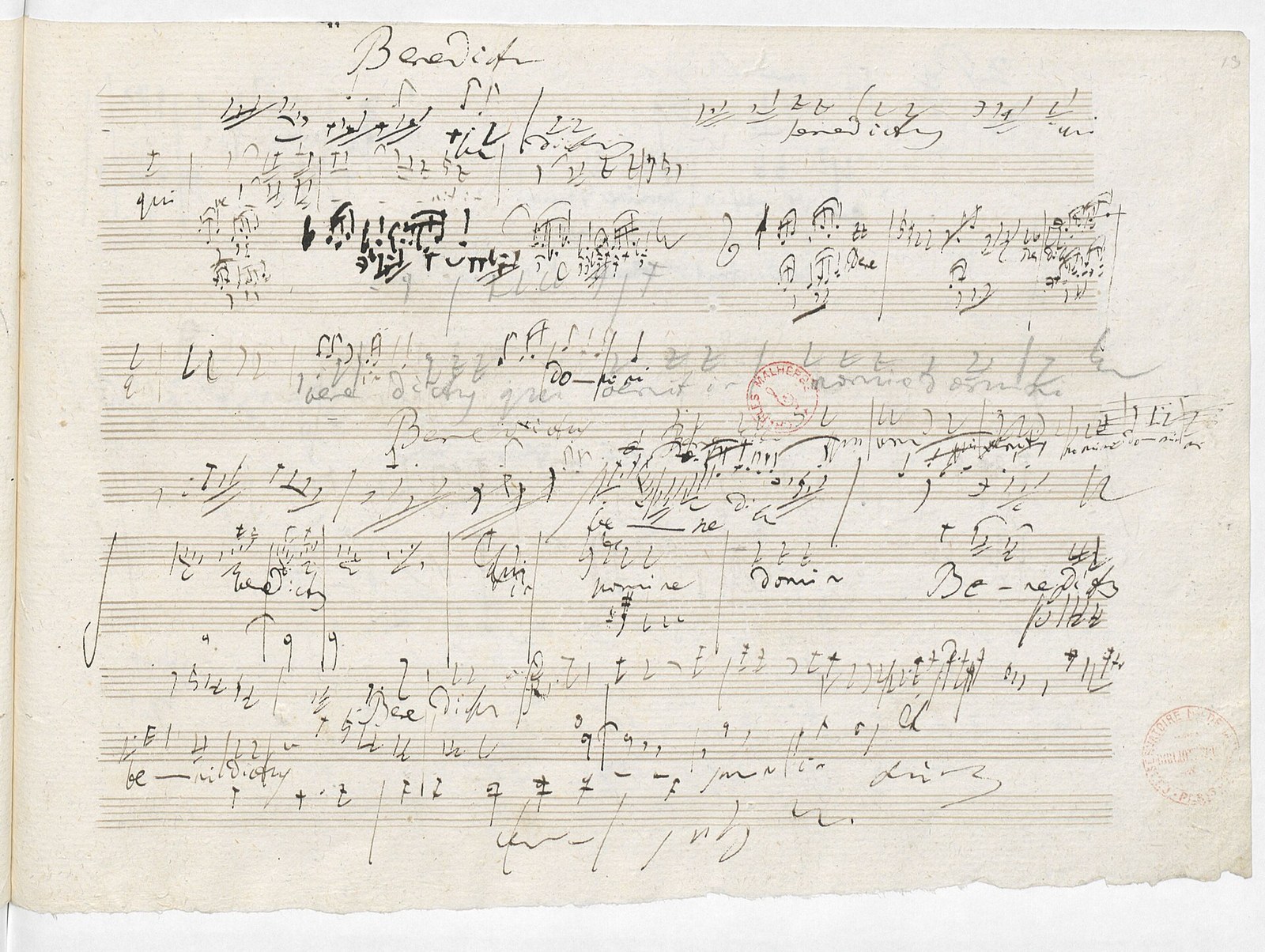
In the composer's own hand
Pieces along a life
Each dot is a piece on Pyeongeumjae — tap one to open it. The year is whichever is confirmed: composed, completed, published or premiered.
Pieces by Beethoven
- Symphony No. 5I. Allegro con brio · premiered 1808 · aged about 38 · about 8 min
- String Quartet No. 6Movement IV · about 8 min
- Piano Sonata No. 15Movement III · about 2 min
- Symphony No. 4II. Adagio · about 10 min
- Symphony No. 6II. Andante · about 11 min
- Symphony No. 6III. Allegro · about 3 min
- Symphony No. 8Movement IV · about 8 min
Hidden stories about Beethoven
Composers of the same age
People whose lives overlapped with Beethoven's by more than ten years