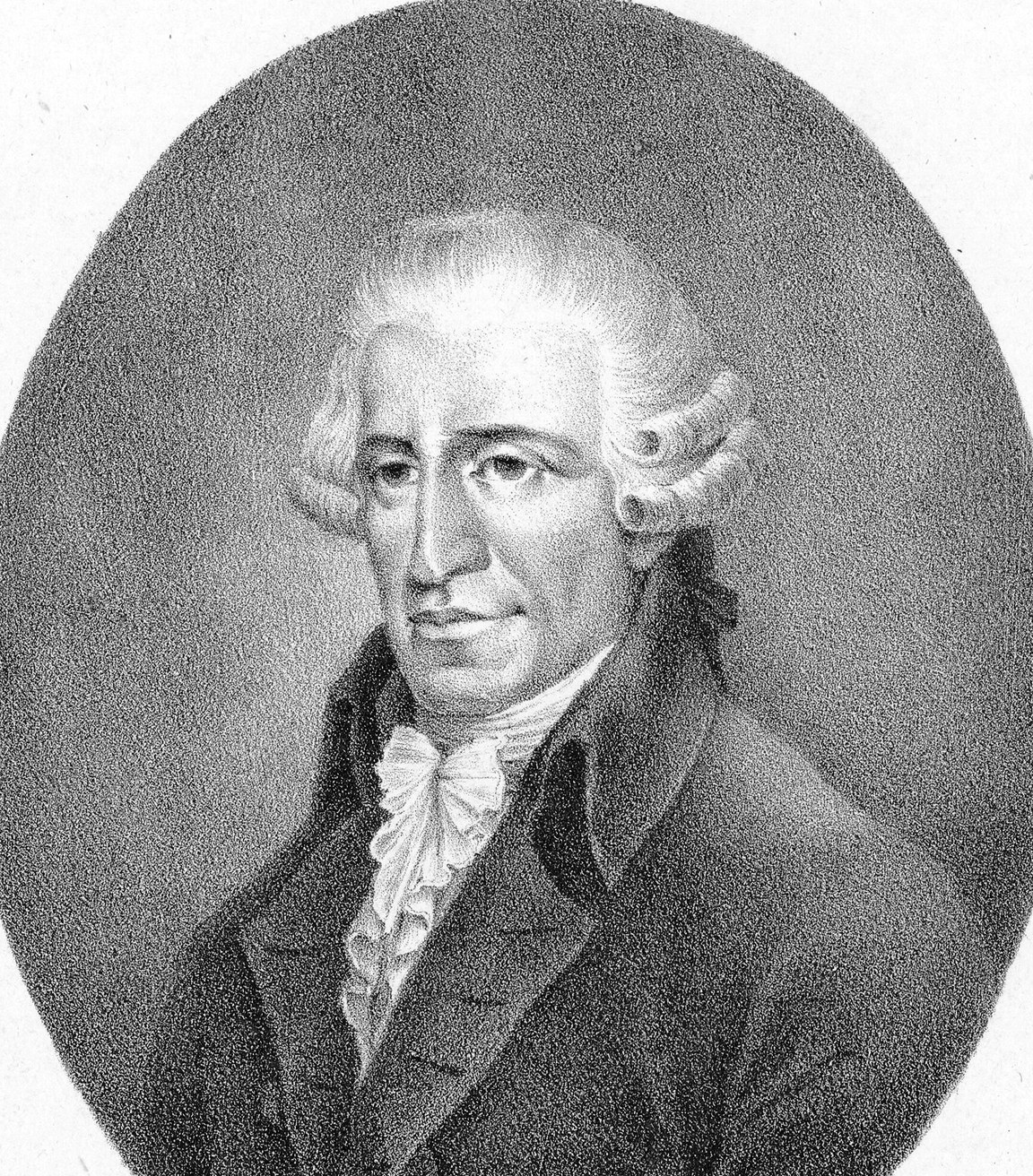
The story of Haydn
One day a choirboy, as a prank, cut off the braid of the boy in front of him. His voice was already breaking. In the end, the story goes, he was dismissed from the choir and turned out onto the streets of Vienna. Joseph Haydn's story began in poverty.
The boy from Rohrau
Haydn was born in 1732 in Rohrau, a village at the eastern edge of Austria, the son of a wheelwright. His father could not read music but loved singing to his own harp. A relative who noticed the boy's clear voice took him at six to teach him music, and later he became a choirboy at St Stephen's Cathedral in Vienna.
A street musician
After leaving the choir when his voice broke, Haydn lived in great poverty for several years. He gave lessons and played in street serenade bands, living in an attic room, while studying composition on his own. For a time he worked as accompanist and servant to the Italian composer Porpora, learning composition and how to teach singing by watching.
The Esterházy court
In 1761 Haydn became vice-music director to the Esterházy family, among Hungary's grandest nobles, and soon music director. For nearly thirty years he wrote symphonies, operas and chamber music for the family and led its orchestra. The lavish summer palace Prince Nikolaus built at Eszterháza lay far from Vienna.
Haydn later told his biographer something to the effect that, cut off from the world, he could not imitate others and so was forced to become original. In these years he shaped the symphony and string quartet, earning the later titles "father of the symphony" and "father of the string quartet."
Friendship with Mozart
In the 1780s Haydn formed a deep friendship with Mozart, twenty-four years his junior. They even played string quartets together, and Mozart dedicated six quartets to Haydn. Haydn reportedly told Mozart's father that his son was the finest composer he knew in person or by name.
London
When Prince Nikolaus died in 1790, Haydn, approaching sixty, set out on his first long journey. Invited to London by the impresario Salomon, he presented twelve "London" symphonies over two visits and was received with great acclaim. Oxford University awarded him an honorary doctorate.
Last years in Vienna
Back in Vienna Haydn wrote the oratorios The Creation and The Seasons. In 1797 he composed a song for the Austrian emperor whose melody later became that of the German national anthem. In 1809, with Napoleon's army occupying Vienna, Haydn died at seventy-seven.
Music to hear on Pyeongeum
- The finale of Symphony No. 45 "Farewell," the second movement of Symphony No. 94 "Surprise," and the "Lark" String Quartet.
Hearing the witty departures of the "Farewell" and the playful crash of the "Surprise," you can tell how much Haydn loved to delight his listeners with surprises.
People around him
- Prince Nikolaus Esterházy: the employer who kept Haydn for nearly thirty years.
- Wolfgang Amadeus Mozarta friend across the generations.
- Johann Peter Salomonthe impresario who brought Haydn to London.
- Ludwig van Beethoventhe young pupil who studied with Haydn in Vienna.
A question to think about
For nearly thirty years Haydn worked at a nobleman's court, wearing a servant's livery, yet he created new music there. Then, free of that frame, he was applauded by crowds of citizens in London.
Between staying in a secure job and setting out freely to find your own path, which better lets people's talents flourish? And is that choice equally open to everyone?
Pieces by Haydn
Hidden stories about Haydn
Composers of the same age
People whose lives overlapped with Haydn's by more than ten years