Composers · Baroque
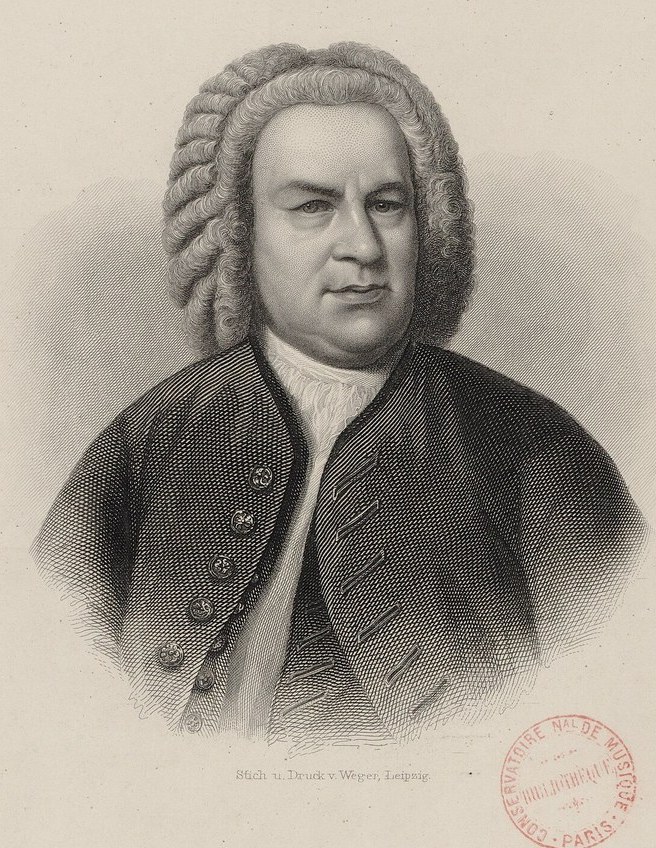
Johann Sebastian Bach
Johann Sebastian Bach
- Life
- 1685–1750
- Born in
- Eisenach, Germany
- Era
- Baroque
The story of Bach
Autumn 1705. A twenty-year-old organist takes leave and sets out for Lübeck, a city on the northern coast, to hear the aged master Buxtehude play the organ. He reportedly went on foot, hundreds of kilometers. And he stretched a four-week leave to nearly four months. This is Johann Sebastian Bach.
An orphan in a family of musicians
Bach was born in Eisenach, Germany, in 1685, into a family that had produced town and church musicians for generations. But he lost his mother at nine and his father at ten. Young Bach grew up and learned music in the home of his eldest brother, Johann Christoph, an organist in Ohrdruf. At fifteen he went north to Lüneburg, studying while singing in a school choir.
The young organist
At eighteen Bach became organist at a church in Arnstadt. He was brilliant but often clashed with church elders. He was criticized for filling hymn accompaniments with too many strange harmonies, and scolded for returning so late from Lübeck. He moved on via Mühlhausen to become court organist at Weimar, where he wrote much of his organ music.
From Weimar to Köthen
When he tried to leave Weimar to become music director at Köthen, the Duke of Weimar would not easily let him go. Bach insisted so stubbornly on resigning that he was locked up for nearly a month. At Köthen, from 1717, under the young, music-loving Prince Leopold, he poured out instrumental works: the Brandenburg Concertos, works for unaccompanied violin and cello, and Book I of the Well-Tempered Clavier.
He also suffered great grief there. Returning from a journey in 1720, he found that his first wife, Maria Barbara, had died and was already buried. The next year he married the singer Anna Magdalena. Bach had twenty children by his two wives, but only about half survived to adulthood.
Cantor of Leipzig
From 1723 until his death, Bach served as Thomaskantor in Leipzig, responsible for church music and the school choir. In his first years he performed a new cantata almost every week. Great works like the St Matthew Passion and St John Passion came from here. The work was hard, with frequent quarrels with the town council, but he also led a student orchestra and gave coffee-house concerts.
With failing eyesight in old age, Bach underwent eye surgery in 1750, with poor results, and died that July. His music was soon regarded as old-fashioned, but his sons and pupils preserved the scores. When the young Mendelssohn staged the St Matthew Passion again in 1829, Bach's music awoke once more.
Music to hear on Pyeongeum
- Orchestral Suite No. 3, Air: a song for strings alone while the trumpets rest. It is the third stop on our Music Journey.
- Cello Suite No. 1, Prelude: one cello creating harmony and melody on its own.
- The Well-Tempered Clavier Book I Prelude in C, the chorale from Cantata 147, the Aria of the Goldberg Variations, Brandenburg Concerto No. 3 and more.
People around him
- His eldest brother Johann Christoph Bach: the organist who took in his orphaned brother and taught him music.
- Anna Magdalena Bachhis second wife, a singer, who copied out many of his scores.
- His sonsCarl Philipp Emanuel, Johann Christian and others made their names in new styles different from their father's.
- Felix Mendelssohnwho revived the St Matthew Passion a century later.
A question to think about
After Bach died, his music was pushed aside as old-fashioned for a time, then highly valued again about a century later. What one age dismisses as outdated often becomes treasure for the next. Among the old things we so easily discard today, there may be such treasures too.
In a society that chases the new, whose responsibility is it to preserve traditions and old works that are not popular now?
In the composer's own hand
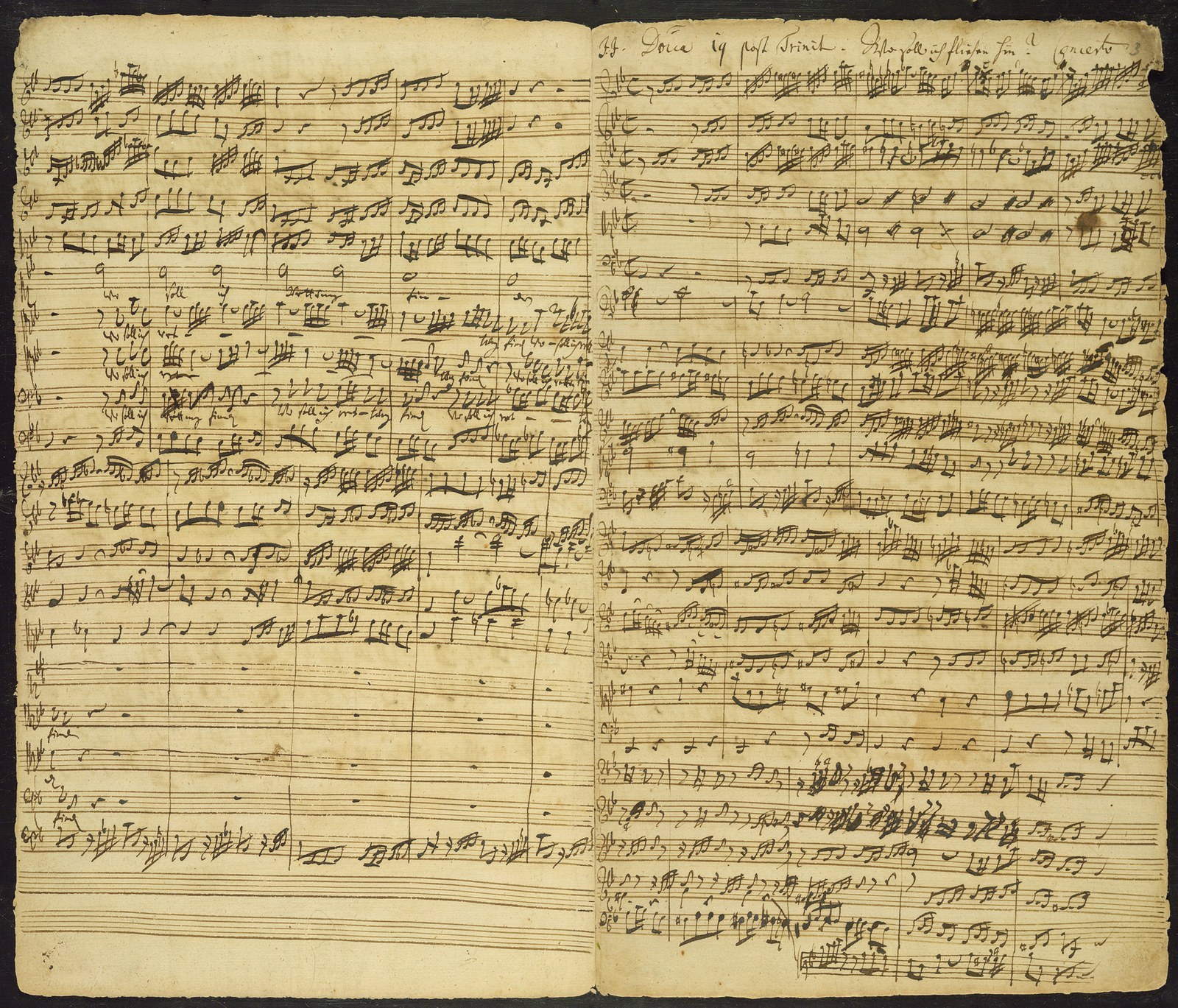
Pieces along a life
Each dot is a piece on Pyeongeumjae — tap one to open it. The year is whichever is confirmed: composed, completed, published or premiered.
Pieces by Bach
- Brandenburg Concerto No. 3I. Allegro · completed 1721 · aged about 36 · about 6 min
- The Well-Tempered Clavier, Book I: Prelude No. 1completed 1722 · aged about 37 · about 2 min
- Violin Sonata No. 1I. Adagio · about 5 min
- Cello Suite No. 1Movement II · about 4 min
- Cello Suite No. 1Movement III · about 3 min
- Organ Sonata in E-flat majorMovement I · about 3 min
- Organ Sonata in E-flat majorMovement III · about 4 min
- Organ Sonata in C minorMovement I · about 4 min
- Organ Sonata in C minorMovement III · about 5 min
Hidden stories about Bach
Composers of the same age
People whose lives overlapped with Bach's by more than ten years