
Variations for a Sleepless Count: How Much Is True?
The Goldberg Variations come with a tale of an insomniac count and a young harpsichordist. Yet the score itself shows no trace of it.
A night in Dresden. Count Keyserlingk, the Russian envoy, cannot sleep. He calls into the next room: "Goldberg, play me one of my variations." And a young harpsichordist sits at the keyboard and plays softly until the count drifts off.
A biographer's story
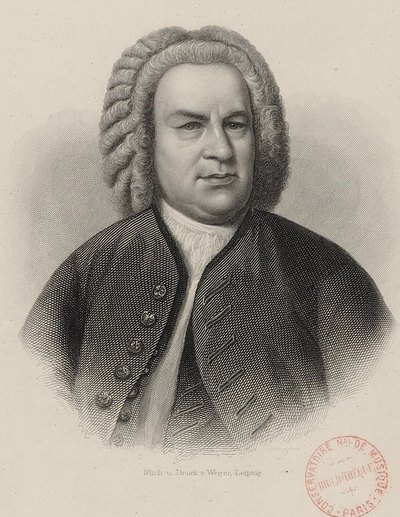
This scene comes from Johann Nikolaus Forkel, who in 1802, about half a century after Bach's death, wrote the first biography of him. According to Forkel, the count asked Bach for harpsichord music to soothe his sleepless nights, was delighted with the result, and rewarded him with a golden goblet filled with gold coins. Because of this story, the work got its nickname from the player: the Goldberg Variations.
Forkel gathered material by corresponding directly with Bach's sons, so the tale is probably not baseless. But scholars point to some odd details.
Pieces that don't fit
First, when Bach published the work around 1741, the title page named no count and carried no dedication. A work that had earned a nobleman's generous reward would usually say so on its cover. The title page says only that it was made to refresh the spirits of music lovers.
Second, there is the player's age. When the music appeared, Johann Gottlieb Goldberg was a boy of about fourteen. He was reportedly very gifted, but it is hard to believe he played such a difficult work night after night at that age.
So many people today take this view: Bach may well have known the count, and Goldberg may have studied with Bach, but the claim that the music was written from the start for the count's insomnia is uncertain.
The aria that comes home
The real wonder of this work lies in the score, not the story. It opens with a slow, graceful aria, followed by thirty variations built on the aria's bass line. Every third variation is a canon, a round in which one voice follows another with the same melody, and the distance between the two voices widens by one step each time. At the end, the opening aria returns without a single note changed. It is like coming home from a long journey to the same room and finding that it feels completely different.
A question to think about
Forkel's story rests on shaky ground, yet it became the work's name and has travelled with it for over two hundred years. A good story spreads faster than fact-checking, and once it becomes a name it is hard to correct. In the news and online, too, a label once attached rarely comes off.
When an uncertain story has already hardened into a name, should we keep using that name? And if we do, what should we make clear alongside it?
Johann Sebastian Bach1685–1750Read the story of Bach →