
Vivaldi Reappears From a Box of Old Scores
Long forgotten after his death, hundreds of Vivaldi's works resurfaced at an Italian school in the 1920s. In between, it was Bach who kept his name alive.
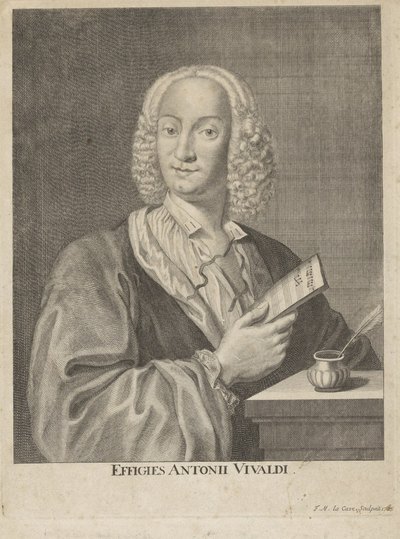
Northern Italy, the late 1920s. A school decides to sell a bundle of old music to pay for building repairs. The musicologist asked to assess it, Alberto Gentili, opens the boxes and nearly stops breathing. Inside is a mountain of manuscripts in Antonio Vivaldi's own hand.
The forgotten Red Priest
In his lifetime Vivaldi was known across Europe. He staged operas in Venice and published concerto collections in Amsterdam. But his popularity faded in later years, and after travelling to Vienna in search of new opportunities, he died there in 1741.
Afterwards his name was quickly forgotten. Audiences always wanted new music, and the concertos of a past generation soon seemed old-fashioned. By the nineteenth century only a handful of people knew who Vivaldi was.
The man who remembered: Bach
Yet through that long silence, one thread still held Vivaldi. That thread was Bach. As a young man, Bach studied Vivaldi's concertos and transcribed several of them as solo pieces for organ and harpsichord. Copying out other composers' music was a good way to learn composition in those days.
When Bach's music began to attract new attention in the nineteenth century, scholars searching for the composers behind Bach's arrangements came upon Vivaldi's name again. In a sense, Bach brought Vivaldi's name back into circulation.
A collection named for two sons
Back to the 1920s. Gentili's find was so valuable that the national library needed to buy it, but the money wasn't there. Two wealthy men from Turin, Roberto Foà and Filippo Giordano, stepped in one after the other. The other half of the collection had been scattered to another branch of the family, and Gentili spent years tracking it down and reuniting it.
The two donors named the manuscripts after their sons, who had died young. To this day Vivaldi's manuscripts at the National University Library in Turin are called the Foà and Giordano collections. From them a wealth of concertos, operas and sacred works came back to life, and Vivaldi became one of the most frequently recorded Baroque composers of the twentieth century.
The slow movement of "Winter" heard today is part of that revival. As a violin sings a warm melody, the other strings pluck their strings with their fingers to make the sound of rain outside the window. The poem printed with the music describes resting comfortably by the fire while outside the rain soaks everything.
A question to think about
If the school had not needed money for repairs, and if two wealthy men had not paid, Vivaldi's manuscripts might have been scattered or lost. Today, too, precious old records and cultural treasures decay for lack of funds or are sold into private hands.
Should protecting records that belong to everyone's heritage be left to the goodwill of a few wealthy people, or should society take shared responsibility?
Antonio Vivaldi1678–1741Read the story of Vivaldi →