
Details
- Composer
- Johann Sebastian Bach
- Catalogue no.
- BWV 525
- Key
- E-flat major
- Scoring
- Organ
- Length
- about 3 min
Recording
Morning music at 7
Track info
「Organ Sonata in E-flat major」Performed by Johannes-Ernst Köhler, organistrecorded 1960Wikimedia CommonsCC BY 1.0
About this piece
An organist plays the manuals with both hands and the pedal keyboard with both feet. In this sonata Bach gave the right hand, the left hand and the feet one separate line each. It is a piece in which one person performs as a trio.
At a glance
- What it isthe first movement of the first of six trio sonatas for organ. It begins brightly and briskly, with no tempo marking.
- Who, when, whyBach gathered the six together in Leipzig around 1730. His early biographer Forkel wrote that they were made for the practice of his eldest son, Wilhelm Friedemann.
- What to listen forthe right and left hands trading the same theme, and the pedal walking underneath.
Listen for
- The first themethe right hand presents a bright theme, and a moment later the left hand takes it up.
- Three strandswhile the two hands' lines cross each other, the feet hold the beat in the bass. If following all three at once is hard, pick one line at a time.
- The closethe theme comes back in the home key of E-flat major and the movement ends brightly.
When it was written
In Bach's time a 'trio sonata' was usually chamber music for two high instruments with a bass accompaniment. Bach moved that texture onto a single organ. Because each hand has to play on its own keyboard, the pieces were ideal for learning to move both hands and the feet completely independently.
Forkel recorded that Bach wrote these pieces for Wilhelm Friedemann and that his son became a fine organist through them. Some movements among the six are known to be reworkings of music Bach had written earlier.
A question to think about
It is said that a father wrote this piece for his son's practice. It began as study material, yet today it is played in concert.
If something made for learners can be a fine work in its own right, where is the line between a textbook and a work of art? Have you met study material that felt like a work of art?
The composer
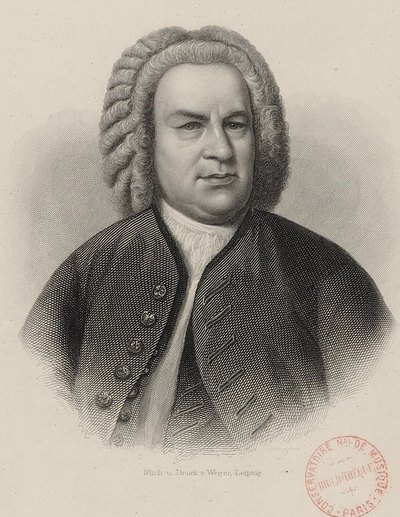 Johann Sebastian Bach1685–1750 · born in Eisenach, GermanyMore on Bach →
For moods like
Excited · Joyful
fast · major key · energy 4
Find more pieces in Listen by Mood →More by Bach
- Brandenburg Concerto No. 3I. Allegro · completed 1721 · about 6 min
- The Well-Tempered Clavier, Book I: Prelude No. 1completed 1722 · about 2 min
- Violin Sonata No. 1I. Adagio · about 5 min
- Cello Suite No. 1Movement II · about 4 min
- Cello Suite No. 1Movement III · about 3 min
- Organ Sonata in E-flat majorMovement III · about 4 min
- Organ Sonata in C minorMovement I · about 4 min
- Organ Sonata in C minorMovement III · about 5 min