Composers · Baroque
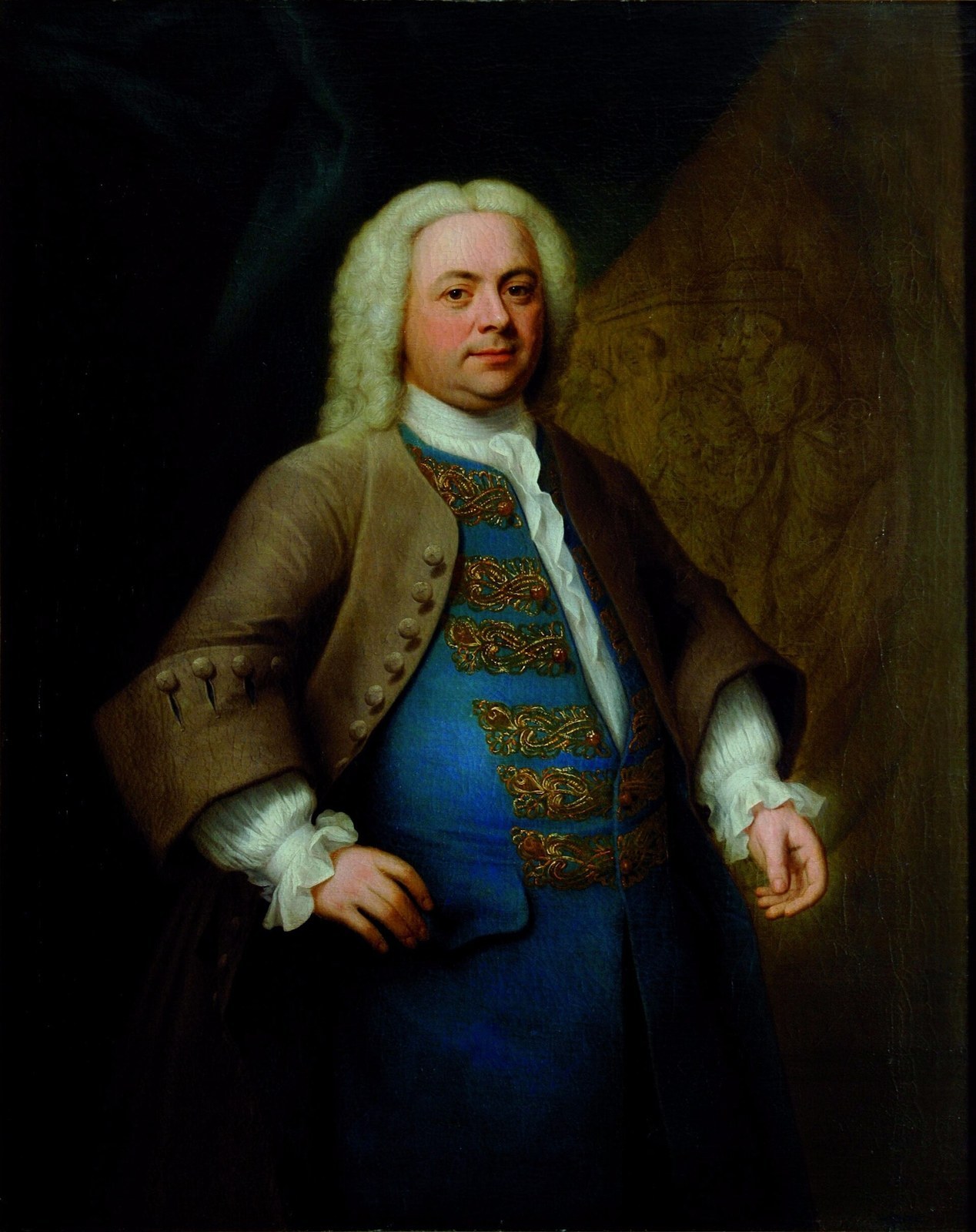
George Frideric Handel
Georg Friedrich Händel
- Life
- 1685–1759
- Born in
- Halle, Germany
- Era
- Baroque
The story of Handel
His father wanted him to become a lawyer. But young Georg Friedrich slipped off to the keyboard at every chance. He would end up a composer buried in Westminster Abbey.
1685, Halle
Handel was born in Halle, Germany, in 1685. Bach was born the same year, yet the two never met. His father, a barber-surgeon who served at court, is said to have frowned on his son's becoming a musician. Still, Handel studied with Zachow, the organist of Halle, and after his father's death entered university before soon turning to music for good.
From Hamburg to Italy
Around eighteen he went to Hamburg, a lively opera city, where he played violin in the opera orchestra and staged his first opera. Then, just past twenty, he left for Italy. Moving among Rome, Florence, Naples and Venice, he absorbed the singing lines of Italian opera and cantata. His opera Agrippina, staged in Venice, was a great success.
Hanover and London
In 1710 Handel became music director to the Elector of Hanover. But he soon took leave to visit London, where his Italian opera Rinaldo was a hit, and in the end he stayed. In 1714 that very Elector became King George I of Britain, so Handel found himself already established in the new king's country. It was around then, in 1717, that he wrote the Water Music for the king's river party on the Thames.
From opera to oratorio
In London Handel staged dozens of Italian operas and even ran theaters himself. But as tastes changed and competition grew fierce, his opera ventures suffered heavy losses more than once. The new path he found was the English oratorio: biblical stories told by soloists, chorus and orchestra without staging. Messiah, premiered in Dublin in 1742, became its emblem.
Last years
Handel became a British subject in 1727. In old age his eyesight failed until he was almost blind, yet he kept playing the organ and leading performances. He gave repeated charity performances of Messiah for London's Foundling Hospital, which cared for abandoned children. He died in London in 1759 and was buried in Westminster Abbey.
Music to hear on Pyeongeum
- Water Musicthe suite for the royal river party of 1717, also the first stop on our Music Journey, with trumpets and horns cutting through the wind.
- Messiah, "Hallelujah" chorus: the chorus closing Part Two of the oratorio, short shouts and long lines piling up ever larger.
- Concerto Grosso Op. 6 No. 2: one of twelve written in little more than a month in autumn 1739, a small solo group conversing with the full ensemble.
Heard side by side, the three pieces show Handel's three faces in turn: the musician of outdoor festivities, the choral composer of church and concert hall, and the instrumental composer of the chamber.
People around him
- Charles Jennenswho assembled biblical passages into the texts of Messiah and other oratorios.
- George I and the royal family: patrons who commissioned the Water Music, coronation anthems and other royal music.
- The Foundling Hospitalthe London children's home Handel supported with benefit concerts and the gift of an organ.
A question to think about
Handel was born in Germany, trained in Italy, became a naturalized Briton and stood at the center of English music. Today the British regard him as one of their own. Is a person's identity decided by where they were born, where they lived, or where they worked?
When someone comes from another country and contributes greatly to a society, from what point can we accept them as "one of us"?
In the composer's own hand
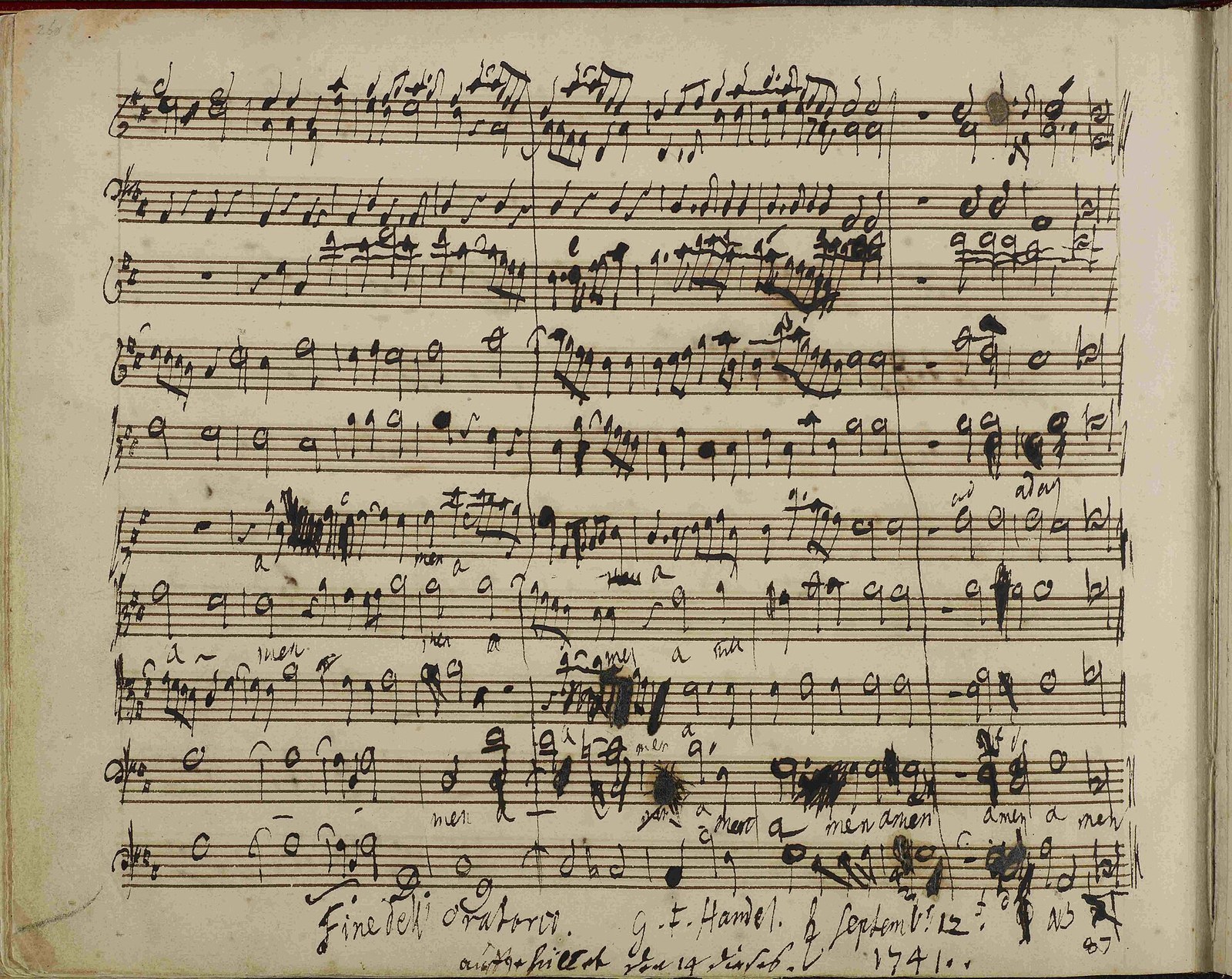
Pieces by Handel
- Concerto Grosso in G majorMovement I · about 2 min
- Concerto Grosso in G majorIV. Allegro · about 2 min
- Concerto Grosso in F majorMovement I · about 4 min
- Concerto Grosso in F majorIII. Largo · about 2 min
- Concerto Grosso in F majorII. Allegro · about 3 min
- Concerto Grosso in F majorMovement VI · about 2 min
- Suite in G minorIII. Allegro · about 1 min
Hidden stories about Handel
Composers of the same age
People whose lives overlapped with Handel's by more than ten years