
Details
- Composer
- George Frideric Handel
- Catalogue no.
- HWV 327
- Key
- F major
- Scoring
- Orchestra
- Length
- about 3 min
Recording
Morning music at 7
Track info
「Concerto Grosso in F major」Performed by L'Arco Magico Chamber Orchestrarecorded 2016Wikimedia CommonsCC BY 3.0
About this piece
Op. 6 No. 9 is a concerto in which Handel, writing twelve concertos in a month, took several movements from music he had written before and reworked them. The second movement, an Allegro, came from one of his organ concertos.
At a glance
- What it isa movement from Concerto Grosso Op. 6 No. 9. Marked Allegro, played fast.
- Who, when, whyHandel, then fifty-four, wrote all twelve in London in the autumn of 1739 and published them as a set the following year.
- What to listen forshort figures passing back and forth between high and low instruments.
Listen for
- The startthe full band brightly presents a theme in F major.
- Tradingshort figures pass between the violins and are repeated like echoes. The original organ concerto is known for passages that imitate birdsong.
- The returnthe opening theme comes back and ends brightly.
When it was written
In the autumn of 1739, in little more than a month, Handel wrote twelve concerti grossi in a burst. The following year he published them by subscription, and this set of twelve is today his Op. 6. In a concerto grosso a small group of solo instruments trades with a large string band; Handel took as his model the set of the same name by the Italian composer Corelli.
At the time Italian opera was losing favor in London, and Handel was turning to oratorios and odes with English words. These concertos were played between the acts of such performances to entertain the audience. This movement comes from his organ concerto known by the nickname 'The Cuckoo and the Nightingale'. Handel himself sometimes played organ concertos between the acts of his oratorios.
A question to think about
Handel often took his own earlier pieces and reworked them for other instruments. It was common practice at the time, though by today's standards it might be called 'recycling'.
Is taking up your own work again and reworking it laziness, or a way of refining a good idea further? How is it different from taking someone else's work?
The composer
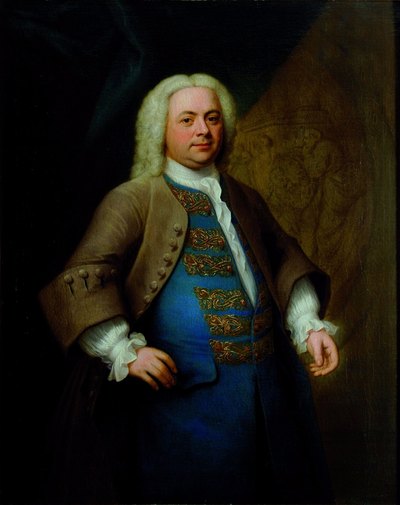 George Frideric Handel1685–1759 · born in Halle, GermanyMore on Handel →
For moods like
Restless · Excited
fast · major key · energy 5
Find more pieces in Listen by Mood →