
Details
- Composer
- George Frideric Handel
- Catalogue no.
- HWV 320
- Key
- F major
- Scoring
- Orchestra
- Length
- about 2 min
Recording
Morning music at 7
Track info
「Concerto Grosso in F major」Performed by L'Arco Magico Chamber Orchestrarecorded 2016Wikimedia CommonsCC BY 3.0
About this piece
The racing music stops for a while, and the strings walk step by step in slow chords. The third movement of Op. 6 No. 2, a Largo, is short, but it is a place for a deep breath.
At a glance
- What it isa movement from Concerto Grosso Op. 6 No. 2. Marked Largo, very slow and broad.
- Who, when, whyHandel, then fifty-four, wrote all twelve in London in the autumn of 1739 and published them as a set the following year.
- What to listen forthe slowly changing harmonies, and the tension and release they create.
Listen for
- A heavy stridethe whole string band steps forward chord by slow chord.
- Tensiona chord clashes for a moment and creates tension, then resolves in the next. Follow those moments.
- An open endingit stops on an open chord, ready to pass to the next quick movement.
When it was written
In the autumn of 1739, in little more than a month, Handel wrote twelve concerti grossi in a burst. The following year he published them by subscription, and this set of twelve is today his Op. 6. In a concerto grosso a small group of solo instruments trades with a large string band; Handel took as his model the set of the same name by the Italian composer Corelli.
At the time Italian opera was losing favor in London, and Handel was turning to oratorios and odes with English words. These concertos were played between the acts of such performances to entertain the audience. A slow movement changes the mood between quick ones and lets the listener catch their breath.
A question to think about
This short slow movement is a place to breathe between the quick ones. The whole comes alive only when there is a place to rest.
Today, when we are asked to run without stopping, do our lives have enough 'slow movements' like this? What can individuals and society do to protect time for rest?
The composer
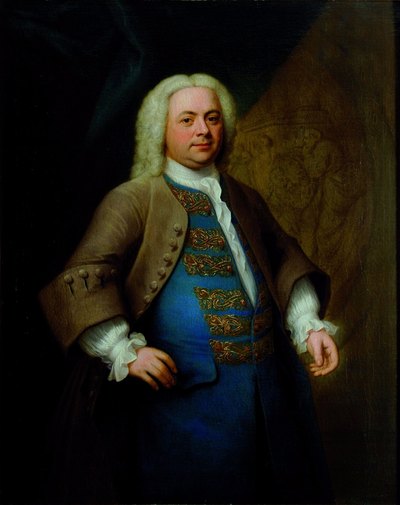 George Frideric Handel1685–1759 · born in Halle, GermanyMore on Handel →
For moods like
Calm · Grateful · Focused
slow · major key · energy 2
Find more pieces in Listen by Mood →