
The Newspaper Notice That Asked Ladies to Leave Their Hoops at Home
Before the 1742 Dublin premiere of Messiah, the papers asked ladies not to wear hooped skirts. The reason was charity.
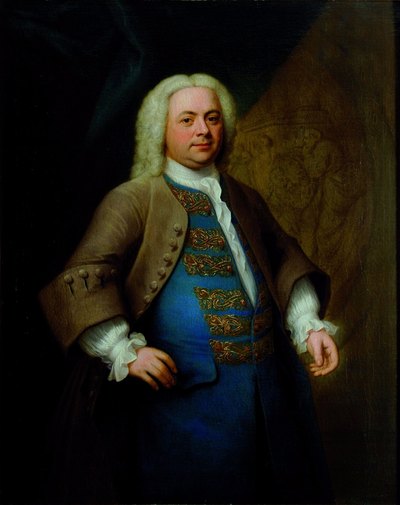
April 1742. A Dublin newspaper prints an odd request: ladies attending a coming concert are asked not to wear the hoops that puff out their skirts, and gentlemen not to wear swords, so that more people can fit in the hall. The concert was the premiere of Handel's Messiah.
A weary composer in London
Handel was then fifty-six. He had enjoyed great success in London with Italian opera, but tastes had changed and his opera business had grown difficult. He was looking for a new path.
In summer 1741 he began a new oratorio on a text that the librettist Charles Jennens had assembled from passages of the Bible. An oratorio tells its story with soloists, choir and orchestra, without staging or acting. Handel reportedly wrote this large work in a little over three weeks, and the dates of completion are written at the end of his score.
That autumn, invited by the Lord Lieutenant of Ireland and by Dublin charities, Handel crossed to Dublin and gave a series of concerts there.
A premiere for people in prison
Messiah was first performed on 13 April 1742 in the new Musick Hall on Fishamble Street, Dublin. The proceeds went to charity: freeing people imprisoned for debt, and supporting two hospitals. That is why ladies and gentlemen were asked to leave hoops and swords behind, to squeeze in a few more listeners.
The concert was a success. The press reported that the work deeply moved the crowded audience. Back in London Handel performed Messiah year after year, and in his last years he conducted it repeatedly at benefit concerts for London's Foundling Hospital, which cared for abandoned children.
Why audiences stand for the Hallelujah
In many halls today, audiences rise when the Hallelujah chorus begins. The story goes that King George II, moved at a London performance, stood up, and everyone stood with him. Yet no record from the time places the king there. What is certain is that, however it began, the tradition continues today.
A question to think about
Messiah's premiere raised money to free people jailed for unpaid debts. In those days, being too poor to pay could land you in prison. Even today, debt wrecks many lives.
How far should society hold people responsible for debts they cannot pay, and from what point should the burden be shared? Is it enough to leave that to private goodwill, like a charity concert?
George Frideric Handel1685–1759Read the story of Handel →