
Details
- Composer
- Joseph Haydn
- Catalogue no.
- Op. 64 No. 5
- Key
- D major
- Scoring
- String quartet
- Length
- about 4 min
Recording
Morning music at 7
Track info
「String Quartet in D major」Performed by Musopenrecorded 2012Wikimedia CommonsPublic Domain
About this piece
The minuet, a dance in three, was originally an elegant court dance. Yet Haydn's minuets carry something like the laughter of a village festival.
At a glance
- What it isthe third movement, minuet and trio, of the "Lark" string quartet.
- Who, when, whya movement from No. 5 of the six quartets of Op. 64, written by Haydn in 1790.
- What to listen forthe minuet's lively three-beat step, the minor-key shadow of the trio, and the minuet's return.
Listen for
- The minuetall four instruments dance in three together. Feel the slight weight on the first beat.
- The triothe middle section turns minor, and the first violin runs on in a restless line, as if the dancers paused for breath.
- The minuet againthe opening dance returns unchanged to close the movement.
When it was written
String quartets in Haydn's time usually had four movements, one of them a minuet. The minuet-trio-minuet pattern was a familiar frame that kept listeners from getting lost. Within it, Haydn played games, twisting rhythms and inserting unexpected rests.
In 1790, when he wrote this quartet, Haydn was about to leave the court he had served for nearly thirty years. This minuet, mixing courtly dance with country high spirits, is also music from a time when he stood between an aristocratic court and the wide world beyond.
A question to think about
The minuet was an aristocratic dance, but Haydn mixed in the fun of ordinary people's dancing. Within art, the boundaries of rank were wearing thin. Even today some culture is labeled "high" and some "popular."
Who set the standards dividing culture into high and popular? What is needed so that such divisions aren't used to divide people?
The composer
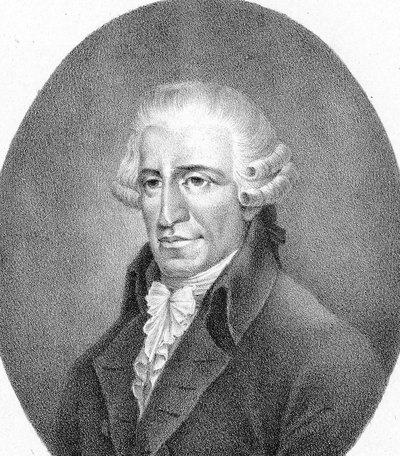 Joseph Haydn1732–1809 · born in Rohrau, AustriaMore on Haydn →
For moods like
Grateful · Calm · Focused
moderate tempo · major key · energy 3
Find more pieces in Listen by Mood →