
Details
- Composer
- Ludwig van Beethoven
- Catalogue no.
- Op. 18 No. 6
- Key
- B-flat major
- Scoring
- String quartet
- Length
- about 8 min
Recording
Morning music at 7
Track info
「String Quartet No. 6」Performed by Musopenrecorded 2012Wikimedia CommonsPublic Domain
About this piece
Four string instruments move very slowly and carefully. The harmony keeps slipping onto paths you cannot predict, and the music hesitates for a long time. Then, suddenly, a bright dance bursts out. Above that slow passage Beethoven wrote the words 'La Malinconia', meaning melancholy.
At a glance
- What it isthe last movement of String Quartet No. 6, for two violins, viola and cello.
- Who, when, whythe final quartet in the young Beethoven's first set of six string quartets (Op. 18), written a few years after he settled in Vienna and published in 1801.
- What to listen forthe way the slow 'melancholy' passage and a fast dance take turns.
Listen for
- Melancholythe movement opens with a slow introduction. Quietly, it touches one strange chord after another, creating a sinking mood. Beethoven also wrote in the score that this part should be handled with great delicacy.
- Dancethen a fast, lightly spinning dance begins, and the shadow of a moment ago brightens as if it had never been there.
- The strugglein the middle of the dance, the slow 'melancholy' cuts in again. The two moods trade places a few times, and at the end the music races at an even faster speed to a bright finish. Listen for how the air of the music changes each time the slow passage returns.
When it was written
Beethoven left his hometown of Bonn for Vienna in 1792 and studied for a while with Haydn. The string quartet was a field in which Haydn and Mozart had already left major works. Beethoven did not rush into it, and he spent several years polishing the six quartets of Op. 18. They were dedicated to his patron, Prince Lobkowitz.
Around this time Beethoven was beginning to notice that his hearing was slowly getting worse. Still, there is no evidence that the 'melancholy' of this movement came from that worry.
A question to think about
Beethoven did not hide 'melancholy'; he placed it at the very start of the movement. Then he followed it with a bright dance and let the two moods come and go.
There are days when sadness and joy alternate several times. What might change if, instead of forcing such feelings onto one side, we simply accepted them as they are?
The composer
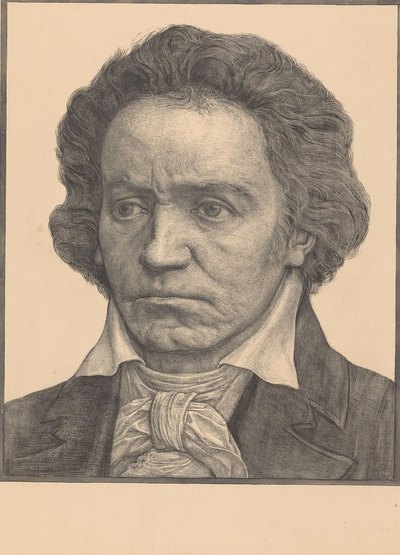 Ludwig van Beethoven1770–1827 · born in Bonn, GermanyMore on Beethoven →
For moods like
Grateful · Calm · Focused
moderate tempo · major key · energy 3
Find more pieces in Listen by Mood →