Composers · Romantic
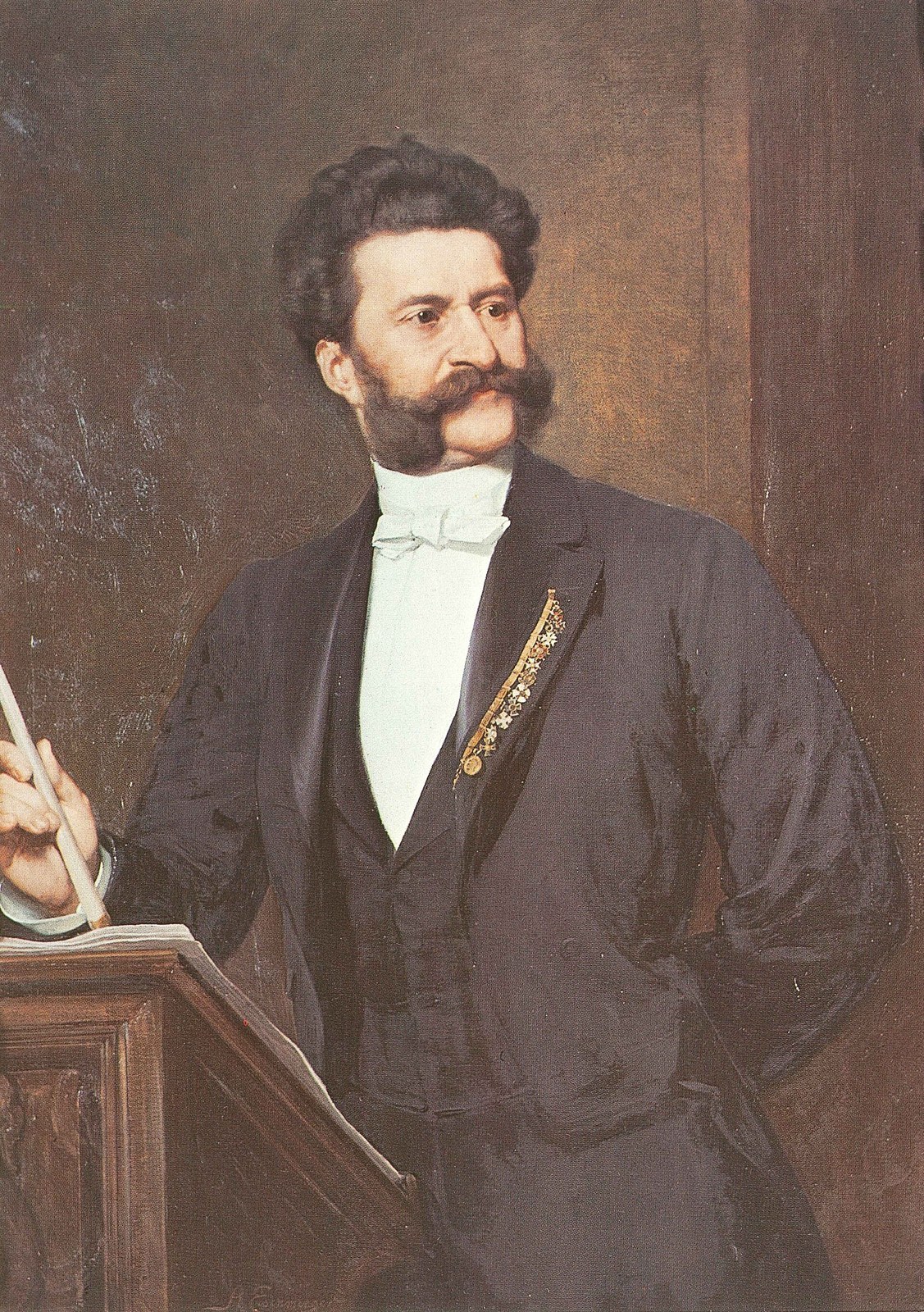
Johann Strauss II
Johann Strauss II
- Life
- 1825–1899
- Born in
- Vienna, Austria
- Era
- Romantic
The story of Johann Strauss II
Autumn 1844, a dance hall in Hietzing on the edge of Vienna. A nineteen-year-old leads his own orchestra in its debut. The city already had Europe's most famous waltz orchestra, and its conductor was the young man's own father. The next day's papers excitedly reported a duel between father and son. This is Johann Strauss II.
A family of waltzes
Strauss II was born in 1825 near Vienna. His father, Johann Strauss I, was the waltz composer and bandleader who had swept the city. But his father did not want his son to become a musician and had him trained for banking. With his mother's help, the son secretly studied violin and composition.
Father and son
When his father left home to start another family, the son formed his own orchestra and went his own way. In the 1848 revolution his father sided with the emperor and wrote the Radetzky March, while the son wrote music for the revolutionaries. Father and son walked different paths, on stage and in politics. When his father died suddenly the next year, the son took over and merged the two orchestras.
Three brothers
Strauss II had two younger brothers, Josef and Eduard. When the overworked elder brother collapsed, Josef, originally an engineer, took up the baton in his place and became a composer. The three brothers toured Vienna's ballrooms together, pouring out waltzes and polkas.
Russian summers and The Blue Danube
From the mid-1850s, for about a decade, he spent summers playing at the railway station concert hall at Pavlovsk near St Petersburg, always crowded with people who came by train. In 1863 he became music director of the Vienna court balls, and in 1867 he presented The Blue Danube. First a choral piece, it was played by orchestra at that year's Paris World's Fair and spread around the globe.
America and operetta
In 1872 he was invited to a huge music festival in Boston, where he conducted an enormous number of musicians and singers. Afterwards he devoted himself to operetta, comic opera; his Die Fledermaus of 1874 is still staged around the world every holiday season.
The Waltz King
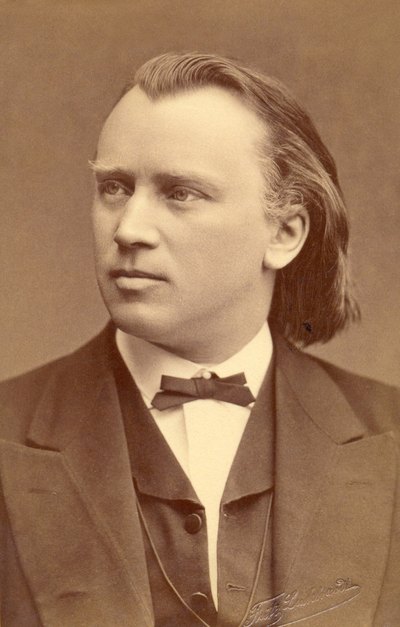
The Viennese called him the "Waltz King." Even Brahms, known for his seriousness, loved his music and became a close friend. When Strauss II died in 1899 at seventy-three, it is said, Vienna's streets filled with people seeing him off.
Music to hear on Pyeongeum
- The Blue Danubea concert waltz of a quiet introduction, five waltzes and a coda.
As the melody glides over the oom-pah-pah of three beats, the waltz keeps the same pulse yet dances in a new color each time. Feel why the Viennese danced to this music all night.
People around him
- His father Johann Strauss I: his rival and forerunner in the waltz.
- His brothers Josef and Eduard: who led the orchestra with him.
- Johannes Brahmsthe friend who cherished his waltzes.
A question to think about
Defying his father, Strauss II followed the same path and finally surpassed him. Children taking up their parents' professions, or competing in the same field, is still common today.
When children follow a path in which their parents have already succeeded, is that a head start, or a shadow that is hard to step out of?
Hidden stories about Johann Strauss II
Composers of the same age
People whose lives overlapped with Johann Strauss II's by more than ten years