
Details
- Composer
- Scott Joplin
- When
- published 1909
- Key
- G major
- Scoring
- Piano
- Length
- about 3 min
Recording
Morning music at 7
Track info
「Pleasant Moments」Performed by Gnissahrecorded 2024Wikimedia CommonsPublic Domain
About this piece
Say "ragtime" and most of us hear a march-like beat that walks in twos. This piece counts in threes instead: one-two-three, the pulse of a waltz. Was Scott Joplin curious what would happen if he laid ragtime's off-beats over a waltz? Pleasant Moments, published in 1909, carries the subtitle "Ragtime Waltz."
At a glance
- What it isa ragtime waltz for solo piano, written in G major.
- Who and whenwritten by Scott Joplin and published in 1909, during his years in New York.
- What to listen forthe left hand turning in threes, and the right hand slipping just off those beats.
Listen for
- The left hand in threea waltz accompaniment usually sounds a low note on the first beat and a chord on the second and third. Oom-pah-pah. That step is the floor the whole piece stands on.
- The right hand's off-beats: ragtime's flavour comes from syncopation, a rhythm that pushes a strong accent slightly early or holds it back. Listen to how those off-beats feel over three beats, and compare them with a rag that walks in two.
- When the sections change: Joplin's pieces are usually built from several sections in turn. Notice how the height of the melody and the mood shift when a new tune begins.
When it was written
Ragtime is piano music that grew up among African American musicians in the late nineteenth century. Laying syncopated rhythm over the frame of the march, it sold widely as sheet music and became a great craze. Joplin made his name in 1899 with the Maple Leaf Rag, and in 1902 he published The Entertainer.
Around 1907 Joplin moved to New York. In 1908 he brought out a short instruction book, School of Ragtime, in which he warned players not to play ragtime fast. Pleasant Moments appeared the following year, so it is worth hearing at an unhurried pace.
At this time Joplin was pouring himself into his opera Treemonisha. In 1911 he published the score at his own expense, but he never saw a proper staging of it in his lifetime. He died in New York in 1917, and his music found a wide audience again in the 1970s, helped by the film The Sting.
A question to think about
Joplin took ragtime, which usually walks in two, and set it on the three-beat frame of a waltz. A long-familiar dance rhythm and the off-beats of a newer craze meet inside one piece. And the name he gave the result was nothing grand, just Pleasant Moments.
Mixing different traditions to make something new happens all the time today, in music, food, language and clothing. What makes the difference between a mix that lets both sides flourish and one that simply borrows from one side without much thought?
The composer
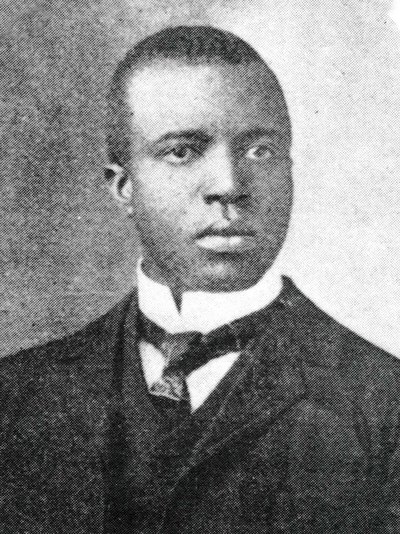 Scott Joplinc. 1868–1917More on Joplin →
For moods like
Grateful · Calm · Focused
moderate tempo · major key · energy 3
Find more pieces in Listen by Mood →More by Joplin
- Combination Marchpublished 1896 · about 3 min
- Harmony Club Waltzpublished 1896 · about 6 min
- Maple Leaf Ragpublished 1899 · about 3 min
- Original Ragspublished 1899 · about 4 min
- Swipesy Cakewalkpublished 1900 · about 3 min
- Augustan Club Waltzpublished 1901 · about 4 min
- Peacherine Ragpublished 1901 · about 3 min
- Sunflower Slow Dragpublished 1901 · about 3 min
- A Breeze from Alabamapublished 1902 · about 4 min
- Cleophapublished 1902 · about 3 min
- Elite Syncopationspublished 1902 · about 3 min
- March Majesticpublished 1902 · about 3 min
- The Entertainerpublished 1902 · about 4 min
- Palm Leaf Ragpublished 1903 · about 4 min
- Something Doingpublished 1903 · about 3 min
- Weeping Willowpublished 1903 · about 3 min
- The Favoritepublished 1904 · about 3 min
- The Sycamorepublished 1904 · about 3 min
- Eugeniapublished 1905 · about 4 min
- Leolapublished 1905 · about 5 min
- The Rose-bud Marchpublished 1905 · about 3 min
- Antoinettepublished 1906 · about 3 min
- Gladiolus Ragpublished 1907 · about 3 min
- Heliotrope Bouquetpublished 1907 · about 3 min
- Lily Queenpublished 1907 · about 3 min
- Rose Leaf Ragpublished 1907 · about 4 min
- Searchlight Ragpublished 1907 · about 3 min
- The Nonpareilpublished 1907 · about 3 min
- Fig Leaf Ragpublished 1908 · about 4 min
- Pine Apple Ragpublished 1908 · about 3 min
- Sugar Canepublished 1908 · about 3 min
- Euphonic Soundspublished 1909 · about 3 min
- Paragon Ragpublished 1909 · about 3 min
- Felicity Ragpublished 1911 · about 3 min
- Magnetic Ragpublished 1914 · about 4 min
- Silver Swan Ragpublished 1914 · about 3 min
- Reflection Ragpublished 1917 · about 4 min