
Joplin · Dawn of Jazz · Music Journey · track 12
Maple Leaf Rag
Scott Joplin
A ragtime piano piece published in Sedalia, Missouri, in 1899
Details
- Composer
- Scott Joplin
- When
- published 1899
- Key
- A-flat major
- Scoring
- Piano
- Length
- about 3 min
Recording
Morning music at 7
Track info
「Maple Leaf Rag」Performed by Gnissahrecorded 2024Wikimedia CommonsPublic Domain
About this piece
Some pieces make your foot tap on its own. The two hands seem to ride different beats, and that friction is strangely exhilarating.
At a glance
- What it isa ragtime piano piece, a march-shaped dance in which four different strains appear in turn.
- Who, when, whyScott Joplin wrote it, and John Stark, a publisher in Sedalia, Missouri, brought it out in 1899. The title is said to come from the town's Maple Leaf Club.
- What to listen forthe left hand's oom-pah walk against the right hand's off-beat rhythms, and the moments the strains change.
Listen for
- The first strainsyncopation, the right hand popping up between the beats. This is the face of the piece.
- The second strainthe right hand sparkles even higher as it runs.
- The third and fourth strains: after the first strain returns once, two new strains follow, and the last closes the piece boldly.
When it was written
In late nineteenth-century America, ragtime, developed by Black musicians, became a craze: piano music placing the rhythmic sense of African American music on the frame of a march. With no radio yet, people bought sheet music and played new tunes on their home pianos.
Joplin, born in Texas, was a musician who played piano in town after town, and in Sedalia he studied music further. After publication, the Maple Leaf Rag sold steadily for years and made his name. Joplin regarded ragtime as serious composition and even left a warning not to play it fast.
A question to think about
Ragtime was created by Black musicians, but most of the big money from publishing and performing it went to white publishers and promoters. Joplin was a rare case with a contract paying him a share per copy sold.
Arrangements in which distributors earn more than creators exist today in music, webcomics and video too. What is needed to protect creators' share?
The composer
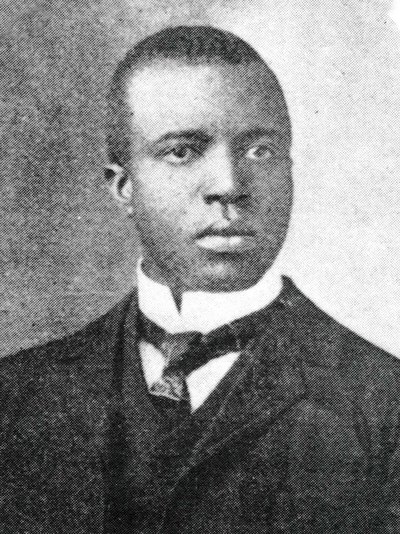 Scott Joplinc. 1868–1917More on Joplin →
For moods like
Joyful · Restless
fast · major key · energy 4
Find more pieces in Listen by Mood →More by Joplin
- Combination Marchpublished 1896 · about 3 min
- Harmony Club Waltzpublished 1896 · about 6 min
- Original Ragspublished 1899 · about 4 min
- Swipesy Cakewalkpublished 1900 · about 3 min
- Augustan Club Waltzpublished 1901 · about 4 min
- Peacherine Ragpublished 1901 · about 3 min
- Sunflower Slow Dragpublished 1901 · about 3 min
- A Breeze from Alabamapublished 1902 · about 4 min
- Cleophapublished 1902 · about 3 min
- Elite Syncopationspublished 1902 · about 3 min
- March Majesticpublished 1902 · about 3 min
- The Entertainerpublished 1902 · about 4 min
- Palm Leaf Ragpublished 1903 · about 4 min
- Something Doingpublished 1903 · about 3 min
- Weeping Willowpublished 1903 · about 3 min
- The Favoritepublished 1904 · about 3 min
- The Sycamorepublished 1904 · about 3 min
- Eugeniapublished 1905 · about 4 min
- Leolapublished 1905 · about 5 min
- The Rose-bud Marchpublished 1905 · about 3 min
- Antoinettepublished 1906 · about 3 min
- Gladiolus Ragpublished 1907 · about 3 min
- Heliotrope Bouquetpublished 1907 · about 3 min
- Lily Queenpublished 1907 · about 3 min
- Rose Leaf Ragpublished 1907 · about 4 min
- Searchlight Ragpublished 1907 · about 3 min
- The Nonpareilpublished 1907 · about 3 min
- Fig Leaf Ragpublished 1908 · about 4 min
- Pine Apple Ragpublished 1908 · about 3 min
- Sugar Canepublished 1908 · about 3 min
- Euphonic Soundspublished 1909 · about 3 min
- Paragon Ragpublished 1909 · about 3 min
- Pleasant Momentspublished 1909 · about 3 min
- Felicity Ragpublished 1911 · about 3 min
- Magnetic Ragpublished 1914 · about 4 min
- Silver Swan Ragpublished 1914 · about 3 min
- Reflection Ragpublished 1917 · about 4 min