
Details
- Composer
- Scott Joplin
- When
- published 1901
- Key
- B-flat major
- Scoring
- Piano
- Length
- about 4 min
Recording
Morning music at 7
Track info
「Augustan Club Waltz」Performed by Gnissahrecorded 2024Wikimedia CommonsPublic Domain
About this piece
By 1901 Scott Joplin was already known as the composer of the Maple Leaf Rag. Yet the pieces he published that year included not only rags bouncing off the beat but also a waltz turning in three: one-two-three. Why did the King of Ragtime keep writing waltzes?
At a glance
- What it isa waltz for piano. A waltz is a dance that turns in three beats.
- Who and whenwritten by Scott Joplin and published in 1901.
- What to listen forthe 'oom-pah-pah' of three beats in the left hand, and the melodies that change one after another above it.
Listen for
- The three-beat stepin a piano waltz the left hand usually strikes a low note on the first beat and lays light chords on the second and third. Picture dancers slowly turning to that step.
- Melodies in a rowpiano waltzes of this period are usually built from several short melodies that follow one another and repeat. Listen for how the brightness and weight change when a new melody comes in.
- A ragtime composer's hands: in Joplin's rags the right hand leaps in between the beats. Compare for yourself whether you hear that kind of rhythmic play in this waltz, or whether it flows evenly.
When it was written
After the Maple Leaf Rag came out in Sedalia, Missouri, in 1899, it sold steadily for years and made Joplin's name. Around 1901 Joplin moved to the larger city of St. Louis and devoted himself to composing. In the same year he also published the rag The Easy Winners.
In the American sheet-music market of the time, waltzes and marches were loved alongside ragtime. With no radio, people bought sheet music and enjoyed new pieces at the piano at home. Joplin wrote dances of these different kinds, not only rags, and in 1905 he published a concert waltz, Bethena.
Joplin regarded ragtime as serious music. He died in New York in 1917. His music was forgotten for a while, then came to be widely loved again in the 1970s.
A question to think about
Even after ragtime brought him a big name, Joplin did not stay inside a single kind of music. In the same year he published a syncopated rag and a waltz in three side by side.
When someone known for one thing tries something quite different, how do the people around them usually react? Besides what you are already good at, what would you like to try?
The composer
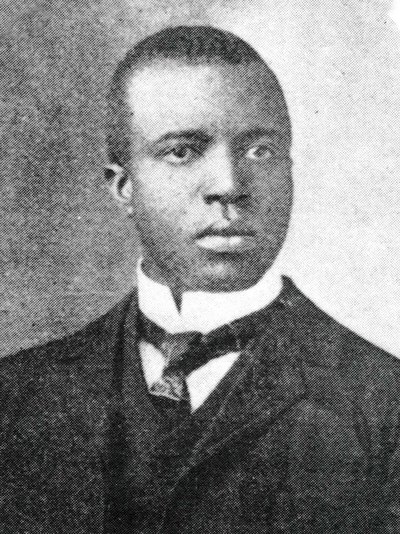 Scott Joplinc. 1868–1917More on Joplin →
For moods like
Grateful · Calm · Focused
moderate tempo · major key · energy 3
Find more pieces in Listen by Mood →More by Joplin
- Combination Marchpublished 1896 · about 3 min
- Harmony Club Waltzpublished 1896 · about 6 min
- Maple Leaf Ragpublished 1899 · about 3 min
- Original Ragspublished 1899 · about 4 min
- Swipesy Cakewalkpublished 1900 · about 3 min
- Peacherine Ragpublished 1901 · about 3 min
- Sunflower Slow Dragpublished 1901 · about 3 min
- A Breeze from Alabamapublished 1902 · about 4 min
- Cleophapublished 1902 · about 3 min
- Elite Syncopationspublished 1902 · about 3 min
- March Majesticpublished 1902 · about 3 min
- The Entertainerpublished 1902 · about 4 min
- Palm Leaf Ragpublished 1903 · about 4 min
- Something Doingpublished 1903 · about 3 min
- Weeping Willowpublished 1903 · about 3 min
- The Favoritepublished 1904 · about 3 min
- The Sycamorepublished 1904 · about 3 min
- Eugeniapublished 1905 · about 4 min
- Leolapublished 1905 · about 5 min
- The Rose-bud Marchpublished 1905 · about 3 min
- Antoinettepublished 1906 · about 3 min
- Gladiolus Ragpublished 1907 · about 3 min
- Heliotrope Bouquetpublished 1907 · about 3 min
- Lily Queenpublished 1907 · about 3 min
- Rose Leaf Ragpublished 1907 · about 4 min
- Searchlight Ragpublished 1907 · about 3 min
- The Nonpareilpublished 1907 · about 3 min
- Fig Leaf Ragpublished 1908 · about 4 min
- Pine Apple Ragpublished 1908 · about 3 min
- Sugar Canepublished 1908 · about 3 min
- Euphonic Soundspublished 1909 · about 3 min
- Paragon Ragpublished 1909 · about 3 min
- Pleasant Momentspublished 1909 · about 3 min
- Felicity Ragpublished 1911 · about 3 min
- Magnetic Ragpublished 1914 · about 4 min
- Silver Swan Ragpublished 1914 · about 3 min
- Reflection Ragpublished 1917 · about 4 min