
Details
- Composer
- Scott Joplin
- When
- published 1904
- Key
- G major
- Scoring
- Piano
- Length
- about 3 min
Recording
Morning music at 7
Track info
「The Sycamore」Performed by Gnissahrecorded 2024Wikimedia CommonsPublic Domain
About this piece
The sycamore is a tall tree you often see along American rivers and streams, a relative of the plane tree with bark that peels away in patches. So why give a piano piece the name of a tree? That is for the listener to imagine. What we have is a score published in 1904 and about three minutes of music in G major.
At a glance
- What it isa ragtime piece for solo piano, in G major.
- Who and whenwritten by Scott Joplin (1868–1917) and published as sheet music in 1904.
- What to listen forthe oom-pah walk of the left hand, the right hand nudging just off the beat above it, and the moments when a new section begins.
Listen for
- The left hand's walkin a classic rag the left hand usually alternates a low bass note with a chord in the middle of the keyboard. That even, pendulum-like step is the floor a rag stands on.
- Right-hand syncopationsyncopation means pushing a strong beat a little early or leaving its place empty, so the rhythm seems to pull forward. Listen for where the right hand slips out of step with the left and then locks back in.
- When the sections change: rags are usually built like marches, with several sections following one another. When a new section arrives, listen for whether the melody climbs higher and whether the mood brightens or settles.
When it was written
Ragtime is piano music that grew up among African American musicians in the late nineteenth century. With no radio, people bought sheet music and tried new pieces at the piano at home, and rag scores sold widely that way.
Joplin grew up in Texas and as a young man travelled the Midwest playing piano. He made his name in 1899 with the Maple Leaf Rag, and in 1902 he published The Entertainer. The Sycamore came out two years later.
Joplin thought of ragtime as music to be played with care. In 1908 he published an instruction book, School of Ragtime, explaining how to play it, and he urged players not to play rags fast. He died in New York in 1917. His music was forgotten for a while, drew new attention in the 1970s, and reached a wide audience through the 1973 film The Sting.
A question to think about
This piece shares its name with a tall riverside tree, and in his instruction book Joplin told players not to rush ragtime. When the left hand walks at an unhurried pace, the right hand's off-beats can come through more clearly, each one landing where you can hear it.
In a time when we are used to watching short videos quickly and swiping on, what might we only notice when we listen slowly? Is there a moment in your own day that you would like to deliberately slow down?
The composer
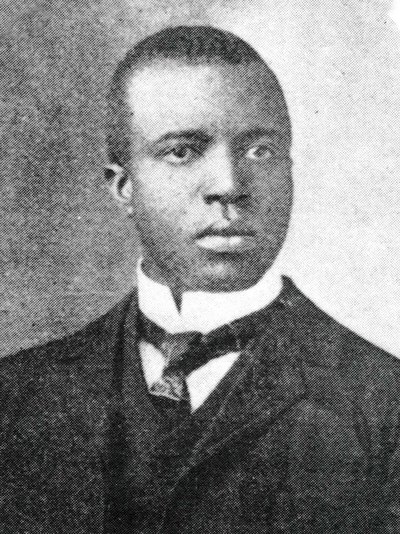 Scott Joplinc. 1868–1917More on Joplin →
For moods like
Excited · Joyful
fast · major key · energy 4
Find more pieces in Listen by Mood →More by Joplin
- Combination Marchpublished 1896 · about 3 min
- Harmony Club Waltzpublished 1896 · about 6 min
- Maple Leaf Ragpublished 1899 · about 3 min
- Original Ragspublished 1899 · about 4 min
- Swipesy Cakewalkpublished 1900 · about 3 min
- Augustan Club Waltzpublished 1901 · about 4 min
- Peacherine Ragpublished 1901 · about 3 min
- Sunflower Slow Dragpublished 1901 · about 3 min
- A Breeze from Alabamapublished 1902 · about 4 min
- Cleophapublished 1902 · about 3 min
- Elite Syncopationspublished 1902 · about 3 min
- March Majesticpublished 1902 · about 3 min
- The Entertainerpublished 1902 · about 4 min
- Palm Leaf Ragpublished 1903 · about 4 min
- Something Doingpublished 1903 · about 3 min
- Weeping Willowpublished 1903 · about 3 min
- The Favoritepublished 1904 · about 3 min
- Eugeniapublished 1905 · about 4 min
- Leolapublished 1905 · about 5 min
- The Rose-bud Marchpublished 1905 · about 3 min
- Antoinettepublished 1906 · about 3 min
- Gladiolus Ragpublished 1907 · about 3 min
- Heliotrope Bouquetpublished 1907 · about 3 min
- Lily Queenpublished 1907 · about 3 min
- Rose Leaf Ragpublished 1907 · about 4 min
- Searchlight Ragpublished 1907 · about 3 min
- The Nonpareilpublished 1907 · about 3 min
- Fig Leaf Ragpublished 1908 · about 4 min
- Pine Apple Ragpublished 1908 · about 3 min
- Sugar Canepublished 1908 · about 3 min
- Euphonic Soundspublished 1909 · about 3 min
- Paragon Ragpublished 1909 · about 3 min
- Pleasant Momentspublished 1909 · about 3 min
- Felicity Ragpublished 1911 · about 3 min
- Magnetic Ragpublished 1914 · about 4 min
- Silver Swan Ragpublished 1914 · about 3 min
- Reflection Ragpublished 1917 · about 4 min