The story of Satie
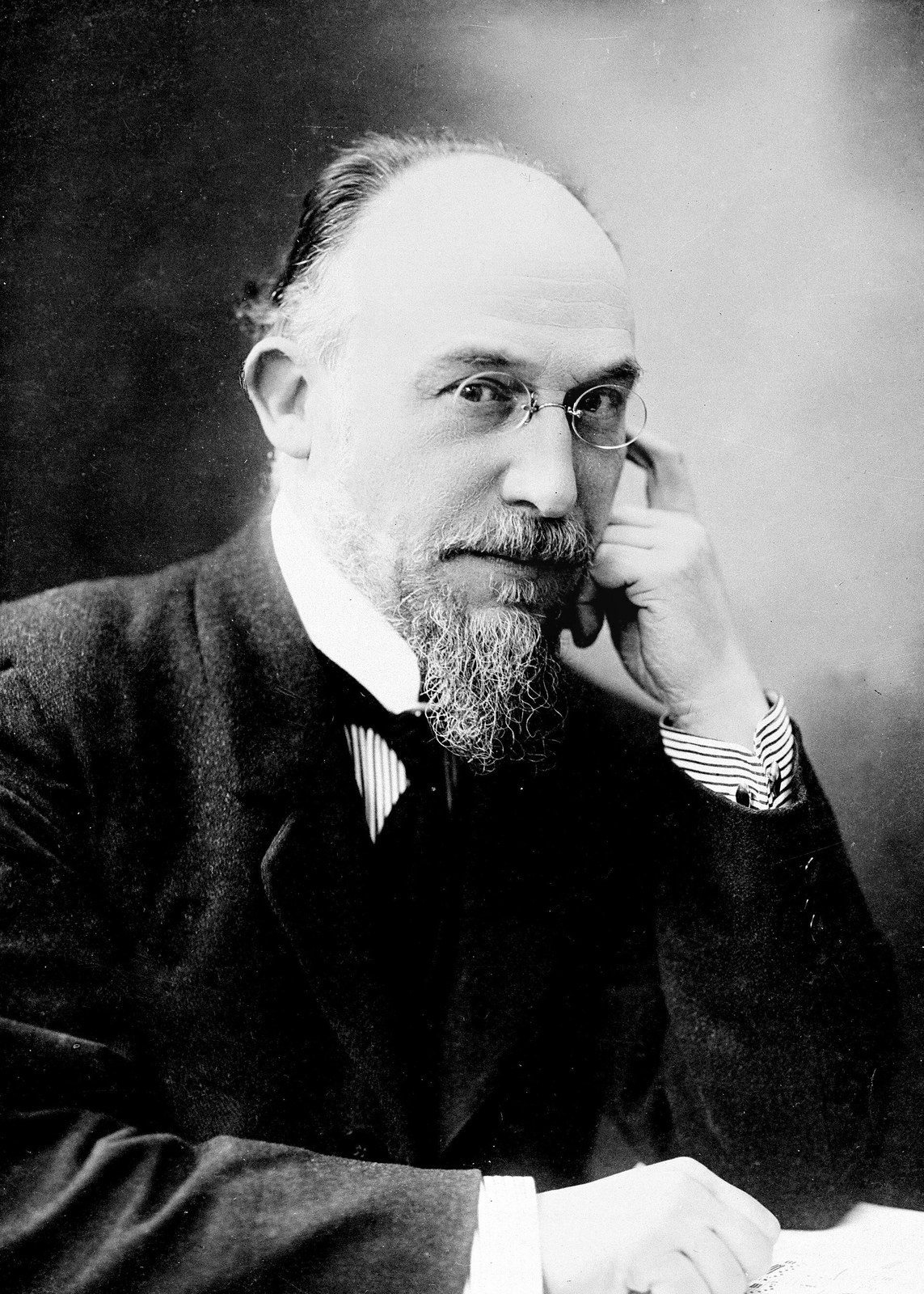
1925. After a composer's death, his friends open the door of his small room, a room no one had entered for more than twenty years. Inside, it is said, were two broken pianos stacked one on the other, piles of umbrellas, and letters never sent. It was Erik Satie's room.
The boy from Honfleur
Satie was born in 1866 in Honfleur, a seaside town in Normandy in northern France. After losing his mother at six he lived for a time with his grandparents, and first learned music from the local organist. As a teenager he came to Paris and entered the Conservatoire.
The lazy student
At the Conservatoire Satie was not well regarded. His teachers thought him talented but lazy, and he never properly finished. Meanwhile, though, he immersed himself in old church music and Gregorian chant, searching for a sound unlike anyone else's.
The pianist of Montmartre
In the late 1880s Satie played piano at the famous Montmartre cabaret the Black Cat, mixing with poets and painters. He wrote the Gymnopédies in 1888 and the Gnossiennes around 1890. Around then he met Debussy, who became a lifelong friend. An eccentric, he was for a while caught up in a mystical religious society, writing music for it, and even declared that he had founded his own church.
Arcueil and late study
In 1898 Satie moved to a small room in Arcueil, a suburb south of Paris. From then on, it is said, he walked several kilometers into Paris almost every day to play piano in cafés and meet friends, always in the same grey velvet suit, bowler hat and umbrella.
Then, in 1905, at thirty-nine, he became a student again. He enrolled at the Schola Cantorum, a music school, and learned counterpoint diligently from the ground up. People around him were astonished, but he studied steadily for several years and even earned a diploma.
Parade and the young musicians
In 1917 Satie staged the ballet Parade with the poet Jean Cocteau, the painter Picasso and the Russian ballet company. With a typewriter and a siren in the score, it caused an uproar. Afterwards young French composers followed Satie in search of new music. He also came up with "furniture music," music people could let pass without listening, an idea that brings today's background music to mind. Satie died in Paris in 1925, at fifty-nine.
Music to hear on Pyeongeum
- Gymnopédie No. 1the piece marked to be played slowly and painfully.
- Gnossienne No. 1a mysterious piece written without bar lines.
Hearing them together, you can feel Satie's idea that stripping away and repeating alone can create a deep atmosphere.
People around him
- Claude Debussya lifelong friend, who orchestrated two of the Gymnopédies.
- Jean Cocteauthe poet who created Parade with him.
- Pablo Picassothe painter who designed the sets and costumes for Parade.
A question to think about
Satie was called lazy at the Conservatoire, yet at thirty-nine he went back to school of his own accord to learn the basics. Our society often assumes certain studies must be finished by a certain age.
Should there be a set age for learning? What is needed so that people who return to study late in life can learn without embarrassment?
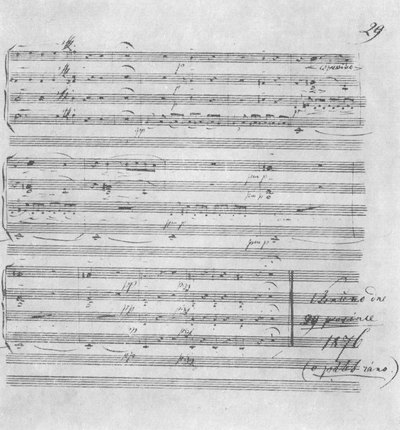
In the composer's own hand
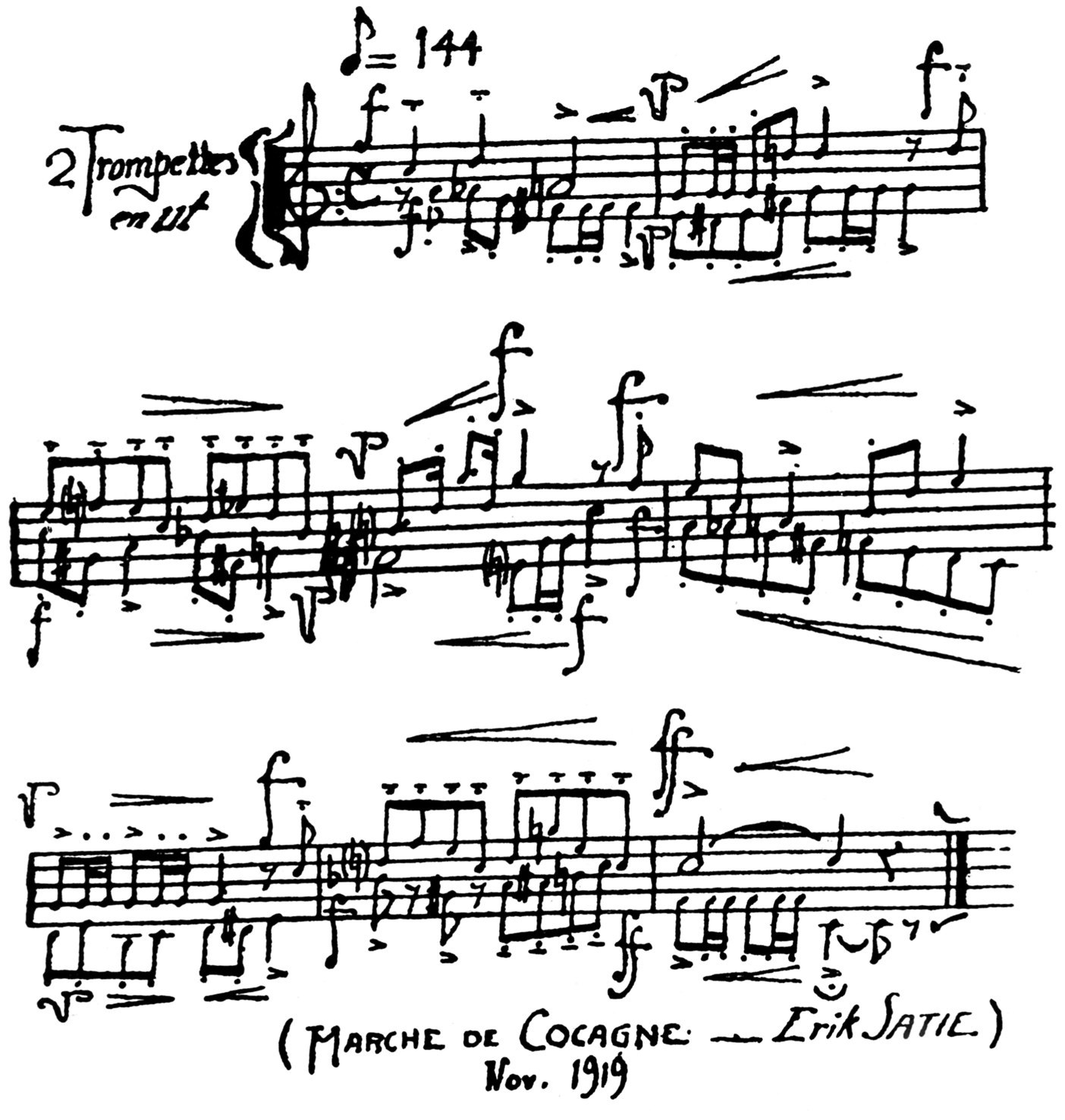
Hidden stories about Satie
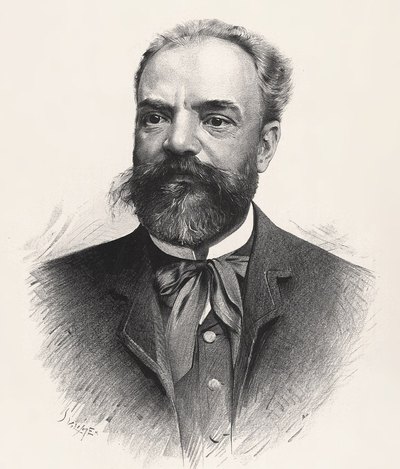
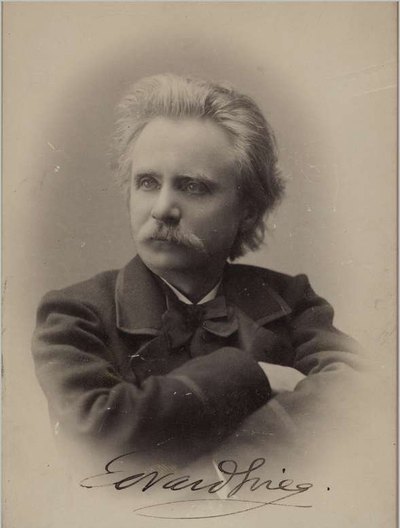
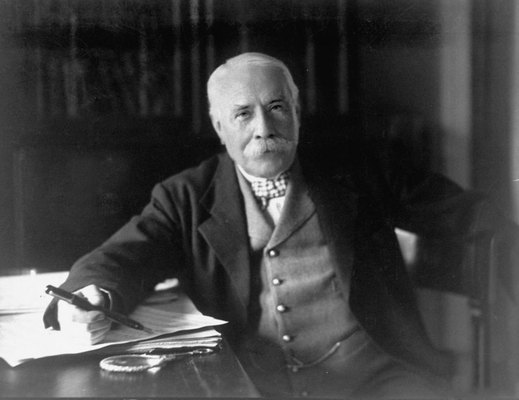
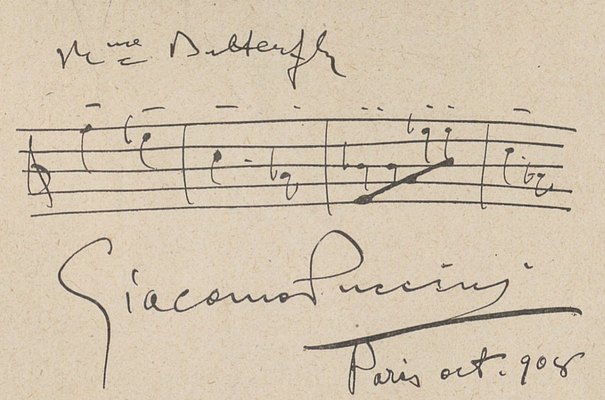
Composers of the same age
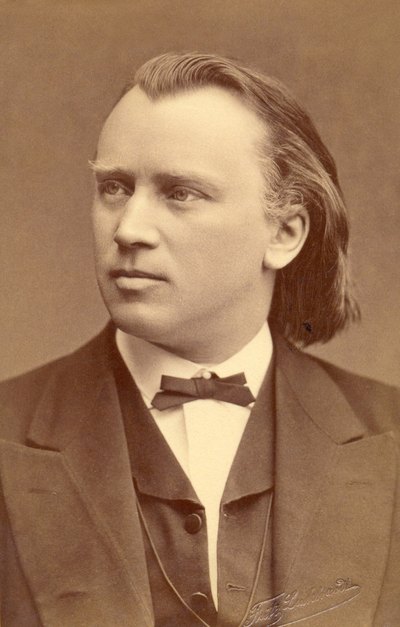
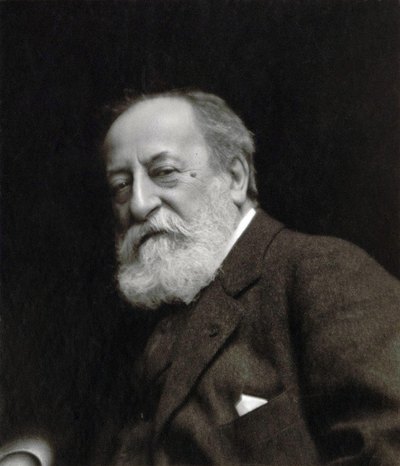
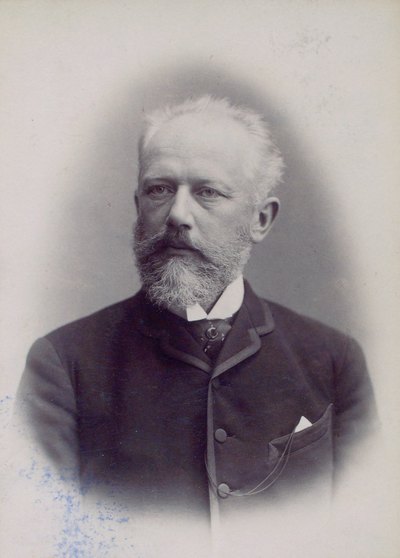
People whose lives overlapped with Satie's by more than ten years