
A Slow and Painful Dance by a Cabaret Pianist
Satie wrote the Gymnopédies at twenty-one while playing piano in a Montmartre cabaret, and marked the first one "slow and painful."
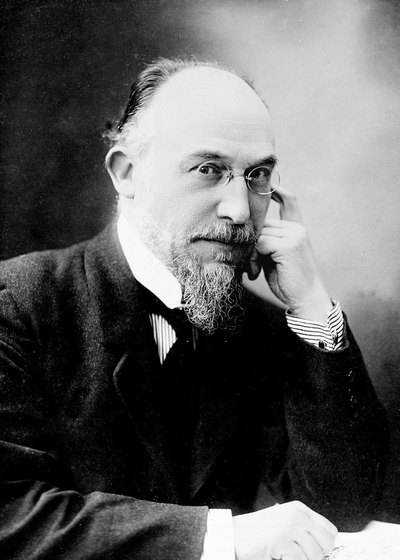
The left hand alternates a single low note and a chord: boom, then chord; boom, then chord. It sways like a slow swing. Above it, the right hand begins to sing without any hurry. There is no dazzling technique, no great outburst of feeling, yet strangely, once you hear it your mind settles. This is Erik Satie's Gymnopédie No. 1.
The pianist of Montmartre
In 1888 Satie, twenty-one, was living on the hill of Montmartre in Paris. At the Conservatoire he had been judged a lazy student and never properly finished; instead he played piano at a famous cabaret called Le Chat Noir, the Black Cat, and mixed with poets and painters. That year he published three piano pieces under the title Gymnopédies.
The word comes from the name of a festival in ancient Sparta, where young men honored the gods with dance and athletic display. No one knows for sure why Satie chose this strange name. We can only guess that he wanted to evoke the plain, still beauty of ancient Greece.
Odd instructions
At the top of No. 1 is a French marking meaning "slow and painful." Scores usually say "slowly" or "gently," so "painful" is unexpected. Satie was famous all his life for quirky, witty directions like this, and in other pieces he filled the margins with remarks that make performers burst out laughing.
French music then, under Wagner's influence, was growing ever bigger, heavier and more complicated. Satie walked the other way. He stripped notes away, repeated things, and explained nothing. That is why his music still sounds startlingly fresh more than a century later.
Clothes from a friend
His friend Claude Debussy did much to make the piece known. In the late 1890s Debussy arranged two of the Gymnopédies for orchestra, so that a small piano piece could sound out in a large concert hall.
When you listen, notice how few notes there are and how much space lies between them. The melody pauses often, and the harmony seems to hang in the air. It is music that leaves room for the listener's own thoughts.
A question to think about
Satie was called lazy at the Conservatoire and never finished the expected path, yet by walking a completely different road he opened up new music. Schools and society today still readily label people who don't meet set standards.
For people whose talents don't show up under set standards to get a chance, what should change in the way schools and society judge them?
Erik Satie1866–1925Read the story of Satie →