
The Sound of a River Painted by a Deaf Composer
Smetana wrote Má vlast after losing his hearing entirely. Vltava follows a river from two springs, past Prague and away.
The piece in this story
Smetana · about 12 min
Track info
「Má vlast: Vltava」Performed by Musopenrecorded 2012Wikimedia CommonsPublic Domain
Two flutes flow past each other like droplets, one a warm spring, the other a cold one. A clarinet soon joins in, small streams gather, and at last the strings begin the broad song of a great river. This is Bedřich Smetana's Vltava.
A sudden silence
In 1874 something terrible happened to Smetana, then fifty. Within a few months he went completely deaf. He had to give up his post as conductor of the theater in Prague. He recorded that inside his deaf ears a high-pitched sound rang constantly.
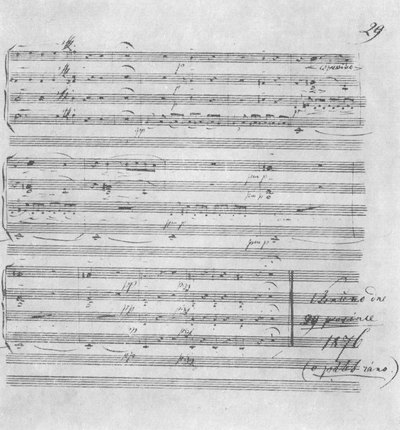
Yet astonishingly, around that same time Smetana began writing Má vlast, My Country, a cycle of six orchestral pieces. Vltava is the second, completed at the end of 1874. He wrote music he would never hear with his own ears, sounding it out inside his head.
A journey down the river
The Vltava is the river that runs through the Czech lands; in German it is called the Moldau. Smetana gave each scene a description in the score, painting a journey along the river.
Two springs meet and become a brook, and the river passes through forests where hunters' horns call. Then villagers dance at a country wedding, and at night water nymphs dance in the moonlight. Next the river crashes against rocks in the St John's Rapids, swirling wildly. At last, grown wide, it flows through the capital, Prague, sweeping past the ancient fortress of Vyšehrad on its hill as if in greeting, and on into the distance.
Singing of a homeland
When this was written, the Czech lands were part of the Habsburg Austrian Empire. Smetana worked to build a Czech musical life, writing operas in the Czech language. This music, following one river from beginning to end, is love for one's own landscape and stories. To Czechs it still carries special meaning.
When you listen, try to follow the scenes in order. You will hear the horns of the hunt, a peasant dance, hushed strings for the moonlight, the rapids churning in the brass, and finally the great river tune returning in full glory.
A question to think about
Smetana kept working after going deaf, but he had to give up conducting, and his life grew hard. Many people today still lose their work through sudden disability or illness.
When a working person suddenly becomes disabled, what should workplaces and society change so that they can keep working? Should it be left to individual willpower alone?
Bedřich Smetana1824–1884Read the story of Smetana →