
The Troll March Its Composer Couldn't Stand
After writing In the Hall of the Mountain King, Grieg told a friend it was almost unbearable even to his own ears. It became one of his signature pieces.
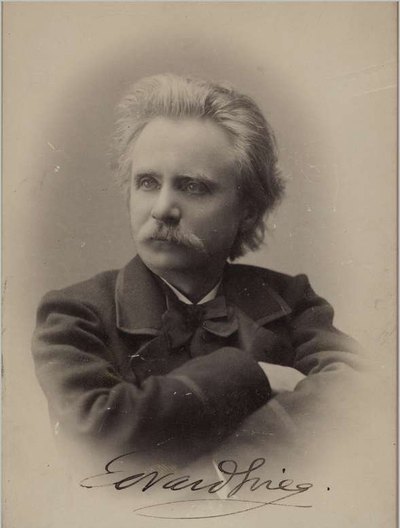
Down low, bassoons and cellos begin to creep. The same short tune, once, and again. But each repetition is a little faster and a little louder. At last the whole orchestra is charging madly, and with a crash everything collapses. This is Edvard Grieg's In the Hall of the Mountain King.
Ibsen's request
In 1874 the Norwegian playwright Henrik Ibsen wrote to the young composer Grieg. He wanted to stage his dramatic poem Peer Gynt and asked Grieg to write the music for it. Grieg accepted the request from Norway's leading writer, but the work proved harder than he expected. The play was first staged in 1876 at a theater in the Norwegian capital.
Its hero, Peer, is a country lad given to bragging and lies. Wandering, he enters the trolls' kingdom in the mountains and tries to marry the Mountain King's daughter. In return he nearly agrees to live like a troll, to wear a tail and even to have his eyes changed into troll eyes. This piece is the music for the scene in which the trolls surround Peer and grow more and more frenzied.
A confession about cow pies
Grieg, it seems, didn't much like it. In a letter to a friend he wrote that the music he had composed for the Hall of the Mountain King was something he could hardly bear to listen to, reeking, as he put it, of cow pies, exaggerated Norwegian nationalism and trollish self-satisfaction.
Surprising, to run down your own work like that. Yet that very "trollishness" became the piece's charm. The clumsy, stubborn power of one tune hammered again and again is impossible to forget once heard. Today it turns up endlessly in films, adverts and games, and has become one of Grieg's most widely known pieces.
When you listen
From start to finish, it is essentially one short tune. It begins in the low instruments and climbs into higher ones, while the speed and volume keep rising. Right up to the moment at the end when the orchestra bursts out like the trolls' shouts, notice your body leaning forward on its own.
A question to think about
In the trolls' kingdom, Peer is ready to promise that he will change his very eyes and thoughts into a troll's to get what he wants. Abandoning your own views to fit into a group, and coming to see the world through the group's eyes, is common today in schools, workplaces and online.
When the wish to belong collides with keeping your own way of thinking, how far should we go along, and where should we stop?
Edvard Grieg1843–1907Read the story of Grieg →