Composers · Romantic
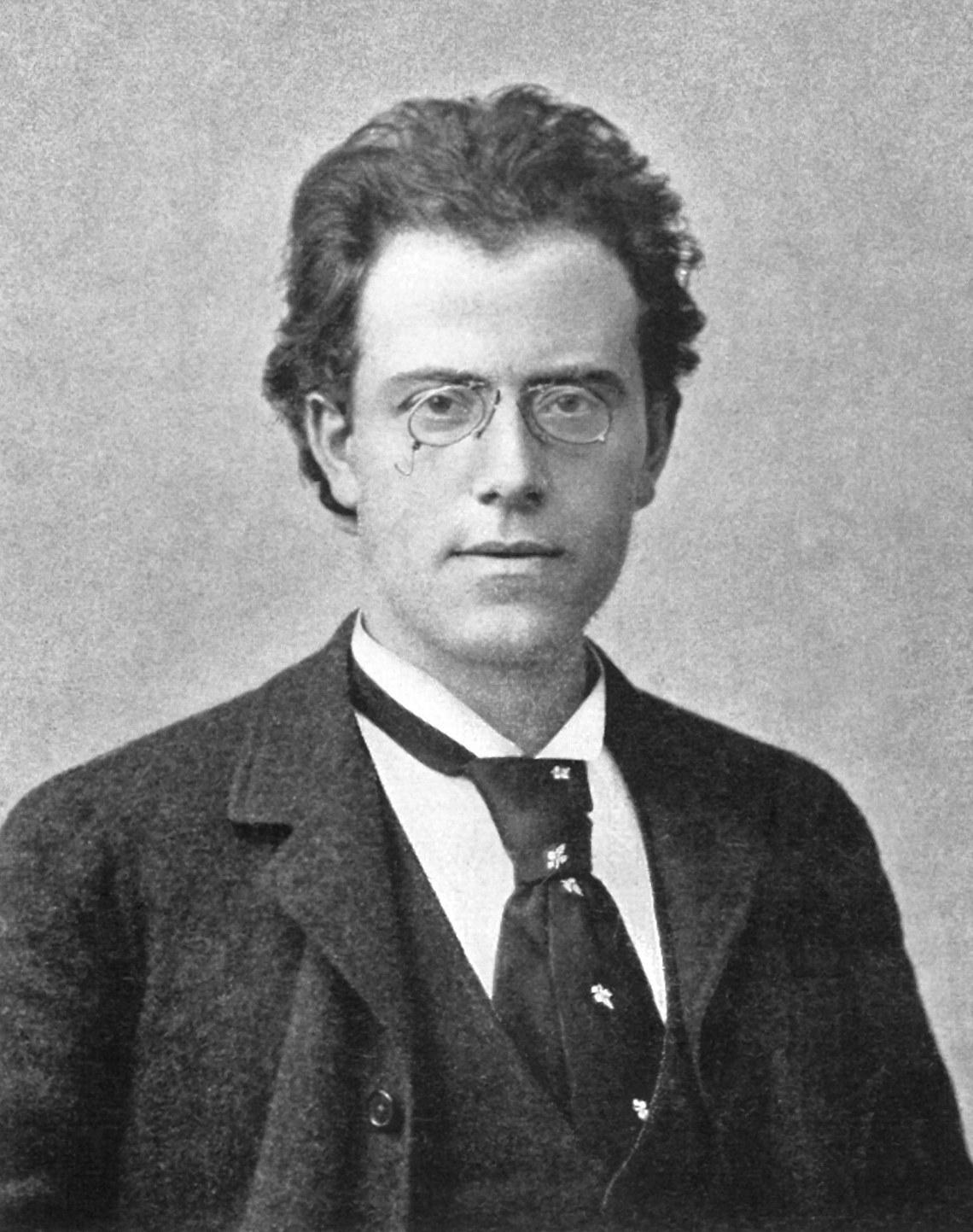
Gustav Mahler
Gustav Mahler
- Life
- 1860–1911
- Born in
- Kaliště, Czech Republic
- Era
- Romantic
The story of Mahler
A small hut in the woods by an Austrian lake, with a few windows and one piano. As soon as the sun rises, a man goes in. No one was allowed to disturb him, and the story goes that even birdsong annoyed him. For a conductor who ran a theater all year, summer was the only time to compose. This is Gustav Mahler.
The boy from Bohemia
Mahler was born in 1860 in Kaliště, a small Bohemian village, to a Jewish merchant family, and soon grew up in the nearby town of Jihlava. He was one of fourteen children, several of whom died young. As a child he heard military bugle calls and marches and country dances, sounds that later appear throughout his symphonies.
Vienna Conservatory and provincial theaters
Entering the Vienna Conservatory at fifteen, he studied piano and composition. After graduating he began as conductor of a small provincial theater and rose gradually through Prague, Leipzig, Budapest and Hamburg to ever bigger stages. He became known as a conductor who was strict in rehearsal and demanded perfection.
The Vienna Court Opera
In 1897 Mahler became director of the Vienna Court Opera. To obtain the post he converted from Judaism to Catholicism, since a Jew could then hardly win such a position in Vienna. For ten years he transformed the theater: he barred latecomers during performances, darkened the auditorium, and reworked productions so that stage and music became one.
Alma and the summer hut
In 1902 he married Alma Schindler, nearly twenty years younger. In summer the family stayed at a villa on the Wörthersee, and he wrote symphonies in a hut in the woods. His Fifth, Sixth and Seventh Symphonies were born that way, and two daughters were born too.
1907
1907 was a cruel year for Mahler. His elder daughter Maria died of illness, and around then he was diagnosed with a heart condition. Amid attacks from the Viennese press and his opponents, he also resigned as director of the Court Opera.
New York and the end
Mahler then crossed to New York to conduct the Metropolitan Opera and the New York Philharmonic, returning to Europe each summer to write Das Lied von der Erde and the Ninth Symphony. Falling gravely ill in New York in 1911, he returned to Vienna and died that May at fifty. In his lifetime his symphonies were often called long and strange, but in the later twentieth century they became favorites of orchestras around the world.
Music to hear on Pyeongeum
- The Adagietto from Symphony No. 5: a slow song for strings and harp alone.
People around him
- Alma Mahlerhis wife, who had studied composition; she recalled being asked to give it up when they married.
- Bruno Waltera young conductor and protégé, who premiered Das Lied von der Erde after Mahler's death.
- Willem Mengelbergthe Dutch conductor who did much to spread Mahler's symphonies.
A question to think about
To reach Vienna's highest musical post, Mahler had to change his religion, and even afterwards he was attacked for being Jewish. Having to hide or change one's faith or identity for a job or advancement still happens today.
If reaching a certain position requires people to change their faith or identity, what is that society doing wrong?
Hidden stories about Mahler
Composers of the same age
People whose lives overlapped with Mahler's by more than ten years