
A Love Letter for Strings and Harp Alone
In the fourth movement of Mahler's Fifth, brass and percussion fall silent and only strings and harp sing. One conductor noted it was a declaration of love to Alma.
In the middle of a huge symphony, the stage suddenly goes quiet. Trumpets, horns and timpani have all laid down their instruments. Only the strings and harp remain. The harp lets fall chords like drops of water, one by one, and above them the strings begin to sing, very slowly and low. This is the fourth movement of Gustav Mahler's Fifth Symphony, the Adagietto.
A conductor who composed only in summer
Mahler was then director of the Vienna Court Opera. Theater work consumed most of his year, so he could compose only in summer when the opera was closed. He built a villa at Maiernigg on the Wörthersee in southern Austria and wrote his symphonies each summer in a small composing hut in the woods.
The Fifth was completed in that hut over the summers of 1901 and 1902. In between, something big happened in Mahler's life. In the winter of 1901 he met Alma Schindler, then in her early twenties, in Viennese society, and within months, in spring 1902, they married. Alma had been studying composition herself.
Music instead of words
A story follows this Adagietto. The Dutch conductor Willem Mengelberg, a close friend of Mahler, wrote in his score that this movement was Mahler's declaration of love to Alma, a letter written in music instead of words. Mengelberg said he had heard this from both Mahler and Alma.
Mahler himself left nothing in writing about it, so we should be careful about taking it at face value. Still, listen closely and the movement sounds like a pause from the turmoil and pain of the other movements, music quietly offering one's heart to someone.
A second identity from film
The movement became widely known, even among people who had never heard the symphony, when Luchino Visconti used it in his 1971 film Death in Venice. There it served less as a love letter than as music for an aging artist's loneliness. That the same music can tell an entirely different story depending on the scene beside it is one of music's strange powers.
A question to think about
Alma later recalled that on marrying she was asked to give up composing. Behind music remembered as a love letter, then, lies the story of a gifted person who had to set aside her own work. Even today, it is usually women who leave their jobs for marriage and child-rearing.
When two people decide to share a life, if one must give up their work for the other's dream, can that be called love? What would have to change for the load to be shared fairly?
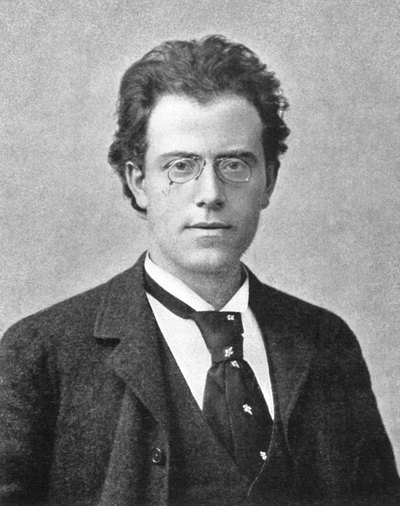
Gustav Mahler1860–1911Read the story of Mahler →