Composers · 20th Century
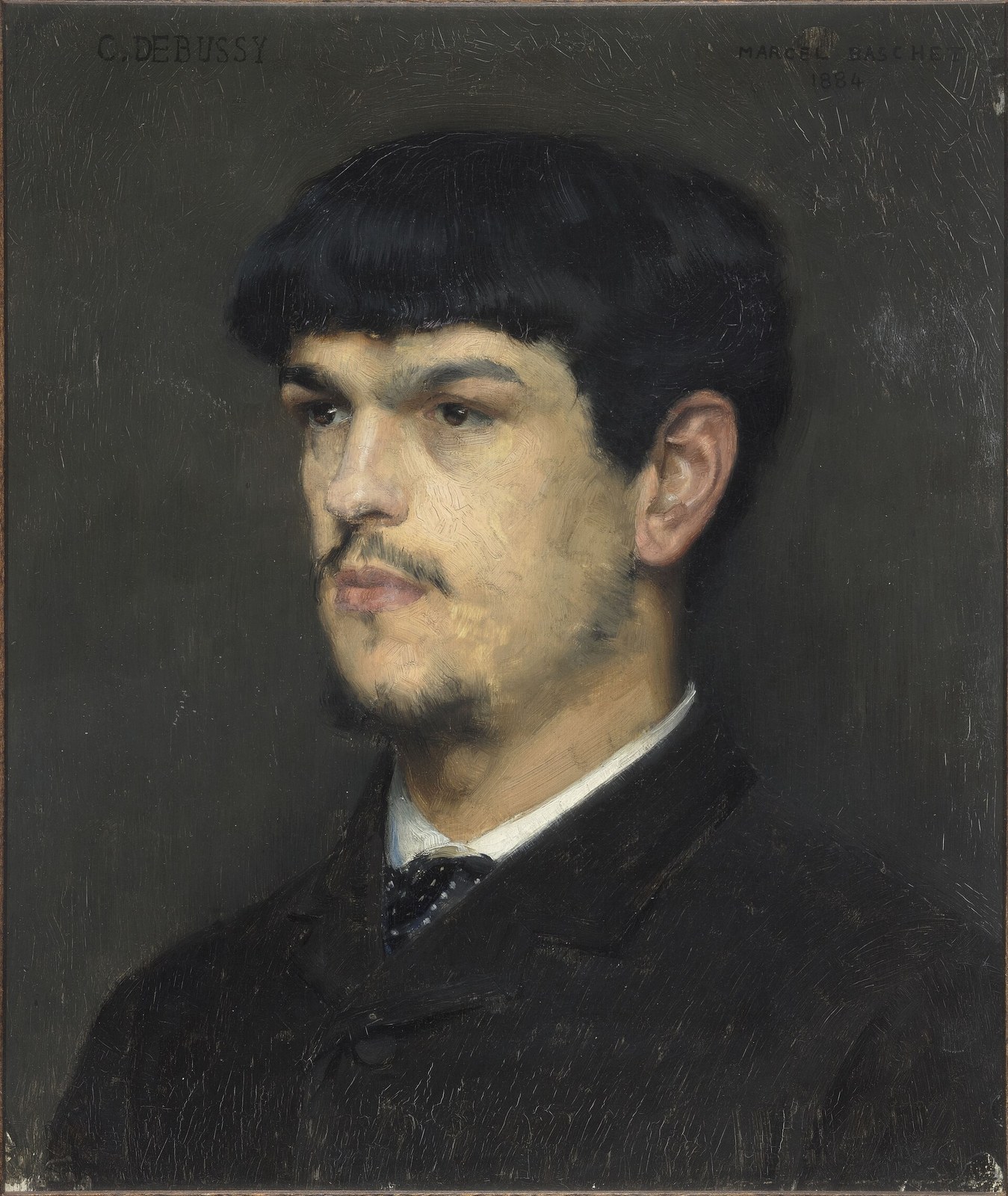
Claude Debussy
Claude Debussy
- Life
- 1862–1918
- Born in
- Saint-Germain-en-Laye, France
- Era
- 20th Century
The story of Debussy
A harmony class at the Paris Conservatoire. A student sits at the piano and plays one forbidden chord after another. When the teacher asks what rule he is following, the student reportedly answers that his own pleasure is the rule. This is Claude Debussy.
The boy from Saint-Germain-en-Laye
Debussy was born in 1862 in Saint-Germain-en-Laye near Paris. His family was not well off, and his parents were far from music. Yet the boy, who began piano lessons around nine, showed astonishing talent and entered the Paris Conservatoire at ten.
There he cared more for composition and harmony than for the piano, seeking sounds that were beautiful to the ear rather than following fixed rules. In his late teens he even traveled around Europe as pianist to the household of Madame von Meck, Tchaikovsky's patron.
The Prix de Rome and Wagner
In 1884 Debussy won the Prix de Rome, the dream of young French composers, and studied in Rome. But he found life there stifling and returned to Paris earlier than planned. Like many French musicians of the time he fell deeply under Wagner's spell, then gradually escaped that vast shadow to find his own way.
Among poets and painters
Debussy was closer to poets and painters than to musicians. He attended the poet Mallarmé's Tuesday gatherings and set poems by Verlaine and Mallarmé. Javanese gamelan music, which he heard at the 1889 Paris World's Fair, also influenced him deeply.
The Prelude to the Afternoon of a Faun of 1894 was the fruit. Its flow, in which the beat seems to melt, and its chords like colors astonished listeners. With the opera Pelléas et Mélisande in 1902 he became a leading French composer. People called him an "Impressionist," though Debussy himself reportedly disliked the label.
The sea and the preludes
In 1905 he presented the orchestral work La mer, and that year his daughter Claude-Emma was born. He adored her, calling her "Chouchou," and wrote the piano suite Children's Corner for her. From 1909 he wrote twenty-four piano Préludes in two books.
In his last years Debussy suffered long from cancer. In March 1918, as shells fell on Paris during the First World War, he died at fifty-five.
Music to hear on Pyeongeum
- "Clair de lune" from the Suite bergamasque: the thirteenth stop on our Music Journey.
- Prelude to the Afternoon of a Faun, Arabesque No. 1, and "The Girl with the Flaxen Hair."
Start with the youthful Arabesque and "Clair de lune," then move to the Faun and "The Girl with the Flaxen Hair." Sound that was at first beautiful and tidy gradually slips free of beat and harmony and floats like air. It is Debussy's own path, heard in order.
People around him
- Stéphane Mallarméthe poet of "The Afternoon of a Faun," whose Tuesday gatherings opened new ideas to Debussy.
- Erik Satiehis friend from Montmartre; Debussy orchestrated two of Satie's Gymnopédies.
- His daughter Claude-Emma, "Chouchou": who inspired Children's Corner.
A question to think about
Debussy trusted his own ears over fixed rules, and that is how he opened new music. Yet at school such a student is often seen as one who won't listen. Learning rules and going beyond them always pull against each other.
What should schools do differently to teach the rules without crushing the ideas of students who go beyond them?
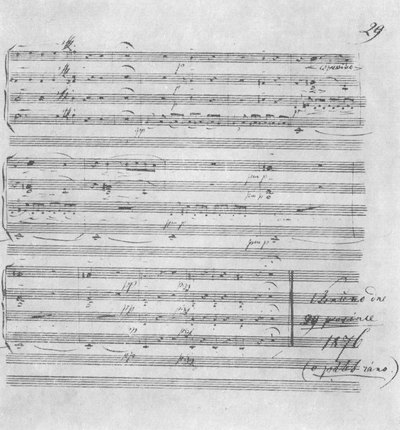
In the composer's own hand
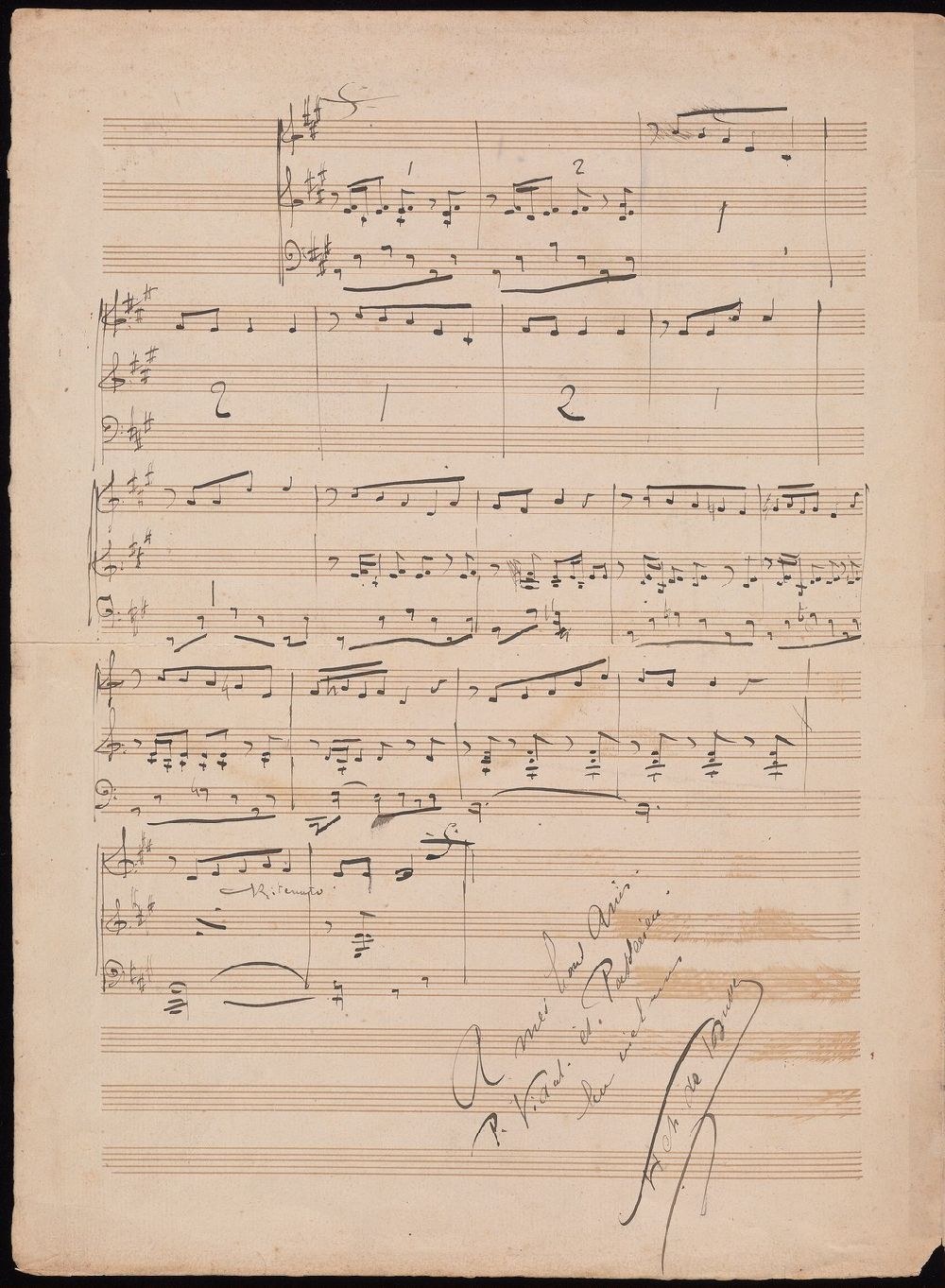
Hidden stories about Debussy
Composers of the same age
People whose lives overlapped with Debussy's by more than ten years