
New Music Opened by a Single Flute
Debussy's Prelude to the Afternoon of a Faun opens with a slow melody for flute alone. Born from a Mallarmé poem, it caused an uproar on stage eighteen years later.
The whole orchestra holds its breath. Then a single flute begins to sing, alone, with no accompaniment: a languid melody that slides down by half steps from a high note and rises again, as if unsure where it is going. It sounds like someone drowsy on a midsummer afternoon, playing a pipe in the heat.
The poet's faun
The piece grew from a poem, "The Afternoon of a Faun," by the French poet Stéphane Mallarmé. A faun is a woodland god of Greek myth, half man and half goat. In the poem the faun wakes on a hot afternoon, unsure whether the nymphs he saw were a dream or real, and plays his pipe: a hazy poem where dream and reality, desire and drowsiness blur.
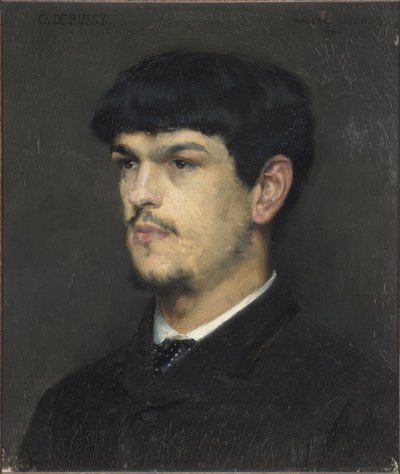
Claude Debussy was a young composer who attended the Tuesday gatherings where Mallarmé welcomed poets and artists to his home. He wrote this piece based on the poem, and it was first performed in Paris in December 1894. Debussy explained that it did not translate the poem literally but freely painted the impressions it left.
Music in which the beat melts
What surprised first listeners most was its flow. It doesn't keep strict time, and its chords ignore the rules about where they ought to resolve. The melody drifts, and sounds seep in and vanish like light and shadow: the glint of the harp, the distant call of muted horns, even the tiny antique cymbals at the very end. That is why many people count this piece as the work that opened the door to twentieth-century music.
An uproar eighteen years later
In 1912 the music set Paris buzzing again. Vaslav Nijinsky, a dancer with the Russian ballet company, created a ballet to it and danced the faun himself. The dancers moved flatly in profile, like figures on an ancient Greek vase, and the gesture of the final scene was attacked as too explicit, causing a major controversy. Some newspapers poured out condemnation, while some artists defended Nijinsky. Debussy himself, it is said, was not especially pleased with the choreography.
A question to think about
Nijinsky's ballet was condemned as going too far at its premiere, yet today it is reassessed as an important work of modern dance. Whenever new art appears, criticism that it "crossed a line" collides with defenses of freedom of expression. The same debates continue today over films, performances and online content.
When a work of art makes many people uncomfortable, what should the standard be for restricting it? And who should decide that standard?
Claude Debussy1862–1918Read the story of Debussy →