
The Turkish Band Sound That Thrilled Vienna
Mozart's "Turkish March" imitates the sound of an Ottoman military band. The music of an enemy that once besieged Vienna became the city's fashion a century later.
The left hand thumps, and the right hand races busily, jingling. It is one piano, yet somehow it calls up a marching band with drums, cymbals and bells. This is the finale of Mozart's Piano Sonata No. 11, "Alla turca," often called the "Turkish March."
How an enemy's music became fashion
In 1683 a great Ottoman army besieged Vienna. Outside the walls, the Ottoman military band sounded its big drums, cymbals and piercing pipes; this kind of band is called mehter. Vienna held out, and the Ottoman army withdrew.
Yet about a century later something odd happened. The sound that had once meant terror became the height of fashion in Vienna. People enjoyed Turkish-style clothes, coffee and "Turkish music." European armies began adding big drums, cymbals and triangles in imitation of Ottoman bands, and composers rushed to write pieces imitating the sound.
Mozart's Turkey
Mozart enjoyed the fashion too. In 1782 he had a big success in Vienna with The Abduction from the Seraglio, an opera set in a Turkish palace, full of Turkish-style music with booming drums and clashing cymbals.
Piano Sonata No. 11 was written around that time, and it is unusual from the first movement on. Instead of the fast opening most sonatas have, it begins with a relaxed theme and variations. Then in the finale comes "Alla turca," meaning "in the Turkish style." The heavy left-hand chords imitate the bass drum; the quick ornaments in the right hand mimic the glitter of bells and cymbals.
Some pianos of the period even had a "Turkish music" pedal, a device that rang bells or made a drum sound when pressed. That is how great the craze was.
A score reappears
For a long time, only the last page of Mozart's autograph of this sonata was thought to survive. Then in 2014, four pages of the autograph were newly discovered in the National Széchényi Library in Budapest. More than two hundred and thirty years later, Mozart's handwriting had resurfaced.
A question to think about
Enemy music that once terrified the Viennese became an exotic, fashionable craze a century later. But that "Turkish style" was closer to what Europeans imagined than to real Turkish music. Today, too, when another country's culture becomes fashionable, it is sometimes dressed up differently from reality or portrayed comically.
When enjoying and imitating another culture is respect, and when it becomes distortion, what separates the two?
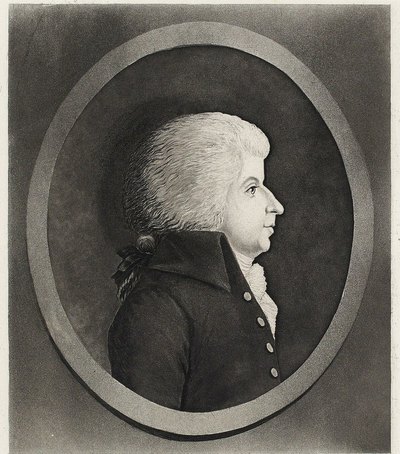
Wolfgang Amadeus Mozart1756–1791Read the story of Mozart →