
The Doctor Who Lifted a Broken Composer
After his first symphony failed disastrously, Rachmaninoff could barely compose for years. His Second Piano Concerto was dedicated to a doctor.
The piece in this story
St Petersburg, March 1897. Sergei Rachmaninoff, twenty-three, is hiding on a stairway in the concert hall, listening to the premiere of his first symphony. But what he hears is nothing like the music he wrote. The playing is a mess, and he reportedly ran out into the street before it was over.
One failure, a long silence
That day's failure was brutal. The conductor was the respected composer Alexander Glazunov, but rehearsal was inadequate and the performance did not bring the work to life. The critic and composer César Cui wrote a scathing review, suggesting this was music only the inhabitants of hell would enjoy.
The young Rachmaninoff collapsed inwardly. For the next few years he wrote almost no major works. He would sit at the piano and nothing would come. Later, looking back on that time, he said he had felt like a man who had been struck on the head.
Dr Nikolai Dahl
In 1900 worried family and friends took him to a doctor, Nikolai Dahl, a music lover who had studied hypnotherapy. Over several months Dahl met Rachmaninoff and worked to rebuild his confidence. According to Rachmaninoff's recollection, Dahl kept telling him that he would write a new concerto and that it would be excellent.
Whether or not that did the trick, Rachmaninoff picked up his pen again. The result was the Second Piano Concerto. In 1901 in Moscow, with Rachmaninoff himself at the piano, the complete work was performed for the first time, to great success. He dedicated the concerto to Dr Dahl.
Comfort in the slow movement
The second movement we hear today is the heart of that concerto. Muted strings open quietly with a few chords; the piano spreads out a gently rippling accompaniment; above it the flute sings the melody first, and the clarinet takes it up. It is music like someone who had fallen apart catching their breath again.
A question to think about
After one failure and harsh criticism, Rachmaninoff could not get up for a long time, and only with a doctor's help could he compose again. Today, too, mental illness is easily misread as "weak will," and many people feel ashamed to ask for help.
What would families, schools and workplaces need to change so that people who are struggling can ask for help without shame? And how sharp is it acceptable for words of judgment about others to be?
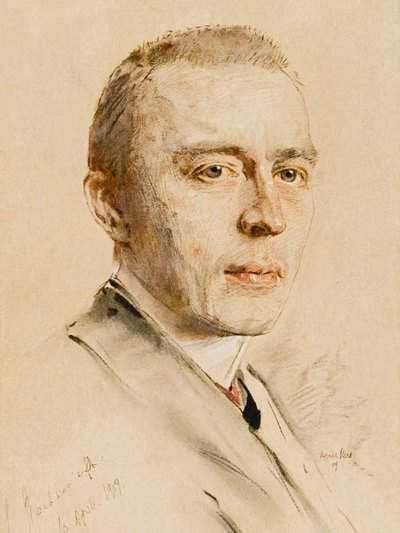
Sergei Rachmaninoff1873–1943Read the story of Rachmaninoff →