
The Man Who Brought the Violin's Devil to the Piano
At twenty, Liszt heard Paganini in Paris and resolved to become the Paganini of the piano. La Campanella is the result.
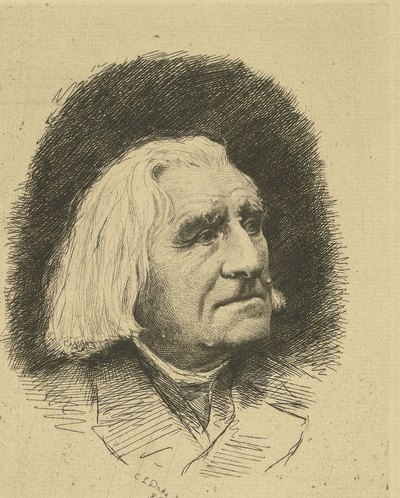
At the very top of the piano, one high note rings like a little bell: ding, ding. But the right hand striking that bell must also travel down to the melody below. The hand leaps up and down across the keys as if flying. This is Franz Liszt's La Campanella, Italian for "the little bell."
The violinist who made a deal with the devil
The real hero of this piece is the violinist Niccolò Paganini, who shook Europe with feats on the violin no one could imitate. Thin, pale, long-haired, playing with uncanny skill, he set rumors flying that he had sold his soul to the devil in exchange for his talent.
The melody of La Campanella comes from the finale of Paganini's Second Violin Concerto. In that movement a clear note keeps chiming like a small bell, which gave it the name.
A resolution at twenty
Paris, spring 1832. Liszt, twenty years old, went to a Paganini concert and was stunned. He had seen with his own eyes what one person could do with one instrument. From that day, it is said, he resolved to become the Paganini of the piano and practiced fiercely for hours every day.
The resolution also left piano music behind. Liszt wrote études transcribing Paganini's pieces for piano, first publishing them in 1838 and then revising them for publication in 1851. La Campanella is the third of the set. The first version was so difficult almost no one could play it; the revised version is the one usually heard today. Even so, it remains one of the most demanding pieces in the piano repertoire.
The first star of the stage
With the skill he built, Liszt toured all over Europe. He is credited with establishing the "recital," in which a single pianist holds the entire stage alone. The frenzy of his audiences, it is said, would remind us of a pop concert today.
When you listen, try watching a video of someone playing it. The ringing high note and the melody below are being played by one hand at the same time, and the distance between them is often wider than the hand itself.
A question to think about
Rather than believe Paganini's astonishing skill came from hard work, people preferred to spread the rumor of a deal with the devil. Even today, people who achieve remarkable things are quickly labeled "born with it," or suspected of hiding something.
Where does the urge to explain others' outstanding achievements by innate talent or shady secrets rather than effort come from? How does that way of seeing affect both the achiever and the people watching?
Franz Liszt1811–1886Read the story of Liszt →