The story of Fauré
1854. A nine-year-old boy leaves the foothills of the Pyrenees in southern France for Paris. As a small child he used to slip into the village chapel and play the harmonium. Someone who heard him, it is said, urged his father to send the boy to a music school. His name is Gabriel Fauré.
The boy from the Pyrenees
Fauré was born in 1845 in Pamiers in the south of France, the sixth child of his family. His father was the director of a school that trained teachers, and it was in the small chapel attached to that school that the boy first met the instrument.
The Niedermeyer School
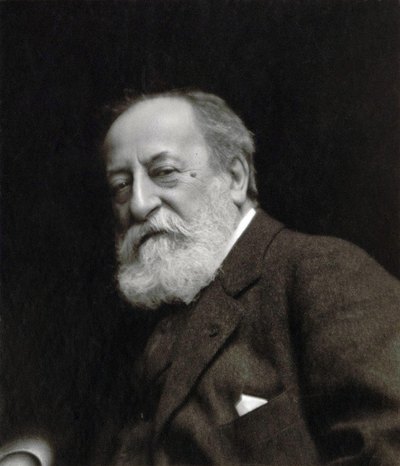
In Paris, Fauré entered the Niedermeyer School, which trained church musicians. He spent eleven years there learning the organ, plainchant and the old church modes. In 1861 Camille Saint-Saëns came to teach piano and played his students the music of Schumann, Liszt and Wagner, which was still new at the time. The teacher, ten years older, and the student became friends for life.
The church organist
After leaving school Fauré worked as a church organist in Rennes in Brittany, and during the war of 1870 he served in the army. He then moved through several Paris churches and in 1877 became choirmaster at the Madeleine. To earn a living he gave many piano lessons, and it is said he could compose mostly during his summer holidays. Even so, he kept writing songs for voice and piano, among them "After a Dream" and "Moonlight," set to a poem by Verlaine. In 1877 he was engaged to Marianne Viardot, daughter of the singer Pauline Viardot, but the engagement was broken off after a few months.
The Requiem and the Pavane
In 1887 Fauré wrote his Pavane, and around the same time he began his Requiem, first performed at the Madeleine in 1888. Rather than painting the terror of the Last Judgment, he sang of death as a peaceful rest. In the meantime he had married Marie Fremiet, daughter of the sculptor Emmanuel Frémiet, and started a family.
The Conservatoire teacher
In 1896 Fauré became organist of the Madeleine and professor of composition at the Paris Conservatoire. Students such as Ravel, Nadia Boulanger and George Enescu grew up in his class. It is said he did not force his own style on students but guided each to find their own voice. In 1905 he became director of the Conservatoire and boldly reformed its old rules.
Sounds he could not hear
From the early 1900s, however, Fauré's hearing began to fail. Low notes sounded higher and high notes lower, distorted, it is said. He hid this for a long time and kept working. After stepping down as director in 1920 he still wrote a piano quintet and a string quartet. He died in Paris in 1924.
Music to hear on Pyeongeum
- Pavaneover the slow rhythm of an old court dance, the flute sings a wistful melody.
- Siciliennea piece in the rocking rhythm of a Sicilian dance, which went into his 1898 music for the play Pelléas and Mélisande.
Neither piece shouts. Listen for the moments when the melody slowly changes its color over an accompaniment that quietly repeats the same rhythm.
People around him
- Camille Saint-Saënshis teacher and lifelong friend.
- Maurice Ravela student in his Conservatoire class.
- Marie Fremiethis wife, daughter of the sculptor Emmanuel Frémiet.
A question to think about
Fauré gave lessons to make a living and could compose mostly in summer, and late in life he worked while hiding that he could no longer hear properly. Today, too, many people divide their time between work that pays and work they want to do.
When there isn't enough time for the work you love, what does it take to keep going? And what would have to change for a society in which people can say openly that their bodies are not what they used to be?
Composers of the same age
People whose lives overlapped with Fauré's by more than ten years