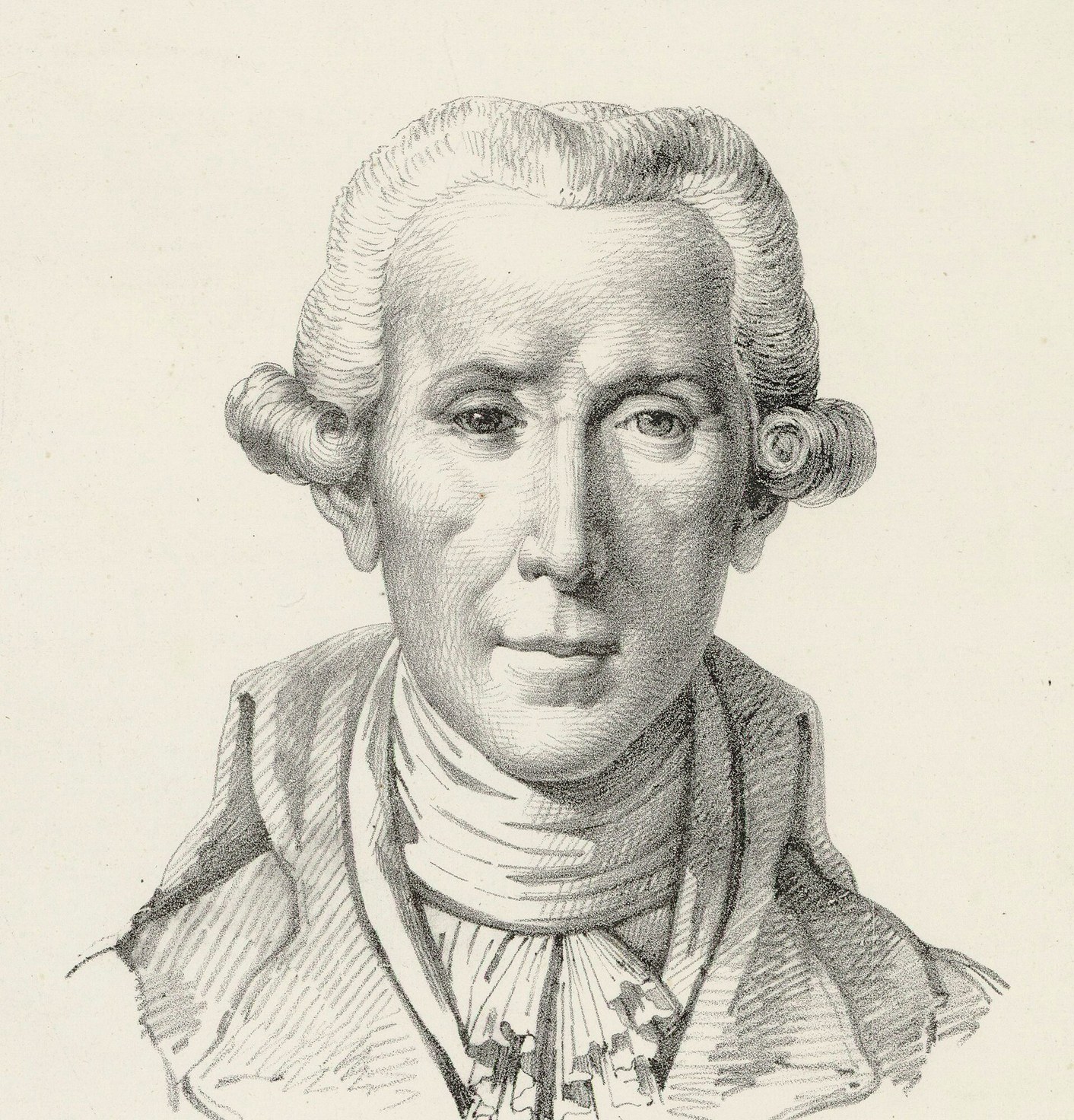
The story of Boccherini
Around 1770, a mountain village far from Madrid. A cellist from Italy arrives at the small court of the Spanish king's younger brother. Here he will write piece after piece for five string instruments: two violins, a viola, and not one cello but two. His name is Luigi Boccherini.
The cello boy of Lucca
Boccherini was born in 1743 in Lucca, a small city in Tuscany. His father was a musician who played the cello and the double bass, and the boy learned the cello from him. As his playing grew, he went to Rome for further study. It is said that he was already performing in public when he was only a little past ten.
Stages in Vienna and Paris
As a teenager Boccherini worked with his father in the orchestra of the court theater in Vienna, travelling back and forth between Vienna and Lucca several times. Around 1767 he went to Paris and made his name as a cellist. In those days the cello was mostly thought of as an instrument for holding up the bass, but he played brilliant melodies high on the instrument and surprised his listeners. Paris publishers printed his chamber music, and his pieces began to be played in cities he had never visited.
To Spain
Around 1768 Boccherini moved to Spain. In 1770 he entered the service of Don Luis, the younger brother of King Charles III. The prince lived on country estates far from the royal court, and Boccherini wrote for his small group of chamber musicians there. There was no great theater and no large audience.
Quintets with two cellos
It was there that he developed his own form: the string quintet made by adding a second cello to the usual string quartet. A cellist himself, he let one cello support the bass while the other sang in the high register. He left more than a hundred of these quintets. The minuet, third movement of a quintet he wrote in 1771, has become more famous than his own name. It turned up in the 1955 British film The Ladykillers, where a gang of crooks pretend to rehearse it, and it has been heard in films and advertisements ever since.
Night music in Madrid
The sounds of Spain found their way into his music too. His 1780 quintet "Night Music of the Streets of Madrid" imitates church bells, street musicians and the soldiers' evening retreat with string instruments. Later he even put the Spanish dance called the fandango into a quintet with guitar.
A lonely old age
In 1785 Don Luis died. Boccherini then received the title of chamber composer to King Frederick William II of Prussia, sending him music from Madrid, and he also had the support of Spanish noble families. But in his last years he lost his wife and several of his children, and money grew short. He died in Madrid in 1805. His remains returned to his hometown of Lucca only in 1927.
Music to hear on Pyeongeum
- String QuintetMinuet: muted strings lay down a light accompaniment while the violin places an elegant tune on top.
When you listen, don't follow only the melody. Listen to the accompaniment bouncing underneath. You may be able to picture five players sitting in a small room of a country house, playing together.
People around him
- Leopoldo Boccherinihis father and first cello teacher.
- Don Luisthe king's brother, who supported him for many years in Spain.
- Frederick William IIthe cello-playing king of Prussia, who gave him the title of court composer.
A question to think about
Boccherini left the stages of the big cities to work at a small court in the countryside, and there he developed his own form, the quintet with two cellos. Today, too, many people gather in big cities in search of opportunity.
Competing with many others on a big stage, or digging deep into your own path in a small place: where do you think you could grow more?
Composers of the same age
People whose lives overlapped with Boccherini's by more than ten years