
Details
- Composer
- Franz Schubert
- Catalogue no.
- D. 960
- Key
- B-flat major
- Scoring
- Piano
- Length
- about 4 min
Recording
Morning music at 7
Track info
「Sonata in B-flat major」Performed by Bernd Kruegerrecorded 2014Wikimedia CommonsCC BY-SA 3.0 de
About this piece
In autumn 1828, Franz Schubert, thirty-one years old, had only about two months left to live. Yet the third movement of the last piano sonata he finished around then is not heavy at all. It moves lightly, as if on tiptoe. Why would he write music like this at the very end of his life?
At a glance
- What it isthe third movement of the Piano Sonata in B-flat major, D. 960. It is the third of four movements, a quick, light scherzo.
- Who and whenFranz Schubert finished it around September 1828, about two months before he died.
- What to listen forsounds that move lightly, as if tapped with the fingertips, and the change of mood in the middle.
Listen for
- The openingthe heading of the score reads "Allegro vivace con delicatezza," meaning lively, quick and delicate. Listen for sounds that touch lightly rather than push hard.
- The middle section"scherzo" is Italian for "joke." A movement like this usually has a contrasting middle section called the trio. Compare it with what came before: how do the brightness and the pace change?
- The returnin this kind of movement the opening music usually comes back after the middle section. Notice how it feels different the second time you hear it.
When it was written
1828 was Schubert's last year. In March he gave his first public concert made up entirely of his own music. Then, around September, he finished three piano sonatas one after another: D. 958, D. 959 and D. 960. D. 960 is the last of the three.
In November, Schubert died at thirty-one. The three sonatas were not published in his lifetime; they appeared in print only about ten years later. As with so much of his music, the world came to know it only after he was gone.
A question to think about
Schubert finished this sonata in the last months of his life, and at the head of its third movement he wrote the word "delicately." Once we know this, though, we tend to go looking for sadness even in the lightest passages.
When we meet someone's work or words, does knowing their circumstances deepen our understanding, or does it make us hear only the story we had already decided to hear?
The composer
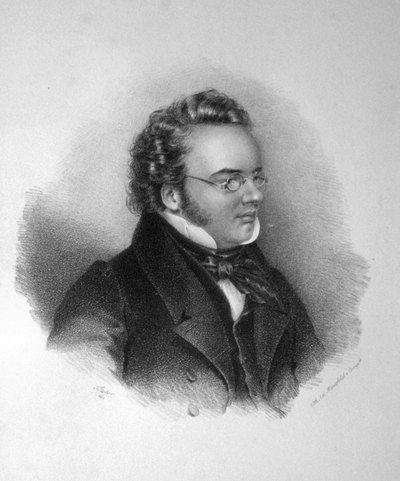 Franz Schubert1797–1828 · born in Vienna, AustriaMore on Schubert →
For moods like
Excited · Joyful
fast · major key · energy 4
Find more pieces in Listen by Mood →