
Details
- Composer
- Franz Schubert
- Catalogue no.
- D. 959
- Key
- A major
- Scoring
- Piano
- Length
- about 12 min
Recording
Morning music at 7
Track info
「Piano Sonata No. 20」Performed by Musopenrecorded 2012Wikimedia CommonsPublic Domain
About this piece
In September 1828 the thirty-one-year-old Schubert completed three piano sonatas one after another. Two months later he died. Sonata No. 20 is the middle one of those three.
At a glance
- What it isthe first movement of Piano Sonata No. 20 in A major, marked Allegro, fast.
- Who, when, whywritten in Vienna in September 1828. The last three sonatas were published only a decade after his death.
- What to listen forthe contrast between the stately chords of the opening and the songlike, gentle second theme.
Listen for
- Statelinessover a walking bass in the left hand, the right hand sounds large chords. It is as if a wide stage were opening.
- Songthe second theme sings gently like one of Schubert's songs, a passage where you feel he was a composer who wrote songs all his life.
- A quiet endat the close the opening theme returns quietly and softly, ending calmly instead of with big chords.
When it was written
In 1828, even as his illness deepened, Schubert wrote at an astonishing pace. A symphony, the String Quintet, songs and the last three piano sonatas all date from that year. In March of the same year he also gave the first and only public concert devoted entirely to his own works.
Schubert died in Vienna that November. The three sonatas were published only around 1838, and the publisher dedicated them to the young composer Robert Schumann. Long seldom played, these sonatas became important works for pianists only in the twentieth century.
A question to think about
Schubert's last sonatas were never published in his lifetime and for a long time were seldom played. Today they are counted among the important works of piano music.
Why does it happen that a person's worth goes unrecognized while they are alive? If there are people or work around us today that are not properly valued, what would it take to recognize them?
The composer
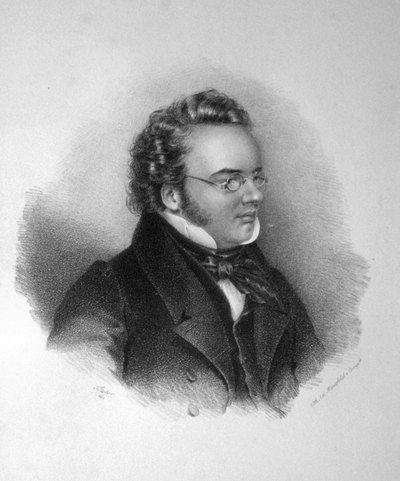 Franz Schubert1797–1828 · born in Vienna, AustriaMore on Schubert →
For moods like
Excited · Joyful
fast · major key · energy 4
Find more pieces in Listen by Mood →