
Details
- Composer
- Franz Schubert
- Catalogue no.
- D. 784
- Key
- A minor
- Scoring
- Piano
- Length
- about 6 min
Recording
Morning music at 7
Track info
「Piano Sonata No. 14」Performed by Musopenrecorded 2012Wikimedia CommonsPublic Domain
About this piece
In February 1823, a 26-year-old composer in Vienna finished a piano sonata. Yet the music was not published while he lived. People could only buy it in print more than ten years after his death. How does the short, fast movement that closes this sonata bring things to an end?
At a glance
- What it isthe third and final movement of a sonata for solo piano. It is in A minor and lasts about six minutes.
- Who, whenFranz Schubert wrote it in February 1823, when he was 26.
- What to listen fornotes racing along under a tempo marking that means "fast and lively," and moments where soft and loud sounds push against each other.
Listen for
- The openingthe dark colour of A minor is there from the very first sound. Follow where the quick notes run.
- Dynamicsthis simply means how loud or soft the music is. Listen for places where a whisper suddenly grows loud.
- Two handstry listening to what the right hand and the left hand are each doing. It is fun to tell apart the hand carrying the tune from the hand supporting it.
- The endinga movement that starts in a minor key has to finish somehow. Notice the mood and energy it lands on.
When it was written
A piano sonata usually has three or four movements, and the last one is often fast. This sonata has three, and this is the final one. The score is marked Allegro vivace, which asks the player to go fast and with life.
In the same year, 1823, Schubert also wrote The Fair Maid of the Mill, a song cycle on poems by Wilhelm Müller. A song cycle is a set of songs sung in a row so that together they tell one story. In the mid-1820s Schubert suffered a serious illness. You may find yourself thinking of that time as you listen, but what the music says is finally up to each listener.
The composer, Franz Schubert
Schubert was born in 1797 in a suburb of Vienna, the son of a schoolteacher. At eleven he joined the boys' choir of the court chapel and studied at its boarding school, and he took composition lessons from Salieri. His friends often gathered to hear his music together, and these evenings came to be called Schubertiades. He died in November 1828, at the age of 31.
A question to think about
This sonata was finished in 1823 but was not published until 1839, after Schubert's death. The only public concert he ever gave of his own works took place in March 1828. Many of his pieces were found and printed only after he was gone.
Good work that becomes known long after it was made is not just a thing of the past. Whose job should it be to notice the work of someone who is overlooked today, and to bring it to the world?
The composer
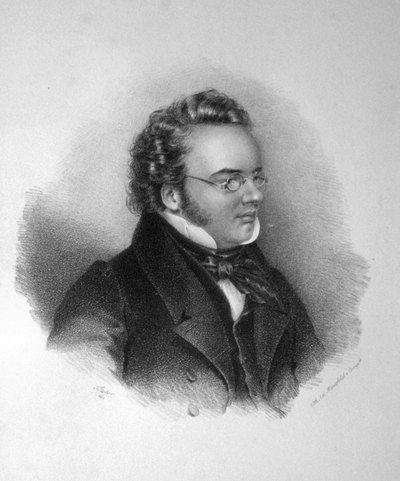 Franz Schubert1797–1828 · born in Vienna, AustriaMore on Schubert →
For moods like
Anxious · Stuck
fast · minor key · energy 4
Find more pieces in Listen by Mood →