
Details
- Composer
- Wolfgang Amadeus Mozart
- Catalogue no.
- K. 207
- Key
- B-flat major
- Scoring
- Violin and orchestra
- Length
- about 6 min
Recording
Morning music at 7
Track info
「Violin Concerto No. 1」Performed by European Archivesrecorded 2021Wikimedia CommonsPublic Domain
About this piece
At about seventeen Mozart was playing violin in the Salzburg court orchestra, and he began writing violin concertos for himself to play. The first of them is Violin Concerto No. 1.
At a glance
- What it isthe first movement of Violin Concerto No. 1, in B-flat major, marked Allegro moderato, moderately fast.
- Who, when, whylong known as a work of 1775, it is now widely dated to around 1773 on the evidence of handwriting studies of the score.
- What to listen forthe moment the solo violin first steps in after the orchestra has presented the theme.
Listen for
- Setting the stagethe orchestra first plays a bright theme, setting the stage before the soloist appears.
- The entrancethe solo violin takes up the same idea and sings lightly in the high register.
- The cadenzanear the end, the orchestra stops and the soloist has a place to display technique alone. This passage differs from player to player.
When it was written
In the early 1770s Mozart worked in the court orchestra of his hometown, Salzburg, where he served as concertmaster and played the violin. His father Leopold, a musician who had written a well-known violin method, urged his son again and again in letters to practice the violin harder.
In the 1770s Mozart wrote five violin concertos in Salzburg. No. 1, the first of them, carries the bright melodies he had absorbed on his Italian journeys and the give-and-take between orchestra and soloist. After moving to Vienna he wrote his concertos as a pianist rather than a violinist.
A question to think about
Long known as a work of 1775, this piece has come to be seen as earlier, thanks to research that carefully compared the handwriting in its score. Even established facts can change when new evidence appears.
When something everyone believed to be true is changed by new evidence, what attitude should we take? What do we believe to be certain today that might change?
The composer
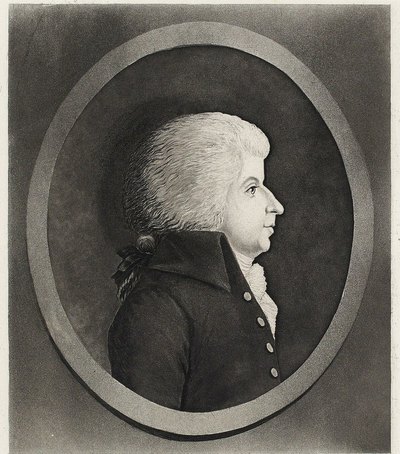 Wolfgang Amadeus Mozart1756–1791 · born in Salzburg, AustriaMore on Mozart →
For moods like
Restless · Excited
fast · major key · energy 5
Find more pieces in Listen by Mood →More by Mozart
- Symphony No. 40I. Molto allegro · completed 1788 · about 8 min
- Violin Concerto No. 1III. Presto · about 5 min
- Oboe Concerto in C majorMovement III · about 6 min
- Piano Sonata No. 11I. Andante · about 14 min
- Sonata No. 13III. Allegretto · about 7 min
- Symphony No. 40Movement III · about 4 min
- Rondo in A majorabout 9 min