
Details
- Composer
- Wolfgang Amadeus Mozart
- Catalogue no.
- K. 333
- Key
- B-flat major
- Scoring
- Piano
- Length
- about 7 min
Recording
Morning music at 7
About this piece
A piano sonata is played on a single piano. Yet near the end of this finale the music stops for a moment and the piano spreads out a dazzling passage alone, as if in a concerto with an orchestra.
At a glance
- What it isthe third and last movement of Piano Sonata No. 13, a rondo marked Allegretto grazioso, somewhat fast and graceful.
- Who, when, whymany believe Mozart wrote it in the autumn of 1783 in Linz, where he stopped on his way back from Salzburg to Vienna. It was published in Vienna in 1784.
- What to listen forthe theme changing a little each time it returns, and the cadenza near the end.
Listen for
- The themea bright, playful theme begins gracefully. Each time it returns, its decoration is a little different.
- Like a concertoin some passages the two hands seem to imitate, in turn, the full orchestra and the soloist. Try to tell the places where the sound grows big and thick from those where it sings lightly.
- The cadenzanear the end the music halts on a chord, and the piano freely displays its skill alone. It is a cadenza Mozart wrote out in notes himself.
When it was written
In 1783 Mozart visited his hometown of Salzburg with his wife Constanze, and on the way back to Vienna they stopped in Linz. The story of how, in the few days he spent there, he wrote and performed his Symphony No. 36, the 'Linz', is well known. This sonata is thought to date from the same time.
In those years Mozart was winning great popularity in Vienna with the piano concertos he performed himself. Perhaps that is why the texture and cadenza of a concerto have seeped into this sonata.
A question to think about
With only one piano, Mozart created the feel of a concerto played by orchestra and soloist together. One person made the sound of many out of imagination.
Sometimes imagination grows when we have less. Do you agree that lack can foster creativity? If so, is it acceptable to leave poor conditions as they are?
The composer
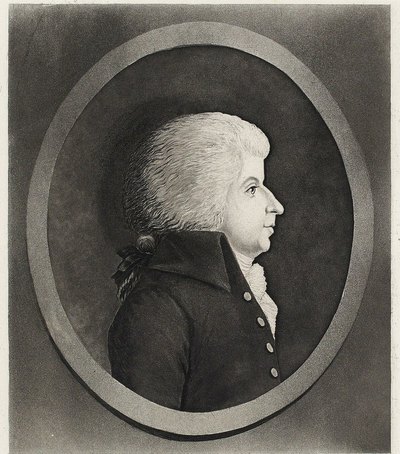 Wolfgang Amadeus Mozart1756–1791 · born in Salzburg, AustriaMore on Mozart →
For moods like
Grateful · Calm · Focused
moderate tempo · major key · energy 3
Find more pieces in Listen by Mood →More by Mozart
- Symphony No. 40I. Molto allegro · completed 1788 · about 8 min
- Violin Concerto No. 1Movement I · about 6 min
- Violin Concerto No. 1III. Presto · about 5 min
- Oboe Concerto in C majorMovement III · about 6 min
- Piano Sonata No. 11I. Andante · about 14 min
- Symphony No. 40Movement III · about 4 min
- Rondo in A majorabout 9 min