
Details
- Composer
- Johannes Brahms
- Catalogue no.
- Op. 98
- Key
- E minor
- Scoring
- Orchestra
- Length
- about 11 min
Recording
Morning music at 7
Track info
「Symphony No. 4」Performed by Musopenrecorded 2012Wikimedia CommonsPublic Domain
About this piece
The winds sound eight chords one after another. Then these eight bars return more than thirty times, each time in different clothes. This is the finale of Brahms's Fourth Symphony.
At a glance
- What it isthe fourth and last movement of Symphony No. 4, in the form of a passacaglia, which keeps repeating the same theme as the basis for variations.
- Who, when, whycompleted in 1885 and first performed that October in Meiningen. The theme takes its cue from the bass line of a Bach cantata.
- What to listen forthe returning eight-bar theme, and the slow variation in the middle where the flute sings alone.
Listen for
- The themethe winds, trombones included, present the theme in eight chords. Remember the path the top notes take, climbing step by step.
- The flute variationin the middle the music slows, and the flute alone sings a long, lonely line. Then the trombones offer a quiet chorale in the major.
- The returnthe opening theme comes back fiercely, and the variations grow more and more intense until the movement ends with force in E minor.
When it was written
The passacaglia and the chaconne were forms much loved in the Baroque era, repeating the same bass or chord progression and piling variations on top. Brahms studied old music deeply and collected scores. He built this theme on the bass of the final chorus of Bach's Cantata No. 150.
Until then, the last movement of a symphony usually took a form such as sonata or rondo. Brahms brought in a form more than a century old to crown his last symphony. After this piece he wrote no more symphonies.
A question to think about
Brahms ended his new symphony with a form more than a hundred years old. He did not simply copy the old, but built the sound of his own time upon it.
When making something new, is the old a burden or a stepping stone? What does it take to carry on a tradition while still being new?
The composer
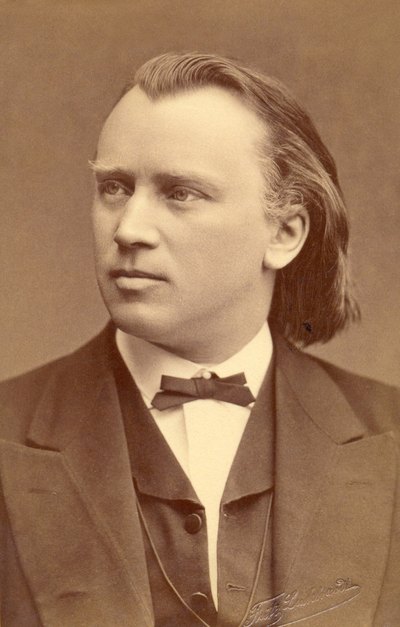 Johannes Brahms1833–1897 · born in Hamburg, GermanyMore on Brahms →
For moods like
Anxious · Restless
fast · minor key · energy 5
Find more pieces in Listen by Mood →