
Details
- Composer
- Johannes Brahms
- Catalogue no.
- Op. 98
- Key
- E minor
- Scoring
- Orchestra
- Length
- about 13 min
Recording
Morning music at 7
Track info
「Symphony No. 4」Performed by Musopenrecorded 2012Wikimedia CommonsPublic Domain
About this piece
The Fourth Symphony begins without any grand introduction, quietly, with the violins sighing down and up two notes at a time. It is like stepping into the middle of a story that has already begun.
At a glance
- What it isthe first movement of Brahms's last symphony, No. 4, marked Allegro non troppo, fast but not too fast.
- Who, when, whywritten over two summers, 1884 and 1885, in the Austrian mountain town of Mürzzuschlag. Brahms himself conducted the first performance in Meiningen in October 1885.
- What to listen forthe pairs of notes that form the first melody, and how they grow.
Listen for
- The sighthe violins draw the first melody in pairs of notes falling and rising, while the winds answer like an echo in between.
- The marchthe woodwinds bring out a new theme with a short, crisp rhythm, and then the cellos sing a warm melody.
- The endthe opening sigh returns large and heavy, and the movement closes with the tragic force of the minor key.
When it was written
When he wrote the Fourth, Brahms had just passed fifty. He first played the finished movements to friends on two pianos, and their response, it is said, was cautious. They worried the music was too difficult and too heavy.
But in October 1885 the first performance, with Brahms conducting the Meiningen court orchestra led by Hans von Bülow, was well received. The orchestra then took the symphony on tour to several cities. Beginning and ending in the minor, it is the only one of his four symphonies that does not end in a major key.
A question to think about
When Brahms's friends first heard this music they worried it was too hard, yet today it is one of his signature works. It is not rare for something strange and difficult at first hearing to become loved over time.
Have you ever come to love something that felt difficult and unfamiliar when you first met it? What does it take to give a second chance to things we don't like right away?
The composer
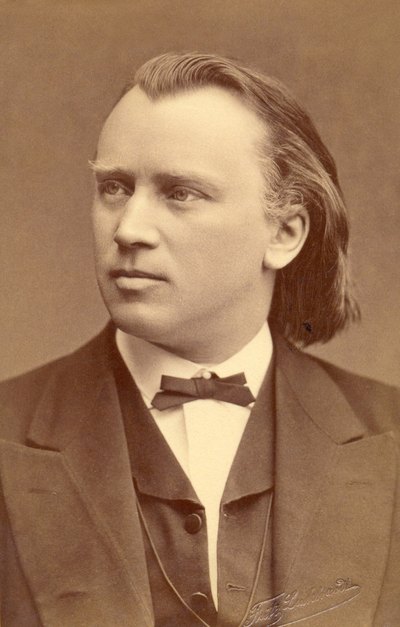 Johannes Brahms1833–1897 · born in Hamburg, GermanyMore on Brahms →
For moods like
Anxious · Restless
fast · minor key · energy 5
Find more pieces in Listen by Mood →