
A Last Wish to Send His Heart Home
Chopin died in Paris in 1849 and was buried there, but his heart was carried to Warsaw by his sister.
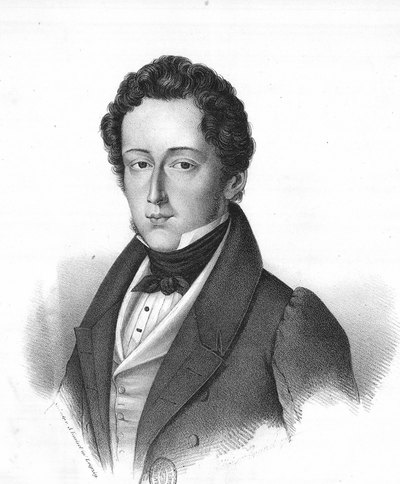
October 1849, the Church of the Madeleine in Paris. The organ plays something very slow and quiet. Left-hand chords sink heavily, one step at a time, while above them the melody barely moves between two or three notes. It is the funeral of Frédéric Chopin, who had died about ten days earlier at thirty-nine. Among the music played that day was his Prelude No. 4 in E minor.
Twenty-four short pieces
In the late 1830s Chopin published his Preludes: twenty-four short piano pieces passing through every major and minor key, a plan that recalls the Well-Tempered Clavier of Bach, whom he revered. Some last less than a minute.
The E minor prelude moves us through its very plainness. The right hand circles almost on one spot, while the left-hand chords slide down little by little, a half step at a time. Then, just once, the melody surges up in a cry before sinking back.
When you listen, pay attention to the chords below rather than the tune above. Each change sounds as if the light were dimming a little more. Near the end the sound stops completely for a moment, and then three last chords close the door very quietly. It lasts barely two minutes, yet afterwards it feels as though far more time has passed.
At the funeral, it is said, Mozart's Requiem was also performed, as Chopin had wished. A fitting request from a man who loved Mozart all his life.
The heart that went to Warsaw
Chopin had one more request. He reportedly asked that his heart be removed after his death. His body was buried in Père Lachaise Cemetery in Paris, but his sister Ludwika carried his heart across the borders, hidden, back to Warsaw.
After leaving home at twenty, Chopin never returned to Poland. After the uprising against Russian rule failed, he lived in Paris almost as an exile. His body could not go home, but his heart did.
Today that heart rests inside a pillar of the Church of the Holy Cross in Warsaw. Every year many people leave flowers before that pillar. Visitors keep coming both to Paris, where his grave is, and to Warsaw, where his heart is.
A question to think about
Chopin left his homeland in an age when his country had lost its independence, never returned, and wished that at least his heart might lie in its soil. Today many people who fled war or persecution grow old in other countries, unable to say when, or whether, they will go back.
What place should a country offer people whose homeland they cannot return to? Can longing for home and putting down roots in a new country go together?
Frédéric Chopin1810–1849Read the story of Chopin →