
A Requiem Ordered by a Nameless Client
In summer 1791 Mozart received a commission for a requiem from someone who would not give his name. He never finished it.
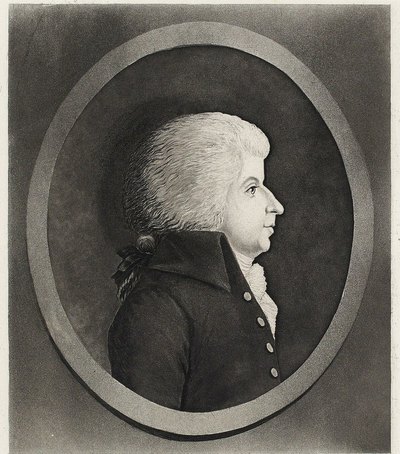
Vienna, summer 1791. Someone comes to Mozart asking for a requiem, a mass for the dead. The fee will be generous, on one condition: don't ask who is ordering it. Mozart, thirty-five, accepted this strange commission.
The mysterious client
For a long time the episode was puffed up into a spooky legend, with a stranger in grey cast as a messenger from the other world. Today, though, the client's identity is fairly clear.
He was an Austrian nobleman, Count Franz von Walsegg. Having lost his young wife early that year, he wanted a requiem in her memory. He also reportedly had a habit of buying other composers' works, copying them out in his own hand and performing them as his own. Hence the go-between and the hidden name.
That year Mozart had no time to breathe. He had two operas to bring to the stage, The Magic Flute and La clemenza di Tito. He worked on the requiem in between, a little at a time.
Tears stopped at eight bars
On 5 December 1791, Mozart died with the requiem unfinished. His widow Constanze faced a serious worry: she could collect the rest of the fee only by delivering a complete work.
Constanze turned to musicians who had worked around Mozart, and in the end his pupil Franz Xaver Süssmayr completed it. So the Requiem we hear today mixes passages Mozart wrote with passages others supplied.
The seam is clearest in the "Lacrimosa," the day of tears. Mozart himself wrote only its first eight bars: the strings rising in short, sobbing steps, the choir climbing higher one step at a time. From there on, it is Süssmayr's hand.
Rumor and fact
The rumor that Mozart was poisoned, and especially that his rival Salieri did it, spread after his death and was eventually turned into a play and a film. There is no evidence for it. It makes an exciting tale, but it was also a rumor that branded a man a murderer.
A question to think about
Count Walsegg wanted to present a purchased work as his own, which is why he hid his name. Today, too, people keep passing off others' writing or art as their own, or paying someone to write for them.
If a work has been fairly bought and paid for, is it acceptable to put your own name on it? Where does protecting a creator's name stop being a matter of rights and start being a matter of honesty?
Wolfgang Amadeus Mozart1756–1791Read the story of Mozart →